Why Digital Meal Planner Benefits Busy Parents in 2026
Discover why digital meal planner benefits busy parents in 2026. Save time, reduce stress, and enjoy healthier meals with smart planning.

A digital meal planner is a tool that automates weekly meal selection and grocery list creation to save time, cut costs, reduce stress, and support healthier nutrition for your family. For busy parents and caregivers, the why digital meal planner benefits question has a clear answer: these tools replace the daily “what’s for dinner?” spiral with one planning session and a system that runs itself. The WHO frames healthy eating as a lifelong protection against disease, and digital planners are the practical bridge that turns those dietary goals into weekly habits. Yummy Bites App, which supports over a million families with 392 expert-backed recipes, is one example of how structured digital planning can transform chaotic mealtimes into calm, nourishing routines.
Why digital meal planner benefits go beyond convenience
The core advantage of digital meal planning is not just speed. It is the replacement of dozens of small, draining decisions with a single, intentional planning session. Decision fatigue is real: when you automate recipe selection and grocery lists, you stop spending mental energy on recurring choices that add up across the week. That freed-up energy goes back to your family.
Digital planners also deliver benefits that paper lists and mental notes simply cannot match:
- Automated grocery lists pull directly from your weekly meal plan, so you buy exactly what you need.
- Virtual pantry tracking flags what you already have, preventing duplicate purchases.
- Instant plan adjustments let you swap a meal in seconds when schedules change.
- Nutritional summaries show whether your child’s week covers key food groups at a glance.
- Repeatable templates let you reuse winning weeks without starting from scratch.
Each of these features targets a specific friction point in the daily feeding routine. Together, they make healthy eating feel less like a project and more like a default.
Pro Tip: Schedule your weekly planning session on Sunday morning, then pair it with a batch-cook session the same afternoon. You will enter the week with meals already prepped and a grocery list already done.

How do digital meal planners save money and reduce food waste?
Planned shopping lists prevent the two biggest budget leaks in most households: impulse buys and forgotten produce that spoils before it gets used. Meal planning reduces food waste by ensuring families buy only what they need and use ingredients efficiently across the week. That efficiency compounds quickly when you have a baby or toddler at home and you are already buying specialty foods.
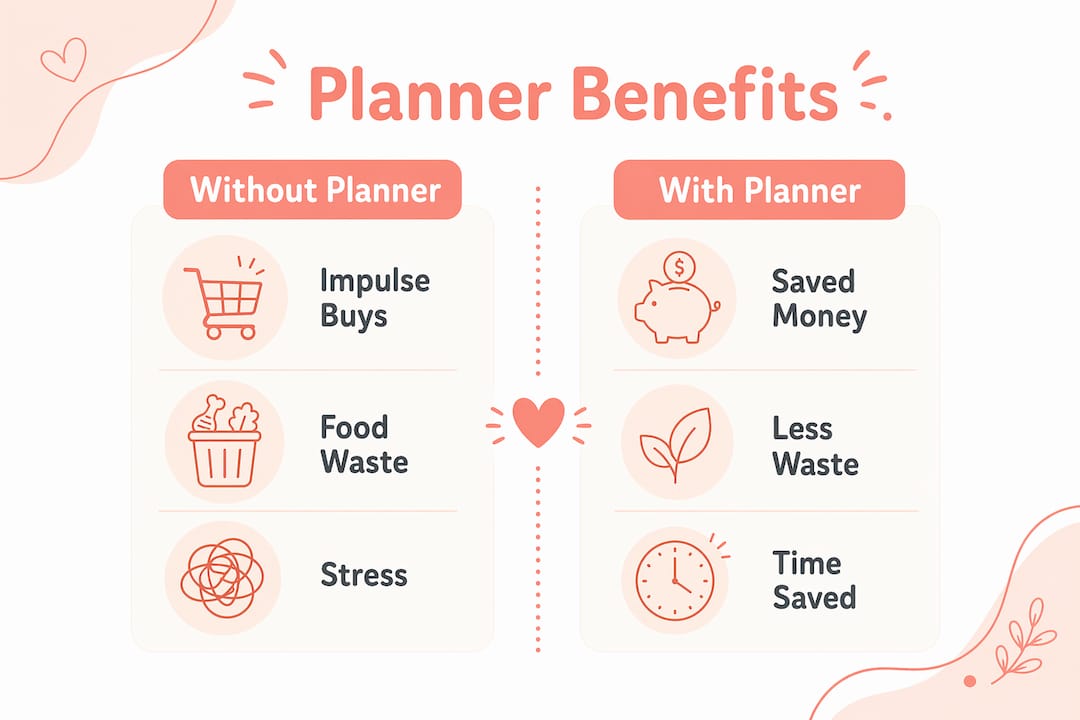
Ingredient consolidation is where digital planners earn their keep. A good planner staggers ingredient use across multiple meals so that one bunch of spinach, for example, appears in Tuesday’s puree, Thursday’s frittata, and Saturday’s pasta. This continuity reduces spoilage and keeps your nutritional targets on track without buying more variety than you can realistically use.
| Shopping behavior | Without a digital planner | With a digital planner |
|---|---|---|
| Impulse purchases | Frequent, unplanned | Rare, list-driven |
| Produce spoilage | High, due to overbuying | Low, ingredient reuse planned |
| Duplicate pantry items | Common | Avoided via pantry tracking |
| Weekly grocery spend | Variable and often high | Predictable and lower |
The savings are not just financial. Less food waste means fewer last-minute store runs, which saves time. Fewer store runs mean fewer opportunities for impulse buys, which saves more money. The cycle reinforces itself once the system is in place.
How do digital meal planners improve child nutrition?
Structured meal planning directly improves what children eat. Research shows that caregiver knowledge correlates strongly with better infant and young child feeding practices, with dietary diversity scores rising significantly when caregivers receive tailored guidance. That is not a small effect. It means the quality of the tool you use shapes the quality of your child’s diet.
Child Trends research confirms that structured nutrition education for caregivers improves feeding behaviors and creates better food environments at home. Digital planners that operationalize this guidance, by delivering age-appropriate prompts, portion guidance, and food introduction schedules, put that education directly into your daily routine. A nutritional balance weekly menu is not just a nice idea. It is a measurable tool for better outcomes.
The most effective planners for young children include:
- Age-appropriate recipe filters so you never accidentally serve a food before your baby is ready.
- Allergen tracking that flags high-risk foods and logs your child’s reactions over time.
- Solids introduction schedules that follow evidence-based timelines for food variety.
- Portion guidance calibrated to your child’s age and feeding stage.
Pro Tip: When choosing a planner for a baby or toddler, prioritize age-specific feeding guidance over recipe volume. A planner with 50 well-sequenced recipes beats one with 500 generic ones every time.
How do meal planners reduce stress at family mealtimes?
Mealtime stress for caregivers comes from two sources: not knowing what to cook and not knowing whether what you cook is right for your child. Digital planners address both directly. Research frames planning as a proven way to reduce the work and stress of feeding children by removing repeated nightly decision-making. When the decision is already made, the friction disappears.
The psychological relief is real. Parents who use structured meal plans report calmer mealtimes because the “what should I feed them?” anxiety is gone before dinner even starts. That calm transfers to the child. Babies and toddlers are sensitive to caregiver stress at the table, and a relaxed feeding environment supports better eating behavior.
“When you remove the daily guessing game from mealtimes, you stop reacting and start parenting.”
Digital planners reduce caregiver burden by anticipating feeding challenges and providing clear, adaptable guidance for managing difficult eating phases. That includes picky eating, appetite fluctuations, and the transition to new textures. Having a plan does not mean being rigid. It means you have a starting point, which is far less stressful than starting from nothing every night.
Consistent meal routines also create social-emotional benefits. Children who eat at predictable times with familiar foods develop a sense of security around food. That security reduces mealtime battles and builds a healthier long-term relationship with eating.
What features should you look for in a digital meal planner?
The right planner depends on your child’s age and your household’s needs. A planner that works well for a family with school-age kids will not serve a parent introducing solids to a six-month-old. Start with your specific situation, then match features to it.
Key features worth prioritizing:
- Age-appropriate content: Generic recipe databases do not account for developmental readiness. Look for planners that filter by age and feeding stage.
- Allergen management: Real-time allergen tracking is non-negotiable for families with allergy concerns.
- Automated grocery lists: The list should generate from your plan, not require manual entry.
- Flexibility: You need to swap meals easily when life changes, without rebuilding the whole week.
- Integration with shopping: Planners that connect to grocery delivery services save an extra step.
| Feature | Why it matters |
|---|---|
| Age-appropriate recipes | Prevents unsafe food introductions |
| Allergen tracking | Reduces risk and builds caregiver confidence |
| Automated grocery lists | Eliminates overbuying and forgotten items |
| Meal swap flexibility | Keeps the plan usable when schedules shift |
| Pediatric expert backing | Ensures guidance is evidence-based, not generic |
The best digital planners deliver structured, age-appropriate guidance rather than generic recipes, which produces measurable improvements in feeding adherence and caregiver confidence. Avoid planners that overwhelm you with features you will never use. A clean interface you actually open every day beats a feature-heavy one you abandon by week two.
Involve your child where possible. Even toddlers can “choose” between two pre-approved options, which builds their autonomy and reduces resistance at the table. Pair your planner with a consistent toddler feeding schedule to reinforce routine alongside variety.
Key Takeaways
Digital meal planners deliver the greatest value when they combine automation, age-appropriate guidance, and allergen tracking into a single tool that parents actually use every week.
| Point | Details |
|---|---|
| Time and decision savings | Automating weekly meal selection replaces daily decisions with one planning session. |
| Cost and waste reduction | Planned grocery lists prevent impulse buys and reduce produce spoilage through ingredient reuse. |
| Child nutrition improvement | Age-appropriate prompts and caregiver education measurably improve dietary diversity in young children. |
| Stress reduction at mealtimes | Removing the nightly “what to cook” question lowers caregiver burden and creates calmer family meals. |
| Feature selection matters | Planners with allergen tracking, age filters, and pediatric backing outperform generic recipe apps for families with young children. |
What I have learned from watching parents use these tools
I have spent years watching parents try to do right by their kids at the dinner table, and the ones who struggle most are not the ones who lack knowledge. They are the ones who lack a system. A parent can know exactly what a six-month-old should eat and still freeze up at 5:30 p.m. because they are tired and there is nothing prepped.
Digital meal planners solve the system problem, not the knowledge problem. That distinction matters. The best planners I have seen work because they remove the gap between knowing and doing. They put the right recipe in front of you at the right time, with the right portion guidance already built in.
The honest caveat: setup takes effort. The first week of using any planner feels slower than just winging it. Parents who push through that initial friction almost universally report that week two feels completely different. The system starts working for you instead of the other way around.
My advice is to choose a planner built specifically for your child’s stage, not a general household meal planner that happens to have a “kids” filter. The specificity is what makes the difference for families with babies and toddlers. A weekly baby meal plan designed around developmental readiness is a fundamentally different tool than a generic weekly dinner planner. Treat it that way.
Yummy Bites App makes meal planning personal for your baby
Yummy Bites App is built specifically for the stage when meal planning matters most: the transition to solid foods. It combines 392 expert-backed recipes with real-time allergen tracking, age-appropriate meal plans, and step-by-step serving instructions reviewed by licensed therapists and pediatric specialists.
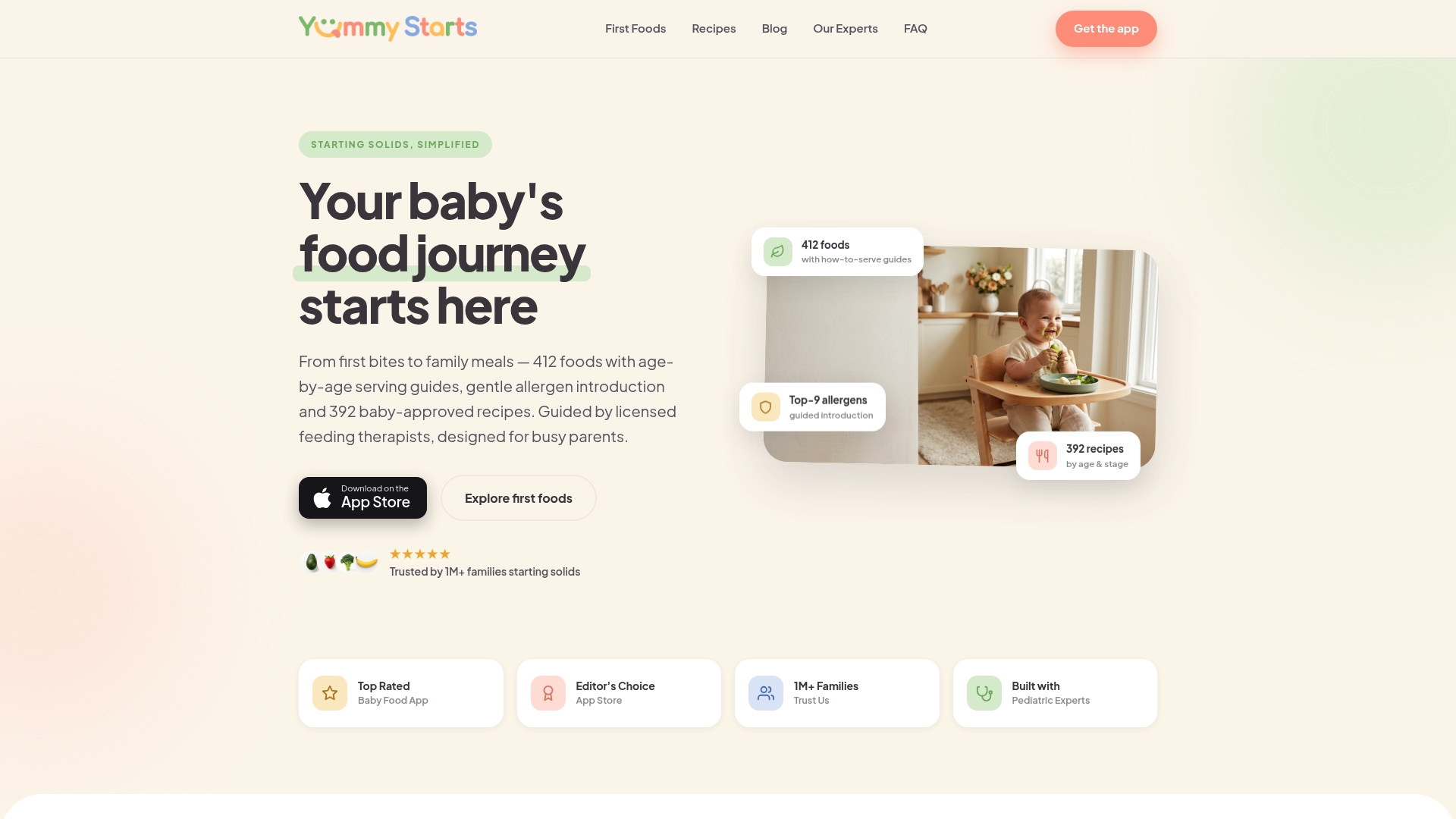
Over a million families use Yummy Bites App to replace feeding anxiety with a clear, personalized plan. The Foods Library gives you a research-backed guide to every food your baby might encounter, with safety notes and introduction timing built in. The Baby Recipes and Meal Planner turns that knowledge into a ready-to-use weekly plan. If you are ready to make mealtimes calmer and more nourishing, Yummy Bites App is where to start.
FAQ
What is a digital meal planner?
A digital meal planner is an app or web tool that automates weekly meal selection, generates grocery lists, and tracks nutritional goals. The best versions include age-appropriate guidance and allergen tracking for families with young children.
How do meal planners help with child nutrition?
Structured caregiver guidance improves infant and young child feeding practices by increasing dietary diversity and feeding confidence. Digital planners deliver this guidance directly into your daily routine.
Are digital planners better than paper meal planning?
Digital planners outperform paper for families with young children because they automate grocery lists, track allergens in real time, and adjust plans instantly. Paper planning requires manual updates and offers no nutritional tracking.
How much time can a digital meal planner save each week?
Automating recipe selection and grocery lists removes the recurring daily decision load that accumulates across a full week. Most caregivers reclaim meaningful planning and shopping time once the system is running.
What should parents look for in a meal planner for babies?
Prioritize age-appropriate recipe filters, real-time allergen tracking, and guidance backed by pediatric specialists. Generic recipe apps do not account for developmental readiness or safe food introduction timelines.
Recommended

This article is for general educational purposes only and is not a substitute for professional medical advice, diagnosis, or treatment. Always consult your pediatrician or a qualified healthcare provider about your baby's diet, allergies and readiness for solids.