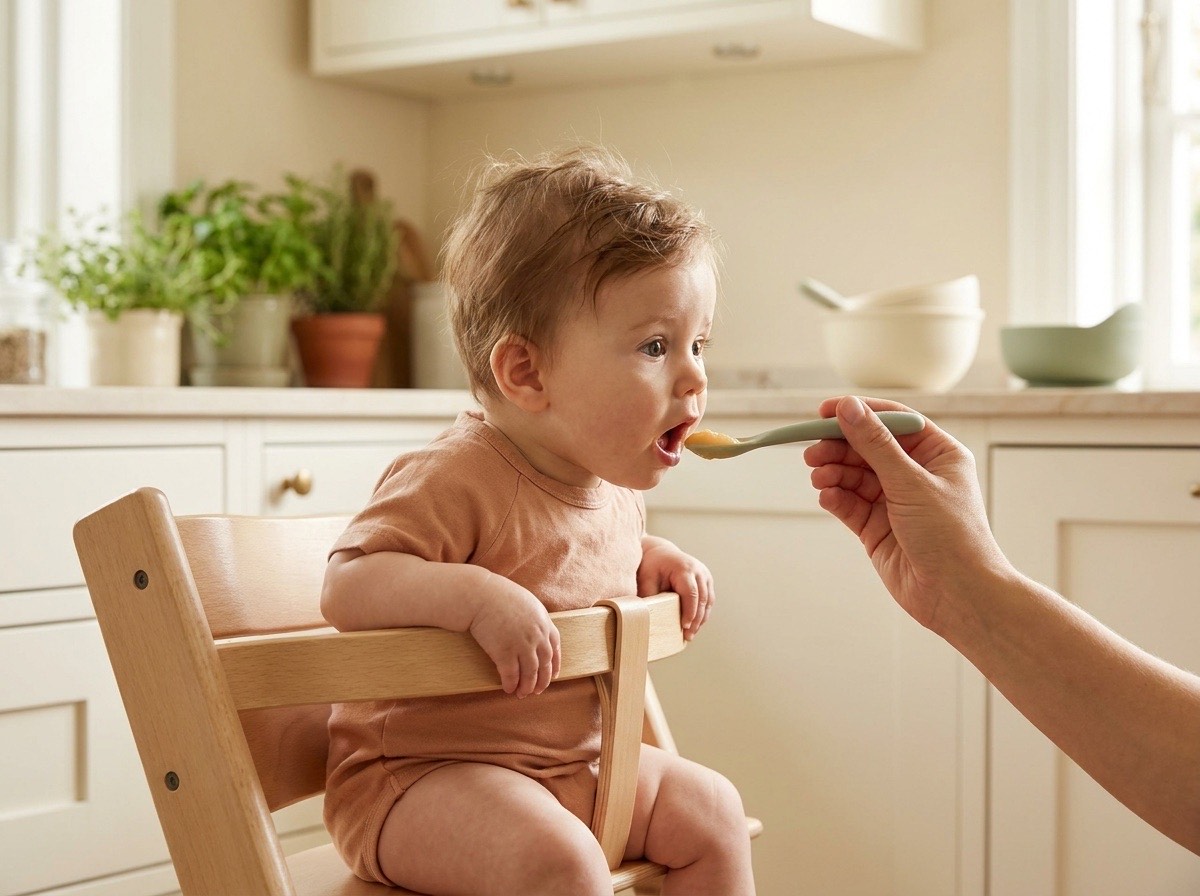
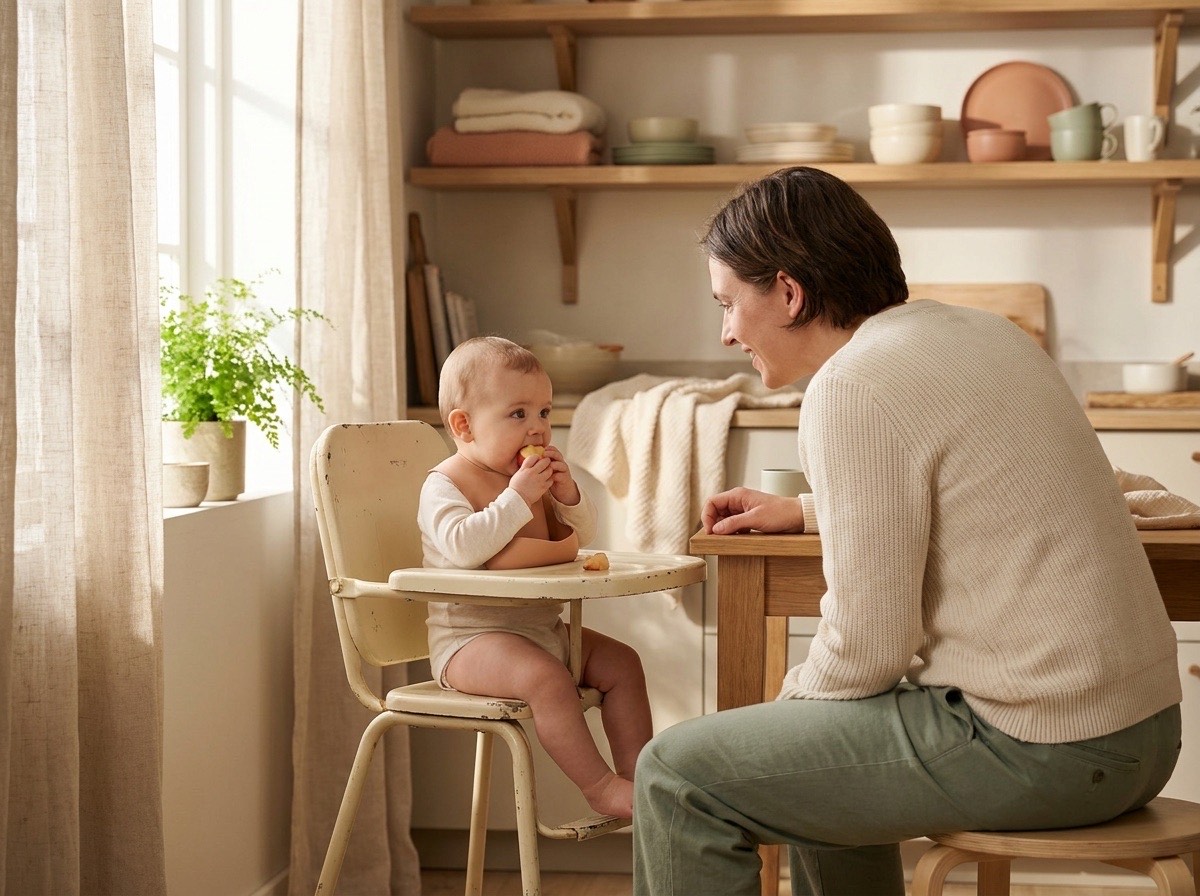
Weekly Baby Meal Plan Guide for New Parents
Discover our weekly baby meal plan guide to simplify starting solids, ensuring balanced nutrition and minimizing decision fatigue for new parents.
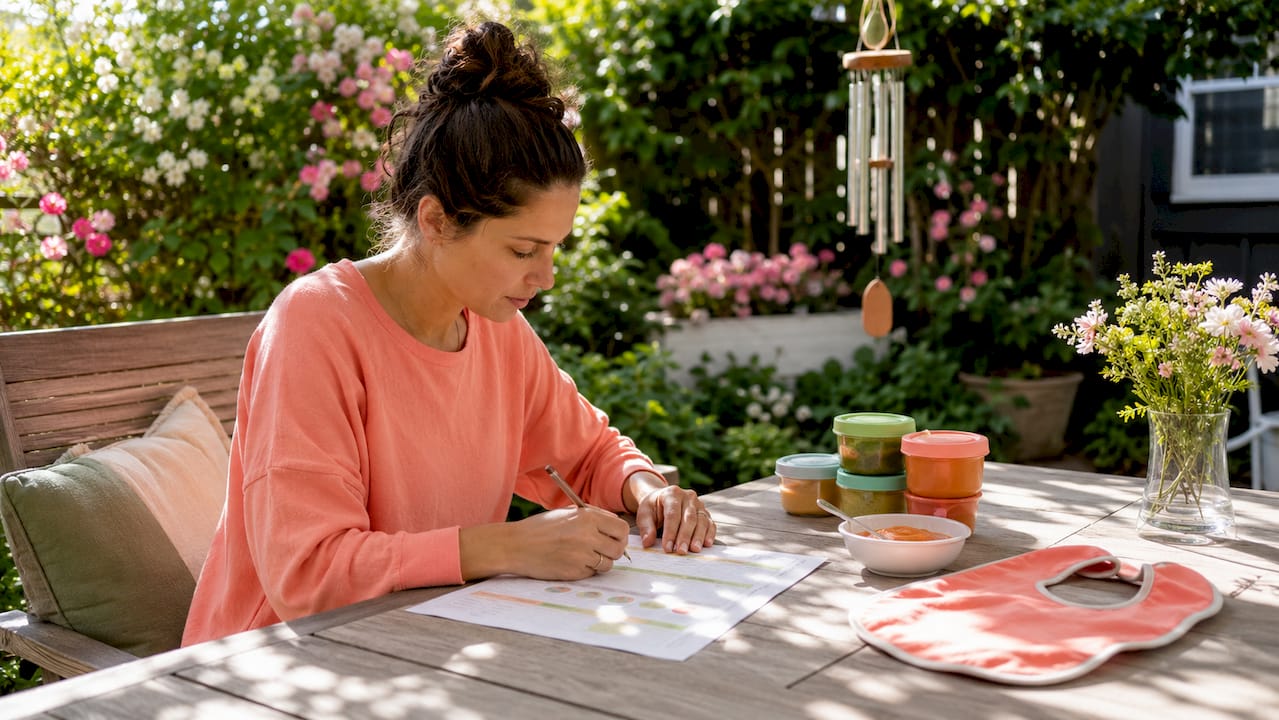
A weekly baby meal plan guide is a structured, flexible framework that organizes your baby’s meals, textures, and allergen exposures across seven days to support balanced growth and reduce daily decision fatigue. Starting solids is one of the most exciting and nerve-wracking milestones of early parenthood. Done with a plan, it becomes manageable. Done without one, it becomes a daily scramble. This guide walks you through the nutrition basics, batch cooking strategies, a sample meal template, and how to adapt everything to your baby’s actual cues, not a rigid schedule.
What are the key nutritional and allergen considerations for weekly baby meals?
Balanced infant nutrition means covering five core food groups every week: fruits, vegetables, proteins, grains, and healthy fats. Systematic weekly planning ensures babies receive all food groups rather than relying on random daily selections. That consistency directly supports healthy growth and development.
Iron is the nutrient most parents underestimate. Babies deplete their birth iron stores around six months, making dietary iron critical from the moment solids begin. Iron-rich foods like lentils, beans, eggs, and dark leafy greens should appear in your baby’s diet daily, not just occasionally.
Allergen introduction is the other major planning priority. The current guidance from pediatric dietitians supports early, repeated allergen exposure rather than avoidance. The eight major allergens, including peanuts, eggs, tree nuts, dairy, wheat, soy, fish, and shellfish, should be introduced one at a time with a few days between each new one. This spacing lets you identify any reaction clearly.
Here is what a nutritionally complete weekly baby food menu should include:
- Iron-rich proteins: lentils, pureed chicken, egg yolk, tofu, beans
- Orange and yellow vegetables: sweet potato, butternut squash, carrot
- Dark leafy greens: spinach, kale, broccoli (pureed or soft-cooked)
- Fruits: mashed banana, pureed pear, soft-cooked apple
- Grains: oatmeal, soft-cooked rice, whole grain toast fingers
- Healthy fats: avocado, full-fat yogurt, olive oil added to purees
Pro Tip: Pair iron-rich foods with a small amount of vitamin C, like a spoonful of pureed mango or a few drops of orange juice mixed in, to increase iron absorption significantly.
Safe allergen introduction works best when you treat your weekly plan as a tracking tool, not just a menu. Note what your baby tried, how they responded, and when you plan to reintroduce it.
How to batch-cook and prep baby meals efficiently
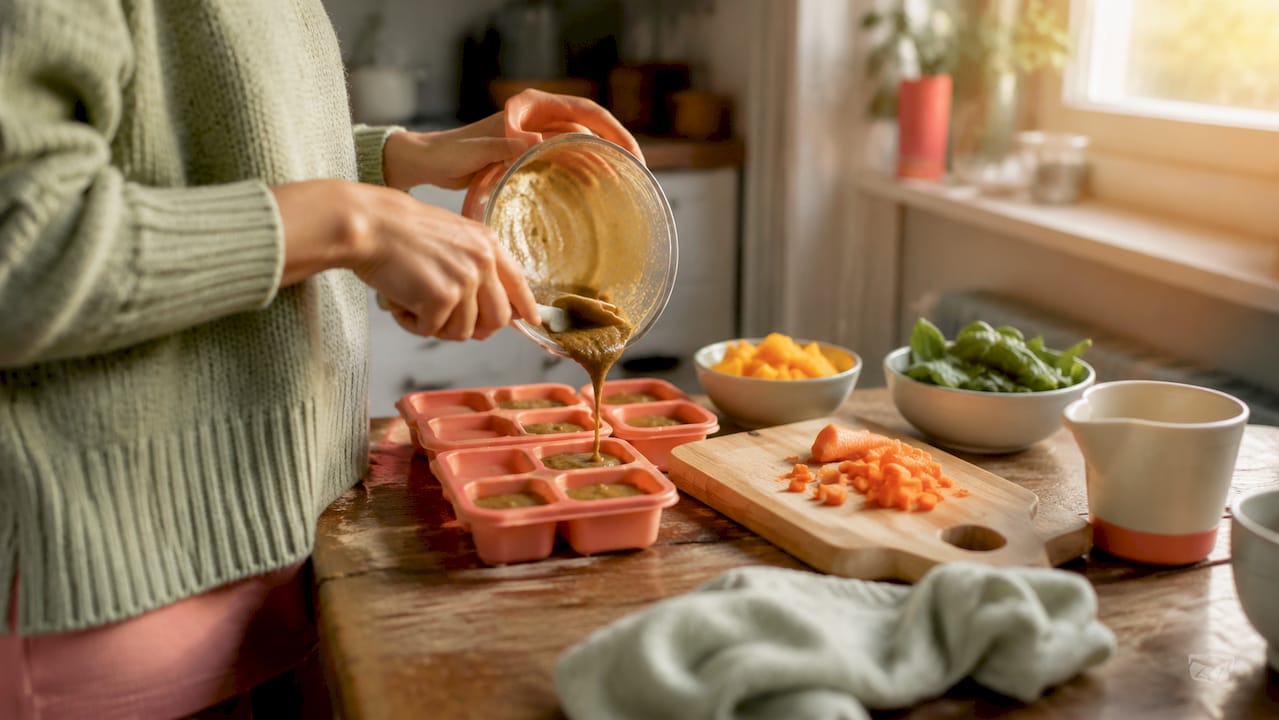
The time investment for weekly infant meal preparation is predictable and manageable. Initial planning takes 15–30 minutes, followed by roughly 2–3 hours of batch cooking once per week. That upfront effort replaces daily cooking sessions and removes the “what do I feed them now?” panic entirely.
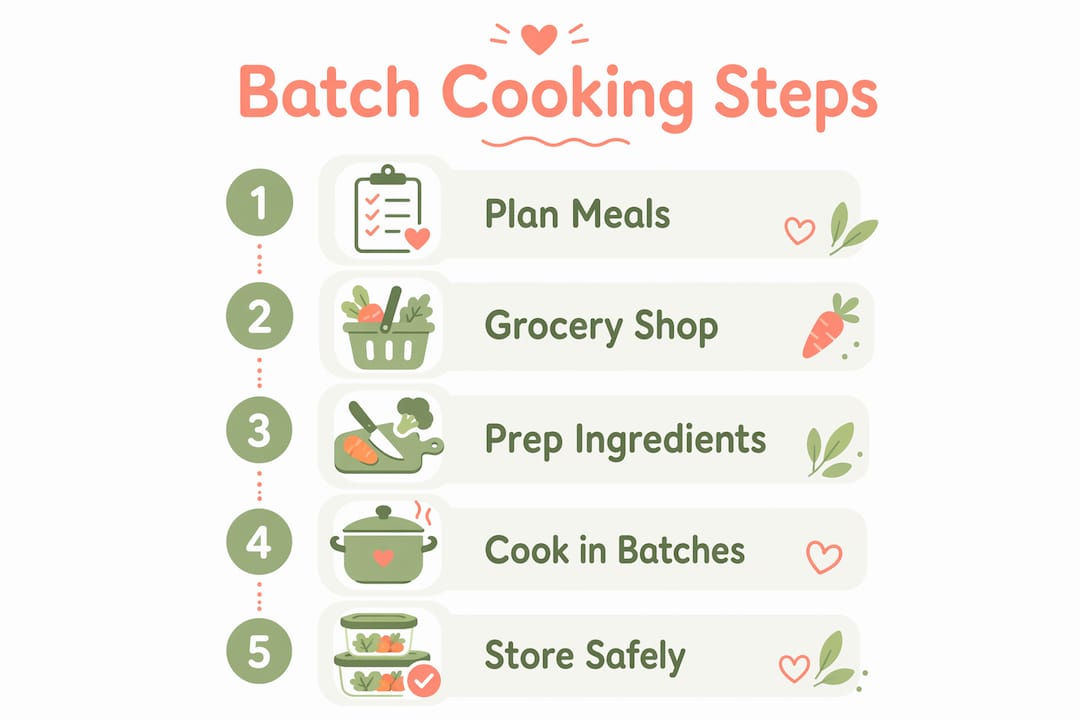
The most efficient approach is cooking base ingredients rather than complete meals. Batch cooking versatile staples like mashed sweet potato, cooked lentils, and soft-cooked oats lets you mix and match throughout the week without repeating the same meal twice. Think of it as building a baby meal pantry, not a fixed menu.
Step-by-step batch cooking method
- Plan your week on Sunday morning. Choose 3–4 base ingredients and 2–3 proteins. Write down which meals each will appear in.
- Cook grains and legumes first. Oats, lentils, and rice take the longest. Start these while you prep vegetables.
- Roast or steam vegetables in bulk. Sweet potato, butternut squash, and broccoli all roast together at 400°F. Puree or mash in batches.
- Portion into containers immediately. Do not leave food in large bowls. Divide into single-serving portions while everything is still warm.
- Label every container. Include the food name and the date it was made. This prevents waste and keeps you safe.
- Freeze what you will not use in three days. Refrigerate prepared foods for up to 3 days and freeze for up to three months.
Storage and tools reference
| Tool | Purpose | Key requirement |
|---|---|---|
| Silicone ice cube trays | Freezing puree portions | BPA-free, 1–2 oz capacity |
| Small glass containers | Fridge storage for 3-day meals | Airtight lids |
| Masking tape and marker | Labeling with food name and date | Write date clearly |
| Immersion blender | Pureeing cooked vegetables and proteins | Easy to clean |
| Steamer basket | Cooking vegetables without nutrient loss | Fits standard pot |
Pro Tip: When you cook dinner for the family, set aside a portion of the base ingredients before adding salt, spices, or sauces. Aligning baby prep with family meals cuts your kitchen time in half and models healthy eating from day one.
What does a sample weekly baby meal plan look like from 6 to 12 months?
A practical weekly baby nutrition plan looks different at six months than it does at ten months. The principle stays the same: offer variety, rotate textures, and follow your baby’s lead. Texture progression from smooth purees to finger foods supports motor skill development and builds confidence with self-feeding.
Here is a sample five-day rotation that works for babies in the 6–12 month range, with texture notes for each stage:
Breakfast options (rotate daily):
- Smooth oatmeal with mashed banana (6+ months)
- Soft scrambled egg with avocado pieces (8+ months, allergen introduction)
- Full-fat yogurt with pureed pear (8+ months)
- Whole grain toast fingers with nut butter thinly spread (10+ months)
Lunch options:
- Pureed lentil and sweet potato (6+ months)
- Soft-cooked broccoli florets with pureed chicken (8+ months)
- Mashed avocado with soft-cooked carrot sticks (8+ months)
- Soft pasta with pureed tomato and lentils (10+ months)
Dinner options:
- Pureed salmon with mashed sweet potato (6+ months)
- Soft-cooked chicken with pureed spinach and rice (8+ months)
- Lentil and vegetable stew, mashed or lumpy (10+ months)
Snack ideas (once or twice daily from 8+ months):
- Soft fruit pieces: banana, ripe mango, soft pear
- Rice cakes with hummus
- Soft-cooked vegetable sticks
Texture comparison by age
| Age | Texture | Example foods |
|---|---|---|
| 6–7 months | Smooth puree | Sweet potato puree, smooth oatmeal |
| 7–9 months | Mashed or lumpy | Mashed banana, soft-cooked lentils |
| 9–10 months | Soft pieces | Cooked carrot sticks, soft pasta |
| 10–12 months | Finger foods | Toast strips, soft fruit chunks |
Smooth should be a ramp, not a residence. The goal is to move through textures gradually, not to stay at purees longer than your baby needs.
How do you adapt your meal plan to your baby’s feeding cues?
Flexibility is the most critical feature of any good baby feeding schedule. Your plan is a guide, not a contract. Some days your baby will eat enthusiastically. Other days they will turn their head away from a food they loved yesterday. Both are normal.
Food refusal is the most common frustration parents face. Babies often need 10–15 exposures to a new food before they accept it. That number surprises most parents. Treat every refusal as sensory exploration, not rejection, and keep offering.
Here are practical strategies for adapting your weekly plan without losing your mind:
- Rotate, do not remove. If your baby refuses broccoli on Tuesday, put it back on the menu Thursday. Repeated exposure builds acceptance.
- Change the texture, not the food. A baby who rejects pureed peas may accept soft whole peas they can pick up themselves.
- Track allergen reactions in writing. Note the food, the amount, and any response within two hours. This record is useful for your pediatrician.
- Keep mealtimes positive. Avoid pressure, distraction, or force-feeding. Meal planning reduces decision fatigue, which frees your mental energy to focus on the interaction, not the logistics.
- Adjust portions to appetite, not the clock. Babies self-regulate intake naturally. A smaller meal on a teething day is not a failure.
Pro Tip: Keep a simple notes column in your weekly planner. One line per meal: what you offered, what they ate, and any reaction. After four weeks, patterns become obvious and planning gets much easier.
Key takeaways
A weekly baby meal plan works because it combines nutritional structure, allergen tracking, and batch cooking into one system that reduces daily stress and supports your baby’s development.
| Point | Details |
|---|---|
| Plan weekly, not daily | Spending 15–30 minutes planning once a week eliminates daily food decisions and reduces stress. |
| Prioritize iron every day | Include lentils, eggs, beans, or dark greens daily to support healthy infant development. |
| Batch cook base ingredients | Cooking versatile staples like sweet potato and lentils enables flexible, varied meals all week. |
| Introduce allergens early | Offer one new allergen at a time with a few days between each to track reactions safely. |
| Treat refusals as exploration | Babies may need up to 15 exposures before accepting a new food, so keep offering without pressure. |
Why I stopped trying to make every meal perfect
I spent the first few weeks of my daughter’s solid food journey treating every meal like a nutrition exam. I cross-referenced food groups, worried about iron absorption ratios, and felt genuine guilt when she pushed away the spinach puree I had spent twenty minutes making. It was exhausting, and it was completely unnecessary.
The shift happened when I stopped thinking about individual meals and started thinking about the week as a whole. If she had lentils on Monday and eggs on Wednesday and avocado on Friday, the week was nutritionally solid. One rejected meal did not undo that. That reframe changed everything.
Batch cooking was the other turning point. Spending two hours on a Sunday afternoon preparing a week of base ingredients felt like a big investment the first time. By week three, it felt like the most obvious thing in the world. I had food ready, I had options, and I was not standing over the stove at 5:30 p.m. trying to think of something soft enough for a seven-month-old.
The parents I see struggling most are the ones holding the plan too tightly. Your baby’s appetite will vary. Their texture preferences will shift. Some weeks they will eat everything; other weeks they will eat almost nothing. The plan is not there to control the meal. It is there to lower the temperature on the whole experience so you can actually enjoy sitting across from your kid at the table.
Celebrate the small wins. A new food accepted. A texture upgrade. A meal eaten with actual enthusiasm. Those moments are the point.
Ready to simplify your baby’s first foods?
Building a weekly baby meal plan from scratch takes time, especially when you are also managing allergen tracking, texture progression, and a baby who has opinions about everything. Yummy Bites App was built specifically for this moment in your parenting journey.
Yummy Bites App supports over a million families with 392 expert-developed recipes, real-time allergen tracking, and personalized meal plans built around your baby’s age and feeding stage. Every recipe comes with step-by-step serving instructions reviewed by licensed pediatric specialists. Whether you are just starting solids or moving toward finger foods, explore the recipe library to find meals your baby will actually eat. Visit Yummy Bites App to get your personalized plan today.
FAQ
When should I start a weekly baby meal plan?
Most babies are ready for solids around six months, when they can sit with support and show interest in food. Starting a weekly plan at the same time helps you introduce variety and allergens in an organized, trackable way.
How many new foods should I introduce each week?
Introduce one new food every two to three days. This spacing gives you enough time to watch for allergic reactions before adding the next new ingredient.
What are the best first foods for a 6-month-old?
Iron-rich purees like lentils, pureed chicken, and egg yolk are strong first choices, alongside soft-cooked vegetables like sweet potato and carrot. Pair iron-rich foods with a vitamin C source to improve absorption.
How long can I store homemade baby food?
Refrigerate prepared baby foods for up to 3 days and freeze portions for up to three months. Always label containers with the food name and preparation date.
What do I do if my baby refuses a food?
Keep offering it. Babies typically need 10–15 exposures before accepting a new food. Try changing the texture or pairing the refused food with something your baby already enjoys.
Recommended

This article is for general educational purposes only and is not a substitute for professional medical advice, diagnosis, or treatment. Always consult your pediatrician or a qualified healthcare provider about your baby's diet, allergies and readiness for solids.