What Is a Nutritional Balance Weekly Menu?
Discover what is a nutritional balance weekly menu. Plan meals effortlessly with the right food proportions for a healthier family diet.

A nutritional balance weekly menu is a structured meal plan that distributes the right proportions of food groups across seven days to meet your body’s dietary needs. The term “balanced diet weekly menu” is the standard phrase used by dietitians and public health bodies, and it sits at the heart of guides like the NHS Eatwell Guide and the World Health Organization’s healthy diet principles. For families, this kind of planning removes the daily guesswork and replaces it with a repeatable, flexible system that works for everyone at the table.
What are the food group proportions behind a balanced weekly menu?
A balanced weekly menu is built on five food groups, each contributing a specific share of your total intake. The NHS Eatwell Guide specifies that fruits and vegetables should make up over one-third of the diet, with starchy foods making up just over one-third. Protein foods, dairy, and healthy oils fill the remaining portions. That breakdown gives you a concrete target to aim for across the week, not just at a single meal.
The WHO defines balance as aligning energy intake with expenditure and maintaining adequate proportions of protein, fats, and carbohydrates. It outlines four core principles for healthy diets: adequacy, balance, moderation, and diversity. Each principle plays a distinct role. Adequacy means getting enough of every nutrient. Moderation means limiting saturated fats, free sugars, and sodium. Diversity means rotating foods so no single source dominates your week.
Here is how the five food groups map to weekly proportions:
- Fruits and vegetables: Over one-third of total food intake; aim for color variety across the week
- Starchy carbohydrates: Just over one-third; choose whole grain versions like brown rice, oats, and whole wheat bread
- Protein foods: Lean meats, fish, eggs, beans, and legumes; vary sources to cover different amino acid profiles
- Dairy or alternatives: Milk, yogurt, cheese, or fortified plant-based equivalents for calcium and vitamin D
- Oils and spreads: Small amounts of unsaturated fats like olive oil; limit saturated fats
| Food group | Weekly target | Practical example |
|---|---|---|
| Fruits and vegetables | Over one-third of intake | Spinach Monday, broccoli Wednesday, berries Friday |
| Starchy carbohydrates | Just over one-third | Brown rice, oats, whole wheat pasta |
| Protein foods | Moderate, varied | Chicken, lentils, eggs, canned salmon |
| Dairy or alternatives | Daily servings | Greek yogurt, fortified oat milk |
| Oils and spreads | Small amounts | Olive oil for cooking, avocado on toast |
Pro Tip: Focusing on main meal ingredients and fitting them into food group categories is more practical than tracking every nutrient. This approach naturally distributes nutrients adequately over time without requiring a spreadsheet.
How does MyPlate help build balanced meals within a weekly plan?
MyPlate is a visual plate model developed by the USDA that makes balanced meal portioning easy to apply at every meal. Half the plate holds fruits and vegetables, one quarter holds protein, and one quarter holds grains. That single image translates the NHS Eatwell Guide’s weekly proportions into something you can apply at dinner tonight.
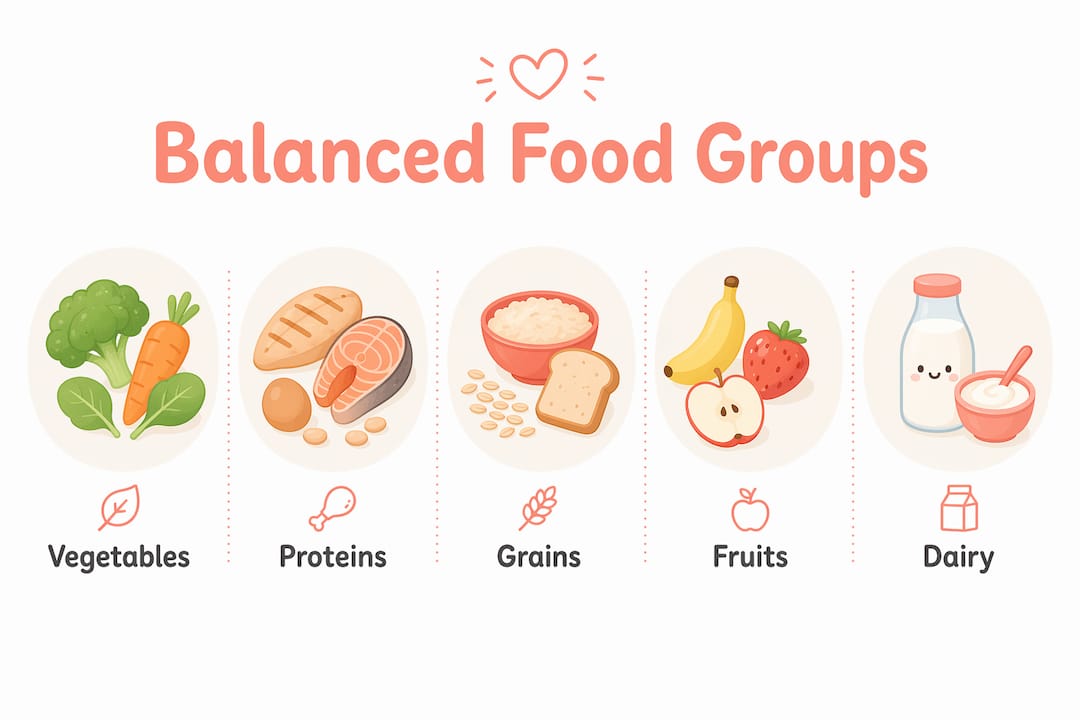
The real strength of MyPlate is flexibility. You do not need to hit perfect proportions at every single meal. A lunch that is heavier on grains can be balanced by a vegetable-rich dinner. Weekly nutritional balance averaged across meals is more realistic than chasing daily micro-level precision. That shift in thinking reduces stress and keeps the plan sustainable.
MyPlate also accommodates different dietary preferences without requiring a separate menu. A plant-based family member simply swaps the protein quarter from chicken to lentils or tofu. A gluten-free household replaces the grain quarter with quinoa or rice. The plate model stays the same. Only the ingredients change.
| Plate section | Standard option | Plant-based swap | Gluten-free swap |
|---|---|---|---|
| Half plate: vegetables/fruit | Roasted broccoli and tomatoes | Same | Same |
| Quarter plate: protein | Grilled chicken | Baked tofu or lentils | Same |
| Quarter plate: grains | Whole wheat pasta | Brown rice | Quinoa or rice |
| Side: dairy or alternative | Low-fat yogurt | Fortified soy yogurt | Same |
For families with mixed preferences, MyPlate works best as a template rather than a rigid rule. Cook the vegetables and grains in bulk, then let each person choose their protein. That one shift covers most dietary differences at the table without cooking three separate meals.
What strategies help plan a nutritional balance weekly menu effectively?
Meal prepping is the single most practical tool for maintaining a healthy weekly meal plan. Healthline recommends planning meals for the full week first, then choosing a prep method that fits your schedule. Two methods work best for families: batch cooking and component-based prep.

Batch cooking means preparing full meals in large quantities and portioning them into containers. A pot of lentil soup, a tray of roasted chicken thighs, and a sheet pan of mixed vegetables can cover four dinners. This method works well when your family eats similar meals.
Component-based prep means cooking individual ingredients separately and assembling meals throughout the week. Prepping master ingredients like grains, proteins, roasted vegetables, and sauces gives you the building blocks for dozens of combinations. Monday’s grain bowl becomes Tuesday’s wrap and Wednesday’s stir-fry. This method handles mixed dietary preferences without extra effort.
Here is a practical weekly prep routine:
- Saturday: Write the weekly menu and build your shopping list around it. Rotate two or three proteins and two starches to keep the list short.
- Sunday: Shop in the morning. Cook grains, roast a tray of vegetables, and prep two proteins in the afternoon.
- Weekday evenings: Assemble meals from prepped components in under 15 minutes.
- Midweek check: Refresh vegetables or add a fresh protein if needed.
- End of week: Use remaining components in a soup, frittata, or grain salad to reduce waste.
Rotating proteins and starches while varying vegetables is the core of an efficient nutritional meal prep guide. It shortens your shopping list, reduces cooking time, and still delivers the variety that nutritional guidelines require.
Pro Tip: Scheduling grocery shopping and cooking on the same day each week builds a routine that reduces last-minute decisions. Consistent prep schedules free mental space and make following a balanced weekly menu sustainable long term.
How does a balanced weekly menu accommodate different dietary needs?
The WHO’s diversity principle encourages a wide variety of nutritious foods and supports shifting toward more plant-based protein sources. That principle is not just about health outcomes. It also makes room for the different preferences and restrictions that real families bring to the table.
Component-based meal prep is the most practical solution for mixed-preference households. When proteins, grains, and vegetables are prepped separately, each family member can build a plate that fits their needs. A child with a dairy allergy skips the cheese. A vegetarian parent adds chickpeas instead of chicken. The weekly menu stays balanced for everyone without requiring separate cooking sessions.
Common substitutions that preserve nutritional balance:
- Gluten-free: Replace wheat-based grains with quinoa, rice, buckwheat, or certified gluten-free oats
- Vegetarian or vegan: Swap meat proteins for lentils, black beans, tofu, tempeh, or edamame
- Dairy-free: Use fortified oat milk, almond milk, or soy yogurt to maintain calcium intake
- Nut allergy: Replace nut-based snacks with seeds like pumpkin or sunflower seeds for healthy fats
- Iron needs: Prioritize iron-rich first foods like lentils, fortified cereals, and dark leafy greens
Moderation within the weekly plan matters too. Less nutritious components like processed snacks or high-sugar desserts do not need to be eliminated. They fit within the weekly framework when the majority of meals follow the food group proportions. The goal is a pattern, not perfection.
Pro Tip: When managing multiple dietary needs in one household, label prepped components clearly and store them separately. This makes assembly fast and reduces the chance of cross-contact for allergy-sensitive family members.
Key takeaways
A nutritional balance weekly menu works by spreading appropriate food group proportions across seven days, using frameworks like the NHS Eatwell Guide and WHO principles, and supported by practical strategies like component-based meal prep.
| Point | Details |
|---|---|
| Weekly balance over daily perfection | Aim for nutrient balance averaged across the week, not at every single meal. |
| Five food groups as your framework | Follow NHS Eatwell Guide proportions: over one-third fruits and vegetables, over one-third starchy carbs, plus protein, dairy, and oils. |
| MyPlate simplifies portioning | Use the half-plate vegetables, quarter-plate protein, quarter-plate grains model as a daily assembly guide. |
| Component prep supports variety | Prep proteins, grains, and vegetables separately to build varied meals and accommodate different dietary needs. |
| Routine scheduling sustains the plan | Set a weekly shopping and cooking day to reduce decision fatigue and keep the menu consistent. |
Why I think most families are closer to balance than they realize
Hello from the Yummy Bites team. After years of working with families on meal planning, the most common thing I hear is “we’re terrible at eating well.” And almost every time, that’s not actually true.
Most families already rotate a handful of proteins. They already buy vegetables. They already eat grains at most meals. What they’re missing is not the food. It’s the framework to see what they’re already doing as a system, and the confidence to build on it.
The NHS Eatwell Guide and WHO principles are not designed to make eating complicated. They’re designed to give you a target that’s achievable over a week, not a single meal. That’s a meaningful distinction. A Friday pizza does not undo a week of varied, vegetable-rich dinners. A weekly meal planner for health is not a contract. It’s a compass.
The families I’ve seen struggle most are the ones chasing daily perfection. They burn out by Wednesday and abandon the plan entirely. The families who succeed treat the weekly menu as a flexible guide. They prep components on Sunday, mix and match through the week, and adjust without guilt when life happens.
My honest advice: start with two proteins, two starches, and three vegetables. Prep them on Sunday. Build from there. You do not need 392 recipes to eat well. You need a repeatable system that fits your actual life.
Yummy Bites App: recipes and meal planning for the whole family
Building a balanced weekly menu gets easier when you have the right tools behind you. Yummy Bites App supports over a million families with a library of 392 recipes, a built-in meal planner, and step-by-step guidance from pediatric specialists and licensed therapists.
Whether you’re introducing solids to a baby or planning nutritious meals for the whole household, the baby meal planner inside Yummy Bites App gives you a practical starting point. Every recipe is designed with nutritional balance in mind, and the allergen tracking feature makes accommodating dietary needs straightforward. For families ready to put a balanced weekly menu into practice, the foods library is a strong place to begin.
FAQ
What is a nutritional balance weekly menu?
A nutritional balance weekly menu is a seven-day meal plan that distributes food groups in appropriate proportions to meet dietary needs. It follows frameworks like the NHS Eatwell Guide and WHO healthy diet principles, emphasizing adequacy, balance, moderation, and diversity.
How do you plan nutritious meals for a full week?
Start by choosing two or three rotating proteins and starches, then vary your vegetables across the week. Prep components in bulk on a set day, and use the MyPlate model to assemble balanced portions at each meal.
Does every meal need to be perfectly balanced?
No. Weekly balance averaged across all meals is more realistic and sustainable than hitting perfect proportions at every sitting. A heavier grain meal at lunch can be offset by a vegetable-rich dinner.
How does meal prep support a balanced diet weekly menu?
Meal prepping reduces decision fatigue and reliance on less nutritious options by having ready-to-assemble ingredients on hand. Component-based prep, where proteins, grains, and vegetables are stored separately, adds flexibility for different dietary needs within the same household.
Can a balanced weekly menu work for families with different dietary preferences?
Yes. Component-based prep and the MyPlate model both support substitutions without rebuilding the entire menu. Swapping chicken for lentils or wheat pasta for quinoa preserves the nutritional structure while accommodating vegetarian, gluten-free, or allergy-related needs. The weekly baby meal plan guide from Yummy Bites App shows how this works in practice for households with babies and adults eating together.
Recommended

This article is for general educational purposes only and is not a substitute for professional medical advice, diagnosis, or treatment. Always consult your pediatrician or a qualified healthcare provider about your baby's diet, allergies and readiness for solids.