Toddler Feeding Schedule: A New Parent's Guide
Wondering what is toddler feeding schedule? Discover a simple guide for balanced meals and snacks that support your child's health.

A toddler feeding schedule is a structured daily routine of three balanced meals and two to three healthy snacks, spaced about every 2–3 hours to meet your child’s energy needs and support healthy appetite development. This framework comes directly from guidance by the CDC and Nemours KidsHealth, two of the most trusted names in pediatric nutrition. If you’ve been wondering what is toddler feeding schedule and whether you’re doing it right, the answer is simpler than most parents expect. Your toddler has a small stomach and a big need for consistent fuel. A predictable routine gives them both.
What is a toddler feeding schedule and why does it matter?
A toddler feeding schedule is the recognized term pediatric dietitians and organizations like the CDC use to describe a structured pattern of meals and snacks every 2–3 hours, roughly 5–6 feeding times per day. That frequency matches toddlers’ small stomach size and high activity level, keeping energy stable throughout the day. Adults can go 4–5 hours between meals without issue. Toddlers cannot.
The CDC and Nemours KidsHealth both recommend this approach because it prevents the blood sugar dips that make toddlers irritable and unfocused. Consistent timing also teaches your child to recognize hunger and fullness cues, which is a skill that pays off for years. Without a schedule, many toddlers fall into constant grazing, which disrupts hunger regulation and makes mealtimes feel like a battle.
How often and when should toddlers eat?
The feeding frequency for toddlers is 5–6 times daily, with no more than 2–3 hours between each occasion. That rhythm keeps energy steady without encouraging constant snacking. Huckleberry, a pediatric sleep and feeding resource, recommends anchoring meal and snack times to your toddler’s wake time and nap schedule rather than the clock alone. That approach makes the routine feel natural instead of rigid.
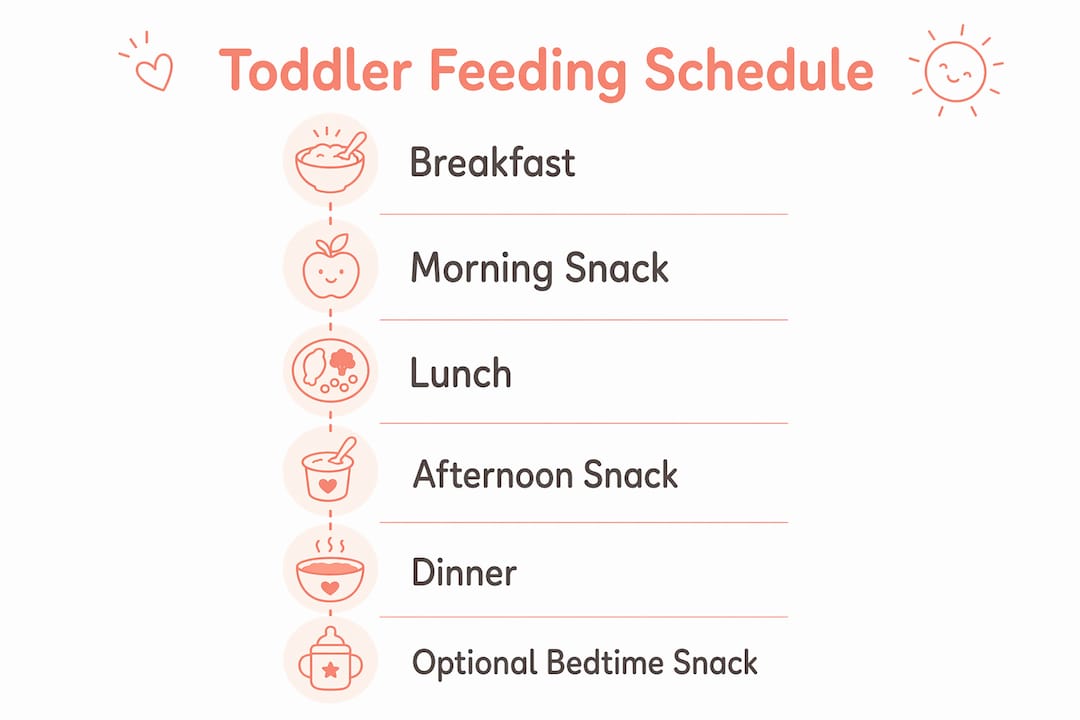
A realistic daily schedule looks like this:
- Breakfast shortly after waking, typically 7:00–8:00 a.m.
- Mid-morning snack around 9:30–10:00 a.m., before the morning nap or activity window
- Lunch around 12:00–12:30 p.m., after the morning nap if your toddler still takes one
- Afternoon snack around 3:00–3:30 p.m., mid-afternoon to bridge the gap to dinner
- Dinner around 5:30–6:00 p.m., early enough to avoid overtired eating
Some toddlers, especially younger ones around 12–18 months, may need a small sixth feeding before bed if dinner is early and wake time is late. That is perfectly normal and not a sign of a problem.
Pro Tip: Set snack times on your phone as recurring reminders for the first two weeks. Once the rhythm is established, your toddler’s body clock will start signaling hunger right on schedule.
What should a toddler feeding schedule include?
A well-built feeding schedule for toddlers is not just about timing. What goes on the plate matters just as much. Toddlers need 1,000–1,400 calories per day, spread across meals and snacks, with a focus on nutrient-dense foods rather than volume.
Each meal should include foods from multiple groups:
- Fruits and vegetables: Fresh, frozen, or cooked. Aim for color variety across the day.
- Grains: Oatmeal, whole grain bread, rice, or pasta. These provide sustained energy.
- Proteins: Eggs, beans, lentils, soft-cooked meat, or fish. Iron-rich options are especially important.
- Dairy or alternatives: Full-fat yogurt, cheese, or fortified plant-based options.
- Iron-rich foods: Fortified cereals, red meat, and legumes. Iron supports brain development and is commonly under-consumed in toddlers.
Snacks follow the same logic. A snack is a mini-meal, not a treat. Pair a carbohydrate with a protein or fat: apple slices with almond butter, whole grain crackers with cheese, or hummus with soft vegetable strips.
Milk guidelines every caregiver should know

Milk is where many parents accidentally throw off the schedule. Toddlers aged 12–24 months should have no more than 16 ounces of milk per day. Older toddlers can have 16–24 ounces daily. Excess milk fills small stomachs and suppresses appetite for solid foods, which limits nutritional variety at the exact stage when variety matters most.
| Age | Max daily milk | Why it matters |
|---|---|---|
| 12–24 months | 16 oz | Protects appetite for iron-rich solids |
| 2–3 years | 16–24 oz | Supports calcium without crowding meals |
Pro Tip: Offer milk with or after meals, not before. A cup of milk before lunch is the fastest way to guarantee your toddler pushes the plate away.
For a deeper look at portion sizing by food group, the vegetable portion guide on the Yummy Bites App blog breaks down age-appropriate amounts clearly.
How to build a flexible schedule around naps and wake windows
The most practical way to schedule toddler meals is to use wake time as your anchor point, not the clock. A toddler who wakes at 6:30 a.m. needs breakfast by 7:00 a.m. A toddler who wakes at 8:00 a.m. shifts everything forward by 90 minutes. The intervals stay the same. Only the start time changes.
Snacks placed predictably mid-morning and mid-afternoon reduce “hangry” behavior and improve cooperation at mealtimes. That is not anecdotal. Huckleberry’s feeding guidance specifically identifies consistent snack placement as one of the most effective tools for reducing mealtime conflict.
Here is how the schedule shifts as toddlers drop naps and extend their wake windows:
| Age / nap stage | Wake window | Suggested meal timing |
|---|---|---|
| 12–18 months (2 naps) | 3–4 hours | Breakfast, snack, lunch, nap, snack, dinner |
| 18–24 months (1 nap) | 5–6 hours | Breakfast, snack, lunch, nap, snack, dinner |
| 2–3 years (no nap) | Full day | Breakfast, snack, lunch, snack, dinner |
The key shift as toddlers drop naps is that the afternoon snack becomes more important, not less. A longer afternoon wake window without a snack leads to overtired, overhungry toddlers at dinner, which is a recipe for mealtime chaos.
Pro Tip: If your toddler is transitioning away from naps, move the afternoon snack 30 minutes earlier to catch hunger before it peaks. A small, satisfying snack at 2:30 p.m. prevents the 5:00 p.m. meltdown.
A weekly meal plan can help you map these timing shifts across the full week, especially during nap transitions.
Common challenges when following a toddler feeding schedule
Toddlers’ appetite varies day to day, and that is completely normal. Nemours KidsHealth confirms that toddlers are wired to respond to their own hunger and fullness signals, which means some days they eat well and some days they barely touch a meal. Your job is to offer food consistently. Their job is to decide how much to eat.
The most common caregiver mistakes that undermine a good schedule include:
- Pressuring toddlers to finish their plate. This overrides fullness cues and creates negative associations with food.
- Offering food outside scheduled times when a meal is skipped. This teaches toddlers that refusing a meal gets them a snack on demand.
- Relying on milk or juice to compensate for a skipped solid food meal. Both fill the stomach without delivering the variety toddlers need.
- Introducing new foods only once. Research shows toddlers may need 10–15 exposures to a new food before accepting it. Offer it repeatedly without pressure.
- Skipping snacks when the toddler “wasn’t hungry at lunch.” Hunger cycles reset quickly. A skipped lunch does not mean a skipped snack.
Allowing toddlers to self-regulate within a consistent schedule reduces mealtime battles and builds long-term healthy eating habits. The schedule holds the structure. You hold the patience. Your toddler holds the spoon.
Offering a variety of foods from all food groups at every meal and snack supports healthy growth and taste development over time. Consistency is the strategy, not perfection at any single meal.
Key Takeaways
A toddler feeding schedule built on three meals and two to three snacks, spaced every 2–3 hours, is the most effective way to support healthy appetite regulation and consistent nutrition during the toddler years.
| Point | Details |
|---|---|
| Feed every 2–3 hours | Toddlers need 5–6 feeding occasions daily to match their small stomachs and high energy output. |
| Anchor timing to wake time | Use your toddler’s wake time, not the clock, to set meal and snack intervals each day. |
| Limit milk to protect appetite | Keep milk at 16 oz/day for ages 12–24 months so solid foods remain the nutritional priority. |
| Snacks are mini-meals | Pair a carb with a protein or fat at every snack to provide lasting energy between meals. |
| Let toddlers self-regulate | Offer food consistently on schedule and allow your toddler to decide how much to eat. |
What I’ve learned from watching toddler feeding schedules actually work
After years of working with families navigating the toddler feeding stage, the pattern I see most often is this: parents build a solid schedule on paper, then abandon it after three difficult days. That is the wrong call.
The first week of any new feeding routine is the hardest. Toddlers test boundaries, refuse foods they ate last week, and eat nothing at lunch then demand crackers at 4:00 p.m. That is not the schedule failing. That is a toddler being a toddler.
What I have seen work, consistently, is caregivers who hold the schedule loosely but hold it. They offer the snack at 3:00 p.m. whether or not lunch was a disaster. They sit at the table with their toddler and eat something themselves. They do not negotiate, bribe, or panic. Over two to three weeks, the toddler’s appetite starts to organize around the rhythm. Mealtimes get calmer. The grazing stops.
The other thing I would tell every new parent: your toddler is not being difficult on purpose. Their appetite is genuinely unpredictable at this stage. A flexible structure gives them the container they need to eventually find their own hunger cues. That is the whole point of the schedule. It is not about control. It is about giving your child a reliable rhythm to grow into.
Yummy Bites App: meal planning made simple for toddlers
Building a toddler feeding schedule is easier when you have the right tools in your corner. Yummy Bites App supports over a million families with 392 age-appropriate recipes, step-by-step serving instructions, and real-time allergen tracking, all developed with licensed pediatric specialists.
Whether you are introducing first foods or planning a full week of toddler meals and snacks, the Yummy Bites meal planner takes the guesswork out of what to serve and when. The foods library helps you build nutritional variety into every feeding window, from breakfast through the afternoon snack. For busy caregivers who want practical, pediatrician-aligned guidance without the overwhelm, Yummy Bites App is a genuinely useful next step.
FAQ
What is a toddler feeding schedule?
A toddler feeding schedule is a structured daily routine of three meals and two to three snacks, spaced every 2–3 hours, to meet toddlers’ energy needs and support healthy appetite regulation.
How many times a day should a toddler eat?
The CDC recommends toddlers eat or drink something every 2–3 hours, which adds up to roughly 5–6 feeding occasions per day across meals and snacks.
What foods should be included in a toddler’s meals?
Each meal should include foods from multiple groups: fruits, vegetables, grains, proteins, and dairy or alternatives. Iron-rich foods like legumes, fortified cereals, and soft-cooked meat are especially important for toddlers.
How much milk should a toddler drink per day?
Toddlers aged 12–24 months should have no more than 16 ounces of milk daily. Older toddlers can have 16–24 ounces. Excess milk reduces appetite for solid foods and limits nutritional variety.
What should I do if my toddler skips a meal?
Hold the schedule and offer the next snack or meal at the regular time. Avoid offering food outside scheduled times, as this teaches toddlers that skipping a meal results in on-demand snacking.
Recommended

This article is for general educational purposes only and is not a substitute for professional medical advice, diagnosis, or treatment. Always consult your pediatrician or a qualified healthcare provider about your baby's diet, allergies and readiness for solids.