Vegetable Portion for Infants: A New Parent's Guide
Learn what is vegetable portion infant and how to serve the right amount for healthy growth. Master proper feeding for your baby today!
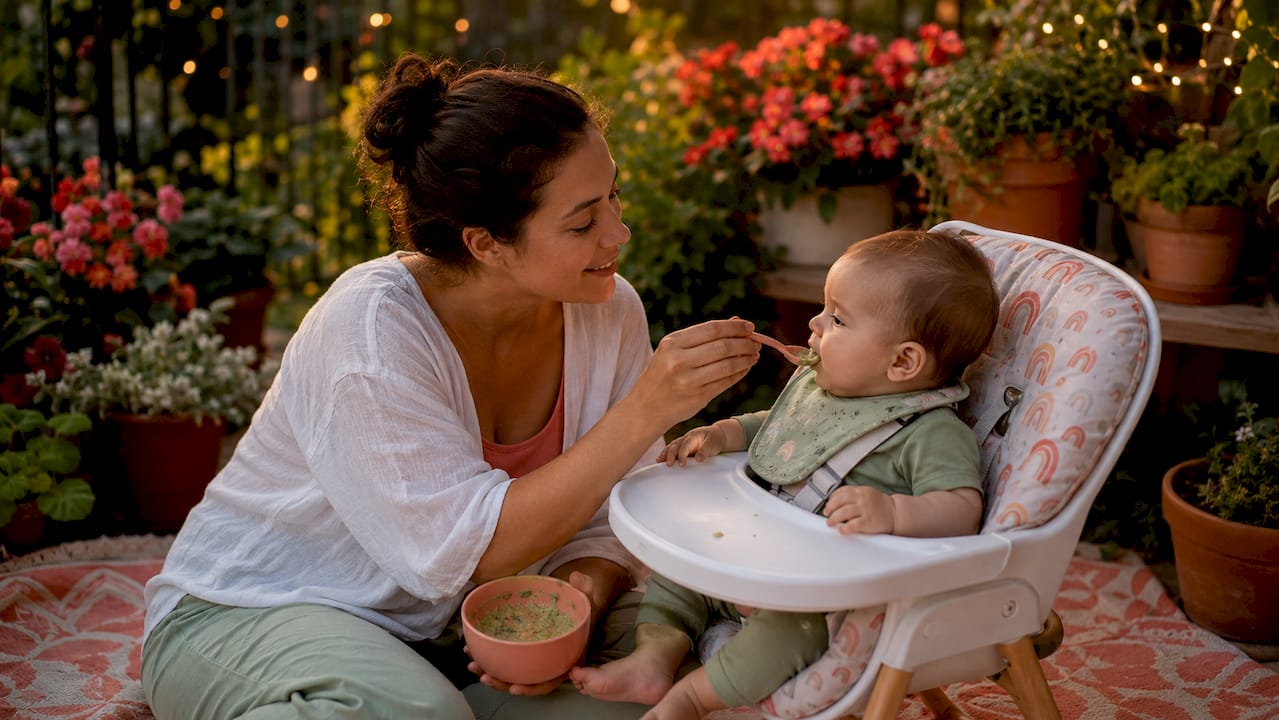
A vegetable portion for an infant is the age-appropriate amount of vegetable food offered at each meal, typically measured in tablespoons and scaled to your baby’s developmental stage. Pediatric nutrition guidelines use the term “infant vegetable serving” to describe this unit. Getting the amount right matters more than most parents expect. Too little and your baby misses key nutrients during a critical growth window. Too much too fast can overwhelm a new eater and create negative associations with food. This guide covers standard portion sizes by age, how texture changes the equation, which vegetables work best, and how to read your baby’s cues so every meal feels manageable.
What is vegetable portion for infants by age?
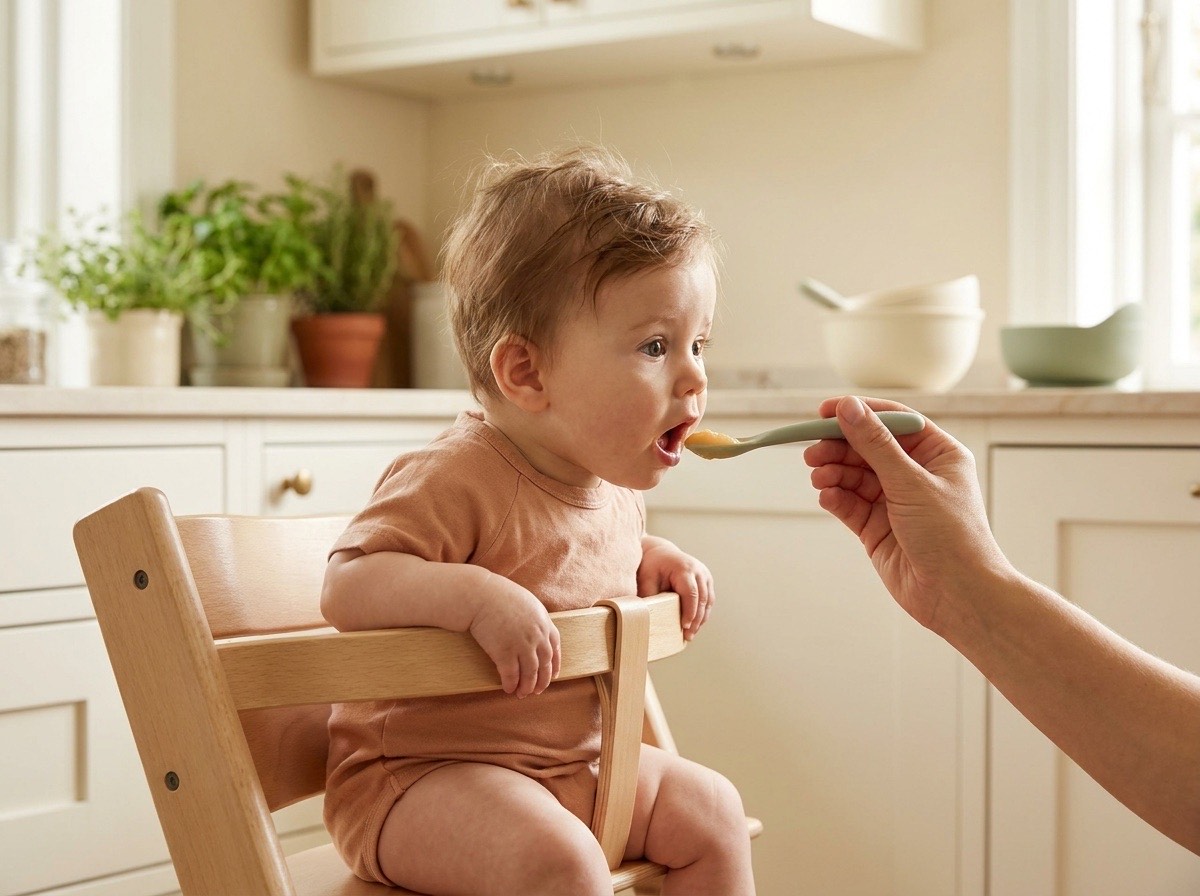
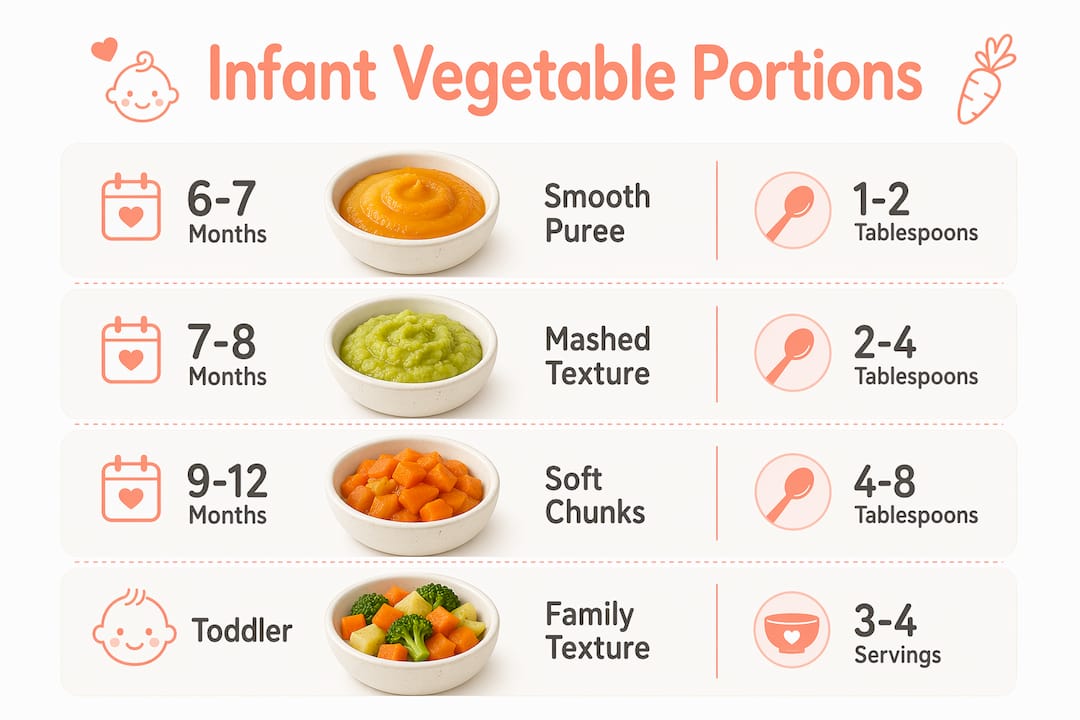
Vegetable portion size for infants follows a clear progression tied to age and developmental readiness. Starting with 1–2 tablespoons of vegetable puree is the standard recommendation from the Academy of Nutrition and Dietetics for babies just beginning solids. That small amount is intentional. Your baby’s digestive system is brand new to anything other than breast milk or formula, and the goal at first is exposure, not volume.
By 6–8 months, most babies can handle 2–4 tablespoons per day of vegetable puree, according to BabyCenter’s age-specific visual guide. That total can be split across one or two small meals. By 8–12 months, daily vegetable intake typically grows to 4–8 tablespoons, spread across two or three meals. The American Academy of Pediatrics notes that about 4 ounces of solids per meal is common at this stage, with vegetables making up a meaningful portion of that total.
| Age | Vegetable portion per day | Texture |
|---|---|---|
| 6–7 months | 1–2 tablespoons | Smooth puree |
| 7–8 months | 2–4 tablespoons | Thin to thick puree |
| 8–10 months | 4–6 tablespoons | Mashed or lumpy |
| 10–12 months | 6–8 tablespoons | Soft diced pieces |
| 12–24 months | 3–4 tablespoons per serving, 2–3 servings daily | Soft chopped |
Kaiser Permanente patient education materials define one toddler vegetable serving as 3–4 tablespoons of cooked or mashed vegetables, with 2–3 servings recommended per day by 12–24 months. That benchmark gives you a useful target as your baby approaches their first birthday.
Pro Tip: Use a standard measuring tablespoon from your kitchen drawer rather than estimating. A “spoonful” can mean very different things depending on the spoon, and consistency helps you track how your baby’s appetite grows over time.
How does texture affect vegetable portion size?
Texture and portion size are linked more closely than most parents realize. A smooth puree takes up less volume in a spoon than a mashed or diced vegetable, so the same tablespoon measurement actually delivers different amounts of food as texture changes. The progression from purees to soft mashed to finely diced pieces between 6 and 12 months is a well-established framework in pediatric nutrition, and each stage requires a slight recalibration of how much you offer.
The AAP’s feeding safety guidelines are clear: softness and appropriate size are the two non-negotiable factors for reducing choking risk. A piece of cooked carrot should crush easily between your thumb and forefinger before it goes on your baby’s tray. If it doesn’t, it’s not ready. Understanding why soft food matters for infant safety is the foundation of every texture decision you make.
Here is how to approach each texture stage safely:
- Smooth puree (6–7 months): Blend cooked vegetables until completely lump-free. Start with 1–2 tablespoons and offer from a soft-tipped spoon. Keep the same texture for several meals before increasing the amount.
- Thick puree (7–8 months): Reduce blending time slightly to leave a thicker consistency. Your baby’s tongue thrust reflex is fading, and thicker textures help build oral motor skills.
- Mashed (8–10 months): Fork-mash cooked vegetables rather than blending. Small soft lumps are fine. Portions can increase to 4–6 tablespoons daily as your baby shows interest.
- Soft diced (10–12 months): Cut cooked vegetables into pieces no larger than a pea. This size supports pincer grip development and reduces choking risk.
Pro Tip: Keep texture consistent for at least three to five meals before moving to the next stage. Changing texture and increasing portion at the same time makes it harder to know which change your baby is reacting to.
What vegetables are best suited for infants?
The best vegetables for infants share three qualities: they cook soft easily, they have a mild flavor, and they carry strong nutritional value. Variety in vegetable exposure early in life helps prevent picky eating and covers the vitamins and minerals babies need during rapid growth, according to CDC infant nutrition guidance. Rotating through different colors and types is more valuable than sticking to one or two favorites.
Strong starting options include:
- Sweet potato: Naturally sweet, easy to puree, and rich in beta-carotene and vitamin A.
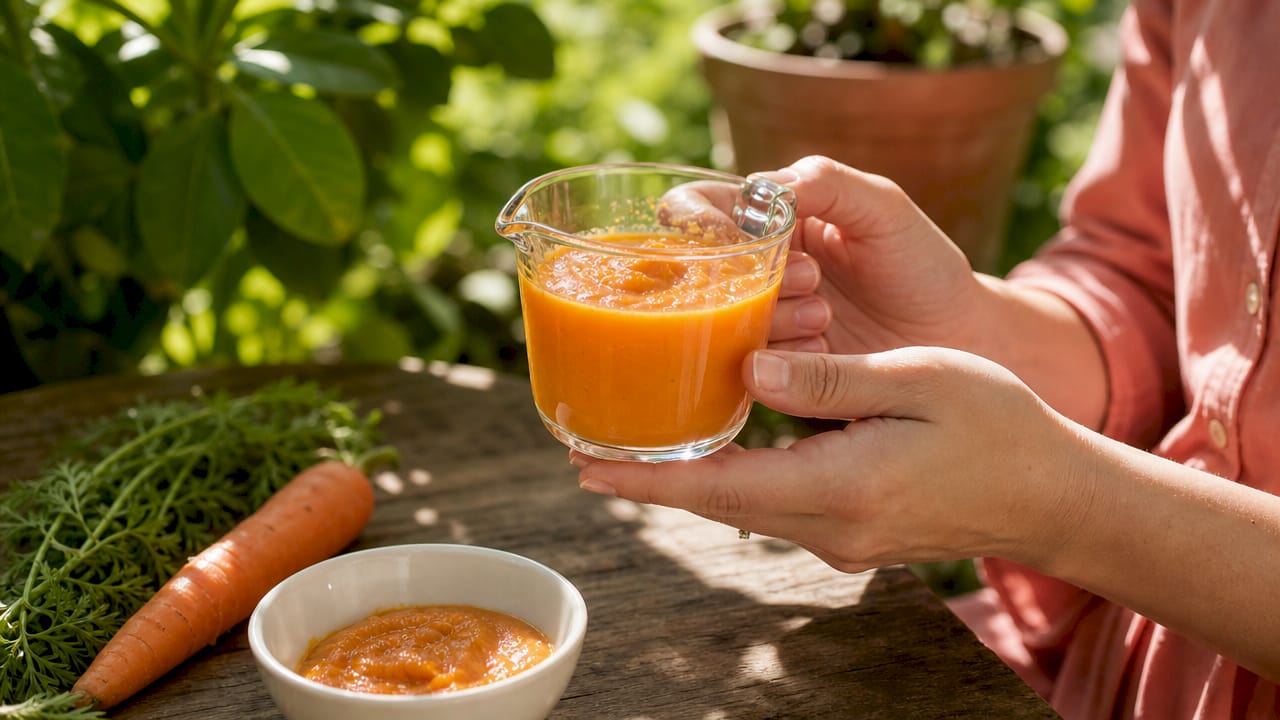
- Carrots: Mild flavor, smooth puree texture, and high in antioxidants. Cook until very soft before pureeing or mashing.
- Butternut squash: Creamy texture when pureed and a good source of potassium and vitamin C.
- Peas: Higher in protein than most vegetables, with a naturally sweet flavor. Blend well and strain for younger babies to remove skins.
- Green beans: Mild and easy to puree. A good source of fiber and vitamin K.
- Zucchini: Cooks quickly, has a neutral flavor, and blends smoothly with other vegetables.
Avoid adding salt, butter, or seasoning blends to infant vegetables. A baby’s kidneys are not equipped to process high sodium levels. Skip canned vegetables with added salt and heavily processed baby food pouches as a primary source. Fresh or frozen vegetables with no additives are the better choice. You can browse a detailed foods library with preparation guidance for each vegetable if you want a structured reference.
How can parents read hunger and fullness cues when serving vegetables?
Portion guidelines give you a starting point, but your baby’s cues tell you the actual amount to serve on any given day. Responsive feeding means adjusting portions based on what your baby signals, not what the chart says. Appetite varies day to day, especially during growth spurts or teething.
Use this sequence to guide each meal:
- Start small. Offer 1–2 tablespoons of vegetable at the start of a meal, regardless of age. This prevents waste and avoids pressure.
- Watch for hunger signals. Leaning forward, opening the mouth when a spoon approaches, and reaching for food are clear signs your baby wants more.
- Watch for fullness signals. Turning the head away, closing the mouth, pushing the spoon back, or losing interest in the food are signs to stop.
- Pause before offering more. Give your baby 30 seconds between spoonfuls. Babies process fullness more slowly than adults.
- Never pressure a clean bowl. Finishing every bite is not the goal. Building a positive relationship with food is.
Starting small and following your baby’s appetite avoids overfeeding and builds positive eating habits that carry into toddlerhood. A baby who learns to self-regulate early is less likely to struggle with food acceptance later.
Practical tips for planning infant vegetable portions
Meal planning for infant vegetable servings does not need to be complicated. A few consistent habits make the process much easier and reduce the daily decision fatigue that comes with early feeding. The weekly baby meal plan guide from Yummy Bites App is a useful starting point for building a realistic routine.
- Batch cook and freeze purees. Cook a large batch of sweet potato, peas, or carrots on the weekend, then freeze in ice cube trays. Each cube is roughly 1 tablespoon, which makes portioning fast and accurate. Batch cooking and freezing simplifies meal prep and helps parents maintain appropriate portion sizes consistently.
- Use a standard tablespoon. Visual estimates drift over time. A measuring spoon keeps portions consistent and helps you track growth in appetite week by week.
- Pair vegetables with other food groups. Combine a vegetable puree with a grain or a protein source to create a balanced meal. Pea puree mixed with a small amount of pureed chicken is a good example for babies 8 months and older.
- Rotate vegetables weekly. Offering the same vegetable every day limits nutrient variety and can reduce acceptance of new flavors. Aim to introduce a new vegetable every three to five days.
- Avoid adult-sized portions. A common mistake is scaling up too quickly because a baby seems hungry. Increase portions gradually, by 1–2 tablespoons at a time, and observe the response over several meals.
| Common mistake | Better approach |
|---|---|
| Adding salt or seasoning | Serve plain, unseasoned vegetables |
| Jumping to diced too early | Follow texture stages by developmental readiness |
| Offering the same vegetable daily | Rotate varieties every 3–5 days |
| Scaling to adult portions quickly | Increase by 1–2 tablespoons at a time |
Key Takeaways
Infant vegetable portions start at 1–2 tablespoons of smooth puree and grow to 6–8 tablespoons daily by 12 months, with texture and responsive feeding guiding every increase.
| Point | Details |
|---|---|
| Start with 1–2 tablespoons | Begin with smooth puree and increase only when your baby shows consistent interest. |
| Match texture to developmental stage | Progress from smooth puree to mashed to soft diced between 6 and 12 months. |
| Follow hunger and fullness cues | Responsive feeding matters more than hitting an exact daily tablespoon target. |
| Rotate vegetable variety | Offering different colors and types covers nutrient needs and builds a wider palate. |
| Avoid salt and adult-sized portions | Keep vegetables plain and increase amounts gradually to protect kidney health and avoid overfeeding. |
What I’ve learned about vegetable portions that most guides skip
Most articles on infant vegetable servings focus on the numbers. The tablespoons, the ounces, the age brackets. Those numbers matter, but they create a false sense that feeding is a math problem with a correct answer. In my experience, the parents who struggle most are the ones who fixate on hitting the exact daily total rather than watching their baby.
The insight that changed how I think about this: smooth should be a ramp, not a residence. Purees are a starting point, not a destination. I’ve seen parents keep babies on smooth purees well past 10 months because the baby “likes them.” That comfort comes at a cost. Delayed texture progression is one of the most common contributors to feeding difficulties in toddlerhood, and it’s almost always unintentional.
The other thing I’d push back on is the idea that a baby refusing a vegetable means they dislike it. Research on flavor exposure suggests babies need to encounter a new food many times before accepting it. One rejection is data, not a verdict. Keep offering. Keep rotating. The variety you build now is the palate your child carries for years.
And one practical note that rarely makes it into guides: some vegetables, particularly peas and beets, can change stool color. Color changes in stool after introducing new vegetables are usually normal and not a reason to reduce portions, unless your baby shows signs of digestive discomfort. Knowing this in advance saves a lot of unnecessary worry.
Yummy Bites App has the vegetable recipes and plans you need
Knowing the right portion size is one thing. Having a library of age-appropriate vegetable recipes ready to go is another. Yummy Bites App supports over a million families with 392 pediatric specialist-backed recipes, step-by-step serving instructions, and meal plans built around your baby’s exact feeding stage.
The baby recipes and meal planner inside Yummy Bites App takes the guesswork out of what to serve, how much to prepare, and how to progress textures safely. Every recipe is calibrated to developmental stage, so you always know the right vegetable portion size for your baby’s age. If you want a structured, expert-backed plan rather than piecing together advice from multiple sources, Yummy Bites App is built exactly for that.
FAQ
How many tablespoons of vegetables should a 6-month-old eat?
A 6-month-old starting solids should begin with 1–2 tablespoons of smooth vegetable puree per day, increasing gradually based on hunger cues.
Should infants eat vegetables at every meal?
Vegetables do not need to appear at every meal in early infancy. One to two small vegetable servings per day is appropriate for babies 6–8 months old, with frequency increasing as solid food intake grows.
What are the best first vegetables for infants?
Sweet potato, carrots, butternut squash, peas, and green beans are among the best vegetables for infants because they cook soft easily, puree smoothly, and carry strong nutritional value.
Can I give my baby too many vegetables?
Overfeeding vegetables is uncommon in early infancy, but scaling up too quickly can cause digestive discomfort. Increase portions by 1–2 tablespoons at a time and watch for fullness cues before offering more.
When should I move from pureed to mashed vegetables?
Most babies are ready for mashed vegetables around 8–9 months, when they show better tongue control and can handle soft lumps. Follow your baby’s developmental readiness rather than a strict calendar date.
Recommended

This article is for general educational purposes only and is not a substitute for professional medical advice, diagnosis, or treatment. Always consult your pediatrician or a qualified healthcare provider about your baby's diet, allergies and readiness for solids.