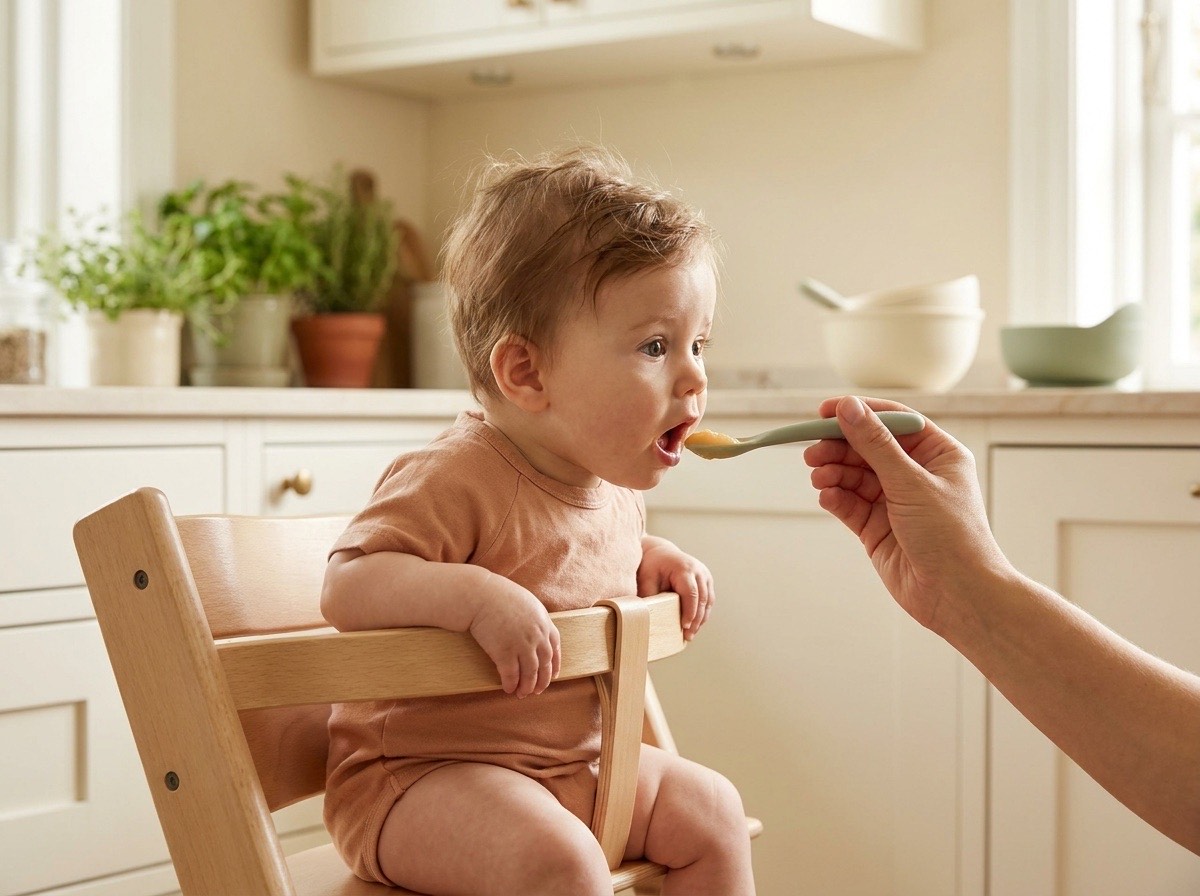
Examples of 6-Month Starter Foods: A Parent's Guide
Discover essential examples of 6-month starter foods that boost your baby's development. Learn about iron-rich purees to complement milk feeds.
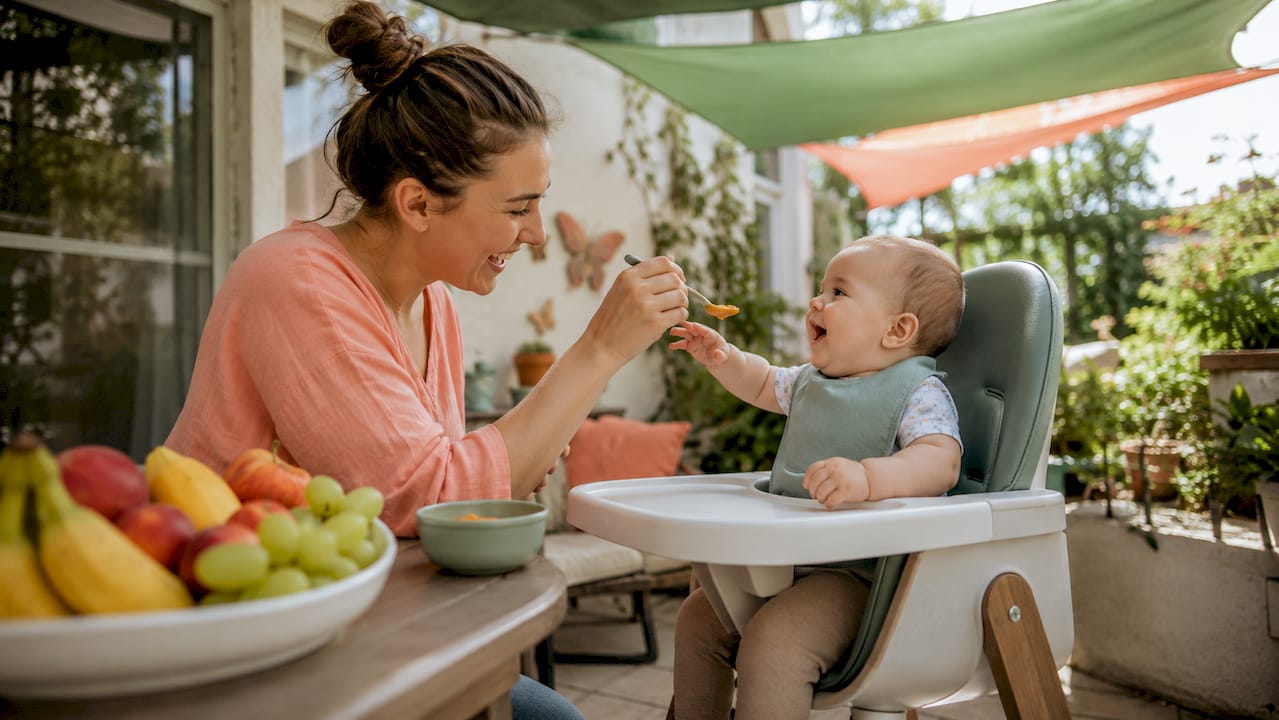
Examples of 6-month starter foods are single-ingredient, iron-rich purees that support infant development while complementing breast milk or formula. The six-month mark is what pediatricians and the CDC call the complementary feeding milestone, the point when most babies show the physical readiness to begin solid foods alongside their usual milk feeds. Readiness cues include good head and neck control, the ability to sit with support, and the loss of the extrusion reflex. Solids at this stage do not replace breast milk or formula. They build feeding skills, expand sensory experience, and fill nutritional gaps, especially iron, that milk alone can no longer cover by six months.
1. What are the best iron-rich starter foods for 6-month-old babies?
Iron is the most critical nutrient to prioritize at six months. Infant iron stores built during pregnancy begin to deplete around this age, and iron-rich first foods are the most direct way to fill that gap.
The best iron-rich options for babies starting solids include:
- Iron-fortified infant cereals: Oat and barley cereals mixed with breast milk or formula to a thin, smooth consistency
- Pureed meats: Chicken, beef, and turkey blended with a little cooking liquid to a silky texture
- Pureed fish: Salmon and white fish, well cooked and carefully checked for bones
- Legumes: Pureed lentils, black beans, and chickpeas, all cooked until very soft
- Tofu: Silken tofu blended smooth or mashed
- Green leafy vegetables: Pureed spinach and kale, which pair well with sweet potato to improve palatability
There is no clinical need to start with rice cereal. Pureed meats and legumes are equally effective first foods and often more nutrient-dense. Rice cereal became a default first food decades ago for convenience, not nutritional superiority.
Pro Tip: Never add cereal to a bottle. It creates a choking hazard and interferes with the swallowing skill development your baby needs for solid feeding.
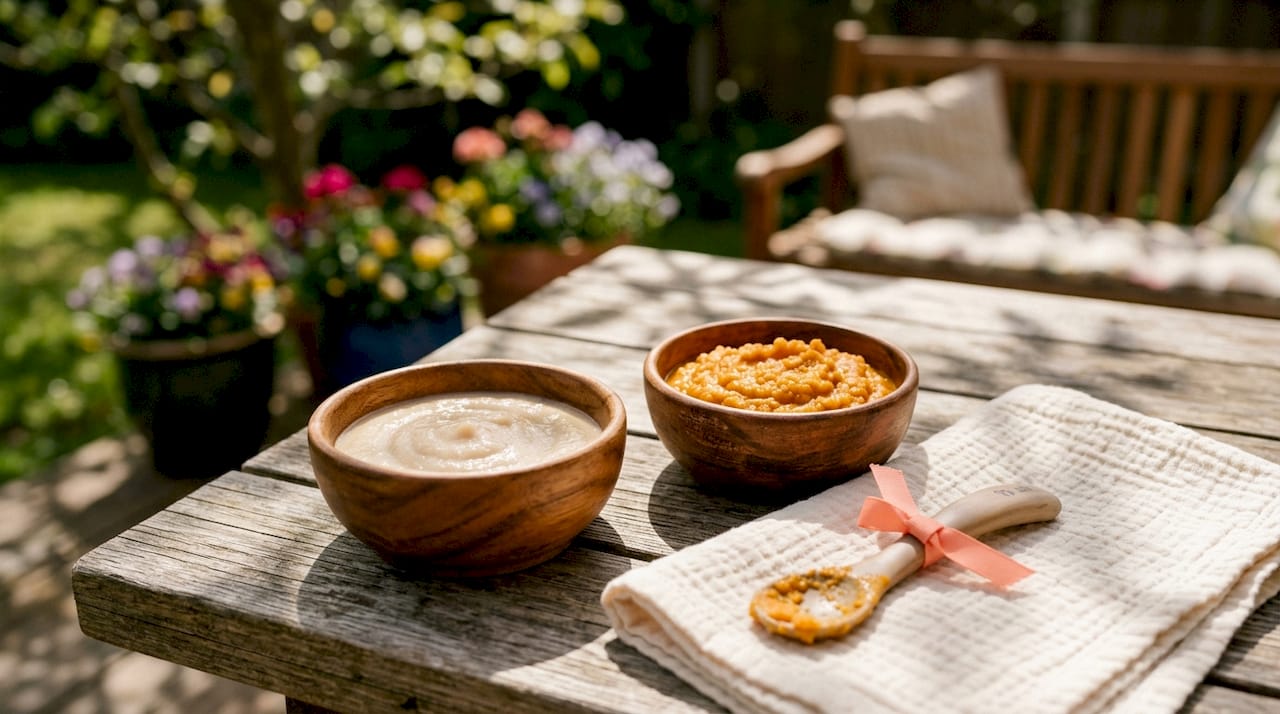
2. Safe and nutritious vegetable and fruit purees for 6-month starters
Vegetables and fruits give your baby vitamins, fiber, and early exposure to a wide range of flavors. The goal is variety, not sweetness. Introducing diverse savory foods early encourages healthy eating preferences that extend well into childhood.
Good vegetable options include:
- Sweet potato: Naturally sweet, easy to puree, and rich in vitamin A
- Butternut squash: Mild flavor and smooth texture when cooked
- Carrots: Soft when steamed and easy to blend
- Peas: High in protein and iron for a vegetable; blend well with a little water
- Avocado: No cooking needed; mash with a fork for a creamy, fat-rich puree
- Broccoli: Steam until very soft and blend; pairs well with potato or pear
- Asparagus: Mild and easy to puree once the tough ends are removed
For fruits, ripe banana mashed with a fork is the simplest first option. Cooked and pureed apple, pear, and blueberries all work well. Kiwi can be introduced once your baby has tolerated a few other fruits, as it is slightly more acidic.
Avoid raw hard pieces of any vegetable or fruit. Avoid high-nitrate vegetables like spinach, beets, and green beans before four months, though they are safe after six months when prepared at home fresh.
Pro Tip: Start savory vegetables before sweet fruits when possible. Babies accept bitter and savory flavors more readily early on. Introducing sweet foods first can make palate diversity harder to achieve later.
3. How and when to introduce common allergenic foods safely
Delaying allergenic foods does not protect your baby. Early, controlled introduction of common allergens between four and twelve months actually reduces allergy risk, particularly for infants with eczema or a family history of food allergies.
The nine major allergens to introduce deliberately are eggs, peanut, tree nuts, sesame, fish, shellfish, wheat, soy, and cow’s milk products (in cooked or yogurt form, not as a primary drink before twelve months).
Follow this order of operations:
- Wait until your baby has tolerated two or three non-allergenic starter foods without reaction.
- Introduce one allergenic food at a time, with a 3–5 day gap between each new food.
- Offer the new food in the morning so you can monitor for reactions during the day.
- Start with a small amount, such as a quarter teaspoon, and increase gradually over several days.
- Safe forms include well-cooked scrambled or hard-boiled egg mashed smooth, smooth peanut butter thinned with water or breast milk, and finely ground tree nuts mixed into puree.
Reactions to watch for include hives, swelling around the mouth, vomiting, or difficulty breathing. If any of these appear, stop feeding and contact your pediatrician. Mild gagging is normal and different from choking. Check the allergen introduction timeline for a structured plan.
4. What texture progression and self-feeding milestones look like at 6 months
Smooth should be a ramp, not a residence. Texture progression from purees to lumpy and finger foods between six and nine months is critical for developing the chewing and swallowing skills your baby will need for table foods by twelve months.
At six months, start with smooth, thin purees your baby can easily move from the front to the back of the mouth. By seven to eight months, thicken the texture and introduce soft lumps. By nine months, most babies are ready for soft finger foods they can pick up themselves.
Signs your baby is ready for finger foods include:
- Sitting with minimal support and holding their head steady
- Reaching for food and bringing objects to their mouth
- Moving food around in their mouth rather than pushing it straight out
- Showing interest in what you are eating
Good early finger foods include steamed carrot sticks, soft-cooked broccoli florets, ripe banana pieces, strips of well-cooked chicken, and soft-cooked pasta. Cut everything into pieces no larger than your baby’s thumbnail to reduce choking risk.
Feeding at six months is less about calories and more about building motor skills and sensory confidence. Watch for hunger cues like leaning forward and opening the mouth, and fullness cues like turning away or closing the lips. Responsive feeding builds a healthy relationship with food from the very start. You can track these infant feeding milestones as your baby grows.
5. Comparing starter food categories by nutrients, preparation, and allergy risk
Choosing what to feed your baby is easier when you see the categories side by side. Each food group brings something different to the table.
| Category | Key nutrients | Preparation ease | Allergy risk | Feeding tip |
|---|---|---|---|---|
| Iron-fortified cereals | Iron, B vitamins | Very easy; mix with milk | Low | Mix thin; do not add to bottle |
| Pureed meats | Iron, zinc, protein | Moderate; blend with liquid | Low | Chicken and beef are good starting points |
| Vegetables | Vitamins A, C, K, fiber | Easy; steam and blend | Low | Start savory before sweet |
| Fruits | Vitamins C and B6, fiber | Very easy; mash or blend | Low | Introduce after vegetables when possible |
| Legumes | Iron, protein, fiber | Moderate; cook until very soft | Low to moderate | Soy is a top allergen; introduce carefully |
| Allergenic foods | Varies by food | Moderate; requires specific forms | High | Introduce one at a time with 3–5 day gaps |
The practical takeaway is that no single food category covers every nutritional need. Rotating across cereals, meats, vegetables, fruits, and legumes gives your baby the broadest nutritional base and the widest flavor exposure.
Pro Tip: Combine flavors intentionally. Pair iron-rich lentils with vitamin C-rich sweet potato puree. Vitamin C increases iron absorption from plant sources, making the meal more nutritious without any extra effort.
Key Takeaways
The most effective approach to starting solids at six months is rotating iron-rich purees, vegetables, fruits, and allergens one at a time, following CDC and AAP guidance on readiness and texture progression.
| Point | Details |
|---|---|
| Iron is the priority nutrient | Start with iron-fortified cereals, pureed meats, or legumes to address natural iron depletion at six months. |
| Introduce one food at a time | Use 3–5 day gaps between new foods to identify any allergic reactions clearly. |
| Introduce allergens early | Early, controlled allergen introduction between four and twelve months reduces long-term allergy risk. |
| Progress textures gradually | Move from smooth purees to lumpy textures and soft finger foods between six and nine months. |
| Milk stays primary | Breast milk or formula remains the main nutrition source throughout the first year; solids are complementary. |
What I’ve learned from watching parents stress over first foods
I have seen parents spend more energy worrying about the “right” first food than actually feeding their baby. The anxiety is understandable. But the research is clear: the specific food matters less than the habit of offering variety, responding to your baby’s cues, and not rushing the process.
The biggest mistake I see is parents defaulting to sweet fruit purees because babies accept them easily. That short-term win creates a longer-term challenge. Babies who only eat sweet foods in the first months often resist savory textures and flavors later. Broccoli and lentils are not punishment foods. They are exactly what your baby’s palate needs to learn to love, and the window for that learning is shorter than most parents realize.
The second mistake is treating feeding as a performance. Parents count spoonfuls, track grams, and panic when a baby turns away after three bites. Starting solid foods at six months is about skill-building and sensory exploration, not calorie targets. Your baby is learning to move food in their mouth, coordinate swallowing, and recognize hunger and fullness. That takes time and repetition, not pressure.
One thing I feel strongly about: introduce allergens early and do it confidently. The evidence behind early allergen introduction is solid. Waiting out of fear is the riskier choice, not the safer one. If your baby has eczema or a family history of food allergies, talk to your pediatrician before starting, but do not delay without a clinical reason.
Your baby just wants lunch. Give them a variety of real foods, follow their cues, and trust the process.
Planning your baby’s first foods with Yummy Starts App
Starting solids is one of the most exciting milestones in your baby’s first year. It can also feel like a lot to manage at once, especially when you are tracking new foods, watching for reactions, and trying to build a varied diet from scratch.
Yummy Starts App supports over a million families through exactly this stage. The app includes a library of 392 baby-safe recipes, step-by-step serving instructions matched to your baby’s age and feeding stage, and real-time allergen tracking built in. Licensed therapists and pediatric specialists back every recommendation. Whether you need a first foods library to plan the week or guidance on introducing a new allergen safely, Yummy Starts App gives you a clear, confident path forward.
FAQ
What are the best first foods for a 6-month-old?
The best first foods are single-ingredient, iron-rich purees such as pureed chicken, beef, lentils, oat cereal, sweet potato, and peas. These address the natural iron depletion that occurs around six months while being easy to digest.
How do I know my baby is ready to start solids?
Your baby is ready when they can hold their head steady, sit with support, and have lost the extrusion reflex that causes them to push food out of their mouth automatically. Most babies reach this point around six months.
Should I introduce allergenic foods at 6 months?
Yes. Current ASCIA and AAP guidance supports early allergen introduction after four to six months once a few starter foods are tolerated. Delaying allergens beyond twelve months increases, not decreases, allergy risk.
How much solid food should a 6-month-old eat?
Start with one to two teaspoons once a day and increase gradually based on your baby’s interest. Breast milk or formula remains the primary nutrition source throughout the first year; solids are supplementary at this stage.
Can I give my baby finger foods at 6 months?
Most babies are not ready for finger foods until seven to nine months, when they can sit steadily and use a pincer grasp. Start with smooth purees at six months and introduce soft finger foods as your baby’s motor skills develop.
Recommended

This article is for general educational purposes only and is not a substitute for professional medical advice, diagnosis, or treatment. Always consult your pediatrician or a qualified healthcare provider about your baby's diet, allergies and readiness for solids.