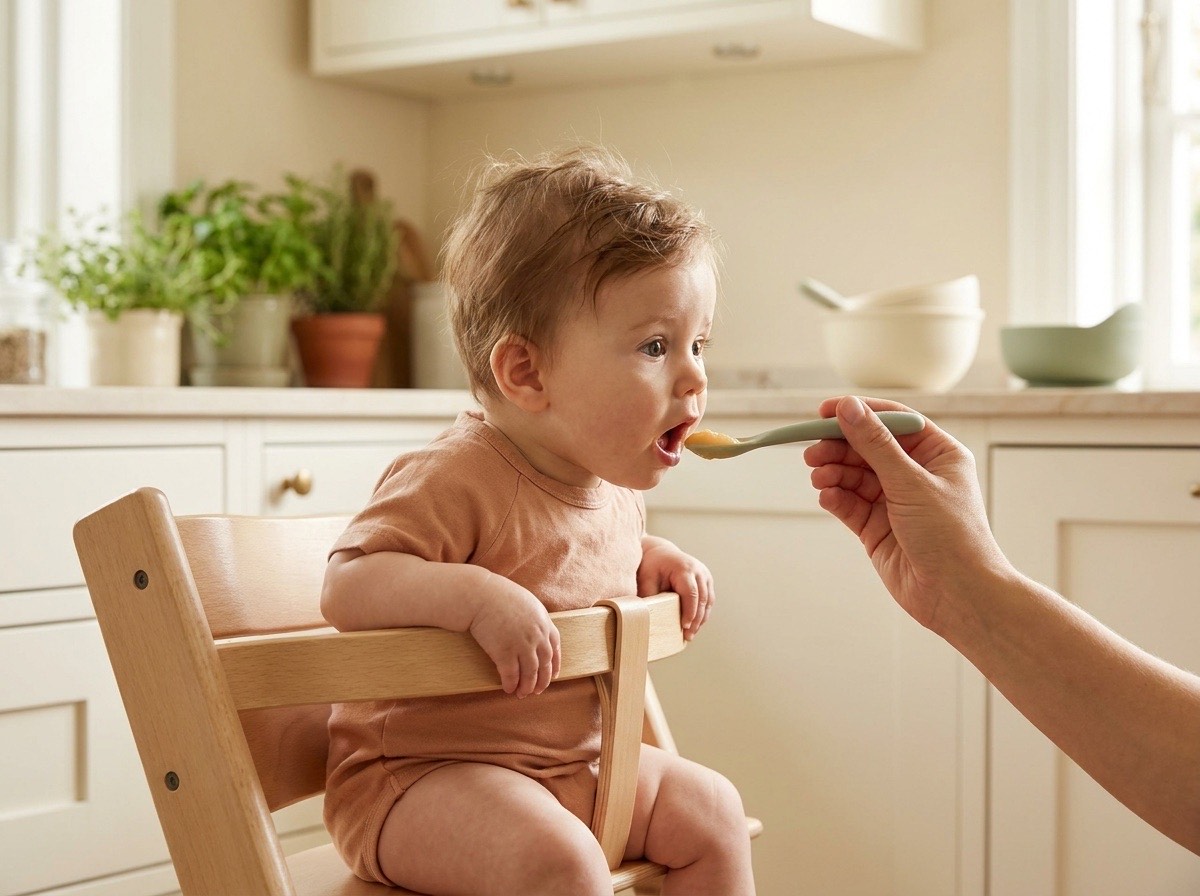
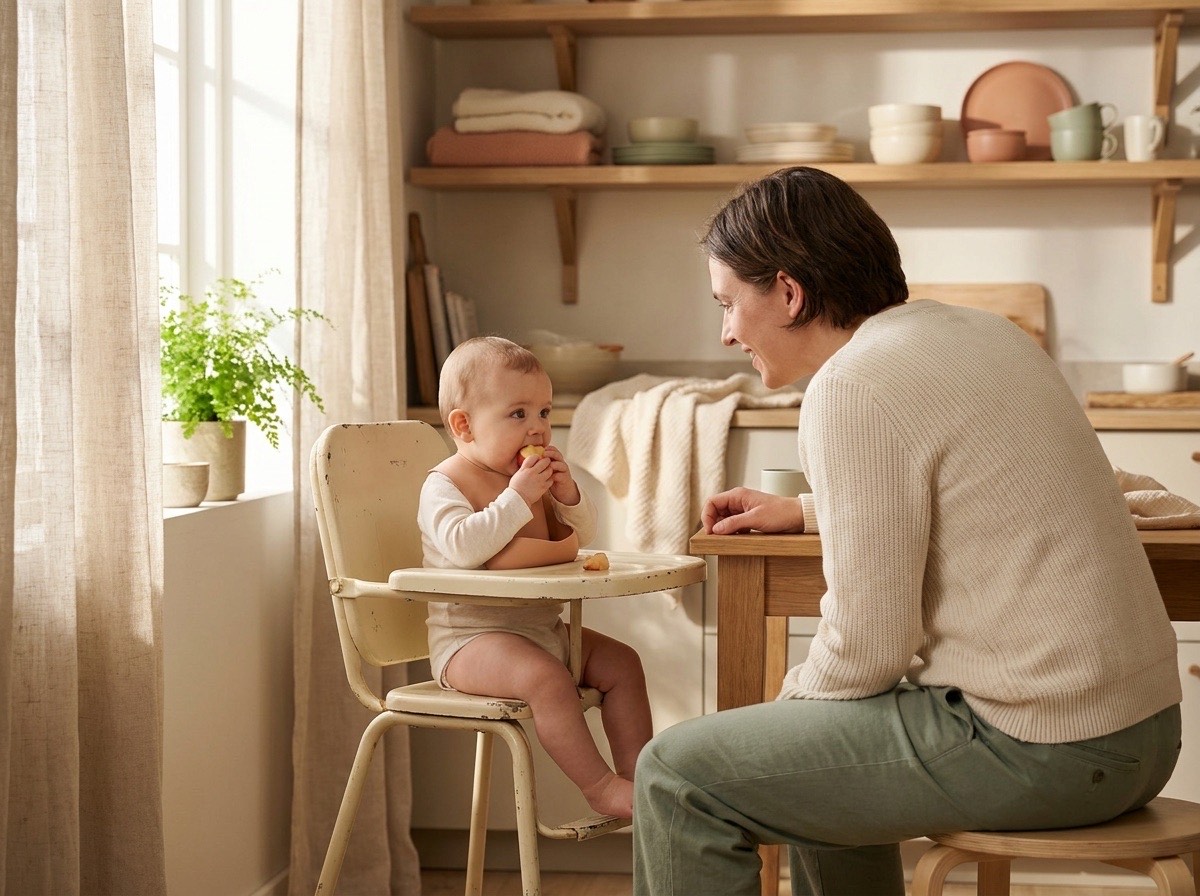
7–9 Month Baby Food Progression: A Parent's Guide
Explore the 7-9 month baby food progression. Learn how to introduce textures and flavors, promoting your baby's feeding skills effectively.
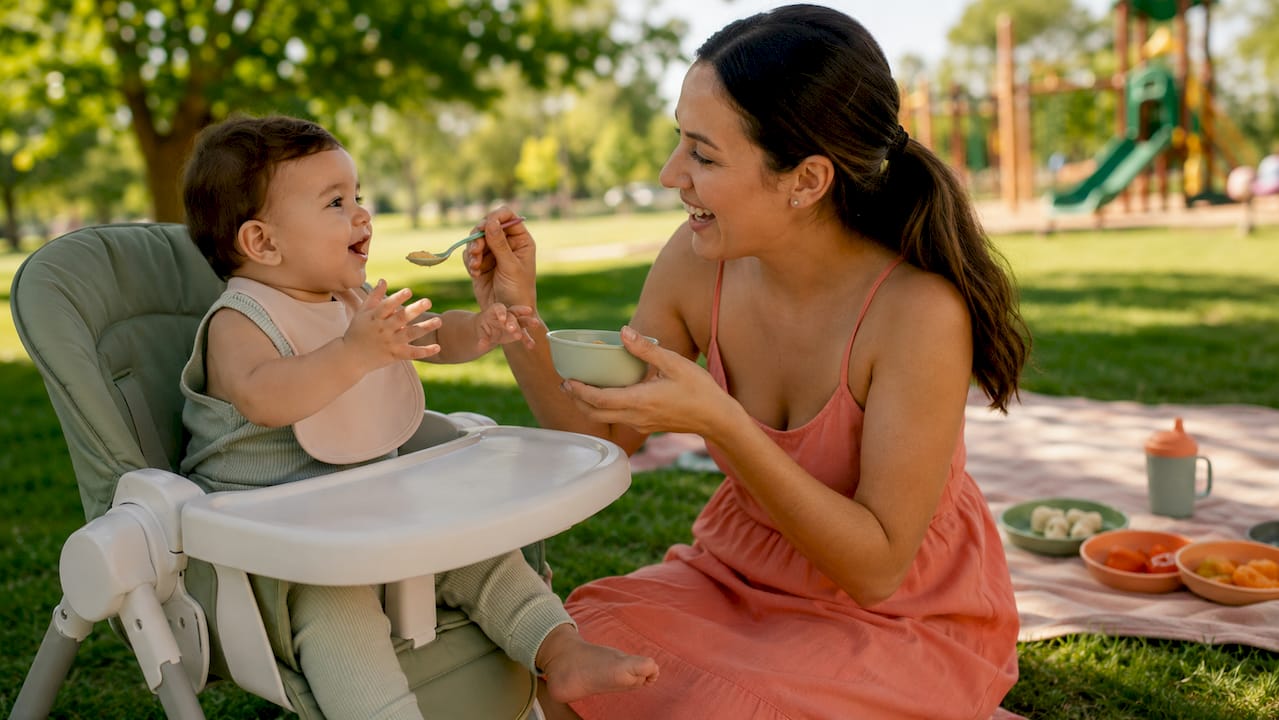
The 7–9 month baby food progression is defined as the phased shift from smooth purees to thicker textures, mashed foods with soft lumps, and eventually soft finger foods, guided by your baby’s developmental readiness rather than a fixed calendar date. Breast milk or formula stays the primary nutrition source until 12 months, but this window is when solid foods begin building real feeding skills. The CDC confirms that by 7–8 months, babies can eat from all major food groups, including vegetables, fruits, proteins, and dairy without added sugars. Getting the progression right matters because texture, timing, and safety all work together to support your baby’s growth.
1. What does the 7–9 month baby food progression actually look like?
The progression moves through three clear texture stages: smooth purees, thicker mashed foods with soft lumps, and soft finger foods. Think of smooth as a ramp, not a residence. Your baby needs to move through it, not stay there. Babies learn to manage thicker textures with soft lumps around 7–9 months, then progress to finger foods as their chewing skill improves.
Each stage builds on the last. A baby who handles smooth sweet potato puree well is ready for mashed sweet potato with small soft pieces. That same baby is not yet ready for raw carrot sticks. The jump in texture should feel like one small step, not a leap.
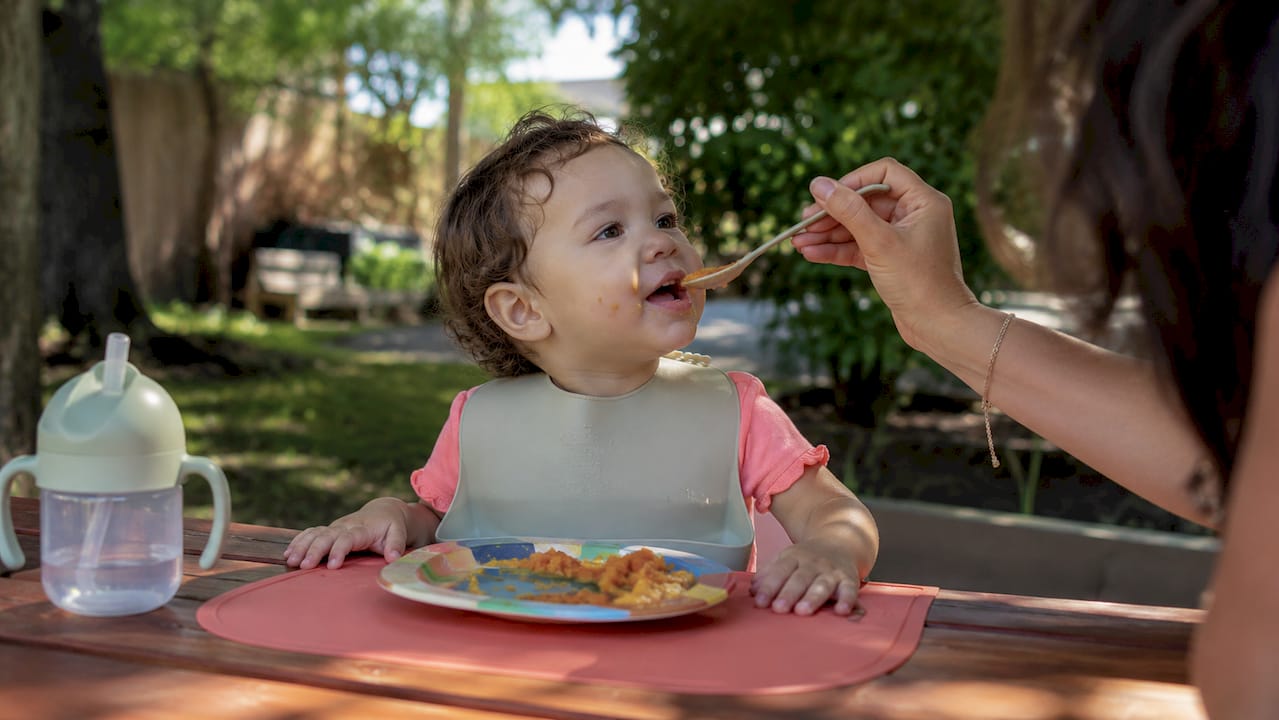
Frequency matters too. At 7 months, one to two small solid meals per day is typical. By 9 months, most babies handle two to three meals with small snacks. Portions stay small, roughly two to four tablespoons per food at a sitting.
2. Key textures and foods to introduce between 7 and 9 months
Foods for 7–9 month olds should cover all major food groups while matching the texture stage your baby is actually at. The CDC supports introducing a wide variety of foods by 7–8 months, and variety at this stage builds a broader palate for later childhood.
Good options by texture stage:
- Smooth to thick purees (7 months): pureed sweet potato, butternut squash, peas, apple, pear, banana, pureed chicken or lentils
- Mashed with soft lumps (7–8 months): mashed avocado, soft-cooked carrot, well-cooked pasta pieces, mashed beans, scrambled egg
- Soft finger foods (8–9 months): soft banana pieces, steamed broccoli florets, small pieces of well-cooked chicken, soft-cooked peas, small cubes of tofu
Iron-rich foods deserve special attention. Breast milk is low in iron after 6 months, so pureed meat, lentils, and iron-fortified cereals should appear regularly in your baby’s feeding schedule. Pair iron-rich foods with vitamin C sources like pureed mango or soft-cooked bell pepper to boost absorption.
Pro Tip: Introduce one new food every two to three days. This window lets you spot any reaction before adding the next food, without slowing progression unnecessarily.
3. Developmental milestones that signal readiness for texture progression
Feeding readiness is a motor skill story, not just an age story. The CDC’s 9-month milestones confirm that babies at this stage show feeding readiness through raking food with their fingers, sitting unsupported, and bringing objects to their mouth with coordination. These physical cues are your clearest green light to advance texture.
Watch for these specific signs before moving to the next texture stage:
- Sits upright without support for several minutes
- Reaches for food and brings it toward their mouth
- Moves food from the front to the back of the mouth
- Shows interest in what you are eating
- Manages current texture without gagging on every bite
The capability-based approach means your baby must handle thicker purees well before you introduce finger foods at a similar texture level. Skipping steps does not speed development. It raises choking risk and can frustrate a baby who is not yet ready. Following your baby’s lead is not passive parenting. It is the most evidence-aligned approach available.
4. How to introduce allergenic foods safely during this window
Early allergen introduction is one of the most important things you can do during this stage. Delaying common allergens like peanut and egg can actually increase the risk of developing allergies, especially in high-risk infants. The optimal window for introduction closely overlaps with the 7–9 month solid food progression.
Follow these steps for safe allergen introduction:
- Start with peanut. Offer thinned smooth peanut butter mixed into puree. Never offer whole peanuts or thick peanut butter, both are choking hazards.
- Introduce egg early. Well-cooked scrambled egg or egg mixed into puree is safe and age-appropriate. Raw or undercooked egg is not.
- Add one allergen at a time. Introduce each new allergen on its own, not combined with another new food, so you can identify any reaction clearly.
- Wait two to three days between new allergens. This gives you time to observe without stalling the overall progression.
- Keep offering allergens regularly. One introduction is not enough. Regular exposure after the first successful introduction supports tolerance.
Signs of an allergic reaction include hives, swelling around the mouth, vomiting, or difficulty breathing. If any of these appear, stop feeding and contact your pediatrician immediately.
Pro Tip: Introduce new allergens earlier in the day, not at dinner. That way you have several waking hours to watch for any reaction before bedtime.
5. Choking risks and how to feed safely at this stage
Babies and toddlers face the highest choking risk of any age group, and that risk increases when finger foods enter the picture. Safe feeding at 7–9 months requires proactive preparation, not just reactive caution.
The single most important distinction every caregiver needs to know is the difference between gagging and choking. Gagging is a normal protective reflex during texture transitions. It involves coughing, sputtering, and sometimes a red face. Choking is different. It is often silent, with no crying or coughing, and requires immediate action. Misreading gagging as choking causes unnecessary panic and can actually interfere with your baby’s natural reflex doing its job.
| Gagging | Choking |
|---|---|
| Loud coughing or sputtering | Silent or very quiet |
| Baby is breathing | Breathing is blocked |
| Face may turn red | Face may turn blue |
| Baby resolves it independently | Requires immediate intervention |
| Normal during texture transitions | A medical emergency |
Safe feeding practices to follow every meal:
- Always seat your baby upright in a high chair with foot support
- Stay within arm’s reach during every meal
- Cut soft finger foods into pieces no larger than a pea
- Avoid round, firm foods like whole grapes, raw carrot, and whole cherry tomatoes
- Never leave your baby alone while eating
Learning infant first aid, including back blows for choking, is one of the most practical things a new parent can do before introducing finger foods.
Key takeaways
The 7–9 month baby food progression works best when texture advances match your baby’s motor skills, allergens are introduced early in safe forms, and every meal happens under close supervision.
| Point | Details |
|---|---|
| Texture is a ramp | Move from smooth purees to mashed foods to soft finger foods as skills develop. |
| Milestones drive timing | Sitting unsupported and raking food signal readiness to advance texture. |
| Introduce allergens early | Early, regular exposure to peanut and egg reduces long-term allergy risk. |
| Gagging is not choking | Gagging is a normal reflex; choking is silent and requires immediate action. |
| Iron-rich foods are non-negotiable | Include pureed meat, lentils, or iron-fortified cereals at most meals from 7 months. |
What I have learned watching families navigate this stage
The parents I see struggle most are not the ones who introduce the wrong food. They are the ones who freeze at the first gag and never move past smooth purees. I understand the fear completely. But staying at smooth purees past 8 months does not protect your baby. It delays the motor skill development that makes eating safer long-term.
The other thing I have noticed is that allergen introduction causes disproportionate anxiety compared to the actual risk for most families. The evidence on early allergen introduction is clear and consistent. Waiting does not make it safer. For most babies, a small amount of thinned peanut butter in a puree at 7 months is genuinely low-risk and genuinely protective.
My honest advice: trust the milestones more than the calendar. Your baby will show you when they are ready to move forward. Your job is to watch, respond, and keep the meals relaxed. A stressed caregiver at the table communicates more than you think. Your baby just wants lunch.
Make feeding this stage easier with Yummy Bites App
Starting solids is one of the most exciting and nerve-wracking parts of the first year. Yummy Bites App supports over a million families through exactly this stage, with 392 recipes built around developmental feeding stages, real-time allergen tracking, and step-by-step serving instructions reviewed by pediatric specialists.
Whether you need an age-appropriate meal plan for your baby or want to browse a curated foods library organized by texture and nutrition, Yummy Bites App gives you a clear, confident path through the 7–9 month window and beyond. No guesswork, no generic advice. Just practical guidance built for your baby’s actual stage.
Start exploring Yummy Bites today and take the stress out of mealtime.
FAQ
What foods should a 7-month-old eat first?
A 7-month-old does well starting with thick purees of single vegetables and fruits, such as sweet potato, peas, or pear, alongside iron-rich options like pureed chicken or lentils. The CDC recommends introducing foods from all major food groups by 7–8 months.
When can a baby start eating finger foods?
Soft finger foods are typically appropriate around 8–9 months, once your baby can sit unsupported and bring food to their mouth reliably. Foods should be soft enough to mash between your fingers with light pressure.
How do I know if my baby is ready to move to the next texture stage?
Your baby is ready when they consistently manage their current texture without gagging on most bites and show the motor milestones for the next stage, such as raking or pinching food. Readiness is skill-based, not age-based.
Is gagging during feeding normal?
Gagging is a normal protective reflex during texture transitions and does not mean your baby is choking. The difference between gagging and choking is critical: gagging is loud and self-resolving, while choking is often silent and requires immediate help.
When should I introduce peanuts and eggs?
Current guidelines support introducing peanut and egg between 4 and 9 months in age-appropriate forms. Delaying these allergens past this window can increase allergy risk, particularly for infants with a family history of food allergies.
Recommended

This article is for general educational purposes only and is not a substitute for professional medical advice, diagnosis, or treatment. Always consult your pediatrician or a qualified healthcare provider about your baby's diet, allergies and readiness for solids.