Allergen Introduction Timeline for Infants: 2026 Guide
Discover the allergen introduction timeline for infants in 2026. Learn when and how to introduce allergenic foods safely to reduce allergy risk.

The allergen introduction timeline for infants is defined as the structured window, starting around 6 months of age, during which caregivers introduce common allergenic foods one at a time to build immune tolerance and reduce long-term allergy risk. The American Academy of Pediatrics (AAP), the Australasian Society of Clinical Immunology and Allergy (ASCIA), and Sydney Children’s Hospitals all agree: early introduction, not delay, is the right approach. Waiting until after 12 months does not protect your baby. It may actually increase risk.
1. How to know your baby is ready for allergen introduction
Developmental readiness, not a calendar date, signals when to start solid foods and begin baby allergen exposure. Most babies reach this point around 6 months. The AAP and ASCIA both confirm that solids should not start before 4 months, regardless of how eager your baby seems.
Look for these readiness signs before starting:
- Sits up with minimal support and holds their head steady
- Shows interest in food by leaning forward or reaching toward your plate
- Has lost the tongue-thrust reflex (no longer automatically pushing food out)
- Opens their mouth when a spoon approaches
Once your baby shows these signs consistently, you can begin solids and plan your infant allergy timeline from there. Do not rush the process, but do not wait indefinitely either.
Pro Tip: Start solids with a single-ingredient puree like sweet potato or pea for a few days first. This gives your baby a chance to practice swallowing before you layer in allergenic foods.

High-risk infants, those with severe eczema or a family history of food allergy, need a different starting point. For these babies, speak with your pediatrician before introducing peanut or egg. The AAP and Allergy UK both recommend clinical input for high-risk groups to tailor a safe plan.
2. Step-by-step timeline for introducing allergenic foods
The food allergy introduction sequence matters. Introduce one allergen at a time, in small amounts, and watch for reactions before moving to the next. ASCIA’s 2026 guidance confirms that all common allergens should be introduced by 12 months, including cow’s milk, egg, peanut, tree nuts, wheat, soy, sesame, fish, and shellfish.
Here is a practical sequence to follow:
- Around 6 months: Start with basic single-ingredient purees (sweet potato, pea, pumpkin). Get your baby comfortable with swallowing before introducing allergens.
- 6–7 months: Introduce well-cooked egg. Mix a small amount of scrambled egg into a puree your baby already accepts. Wait 2–3 days before adding the next new food.
- 6–7 months: Introduce smooth peanut butter. Thin it with breast milk, formula, or water to a safe consistency. Never give whole peanuts or chunks to an infant.
- 7–8 months: Introduce cow’s milk in cooked form (yogurt, cheese, or in a recipe). Plain cow’s milk as a drink is not recommended before 12 months, but dairy in food is fine.
- 8–9 months: Introduce wheat. Offer a small amount of well-cooked pasta or bread softened in liquid.
- 9–10 months: Introduce soy. Plain tofu or soy-based yogurt works well at this stage.
- 10–11 months: Introduce sesame. Tahini thinned into a puree is a practical option.
- 10–12 months: Introduce fish and shellfish. Offer well-cooked, flaked white fish or small amounts of cooked shrimp mashed into a puree.
- 11–12 months: Introduce tree nuts. Use smooth almond butter or cashew butter thinned to a safe consistency.
The AAP is clear that correct food form prevents choking while still delivering allergen exposure. Smooth, soft, and well-cooked is the rule at every stage. For a deeper look at one of the trickiest allergens to introduce, the egg introduction guide on the Yummy Bites App blog walks through the process step by step.
| Allergen | Recommended form | Typical introduction window |
|---|---|---|
| Egg | Scrambled, well-cooked, mixed into puree | 6–7 months |
| Peanut | Smooth peanut butter thinned with liquid | 6–7 months |
| Cow’s milk | Yogurt, cheese, or cooked into food | 7–8 months |
| Wheat | Soft cooked pasta or moistened bread | 8–9 months |
| Fish | Well-cooked, flaked, mashed into puree | 10–12 months |
Pro Tip: Keep a simple feeding log for the first 12 months. Note what you introduced, how much, and any reactions. This record is invaluable at pediatrician visits and helps you track your baby’s full allergen exposure history. The Yummy Bites App blog has a guide on why an allergen diary matters for exactly this reason.
3. Monitoring for allergic reactions after each introduction
Allergic reactions to food typically begin within minutes of ingestion and can develop up to 2 hours after eating. That 2-hour window is your observation period every time you introduce a new allergen.
Watch for these symptoms after each new food:
- Mild reactions: Hives, redness around the mouth, mild swelling, runny nose, or watery eyes
- Digestive reactions: Vomiting or diarrhea shortly after eating
- Severe reactions (anaphylaxis): Swelling of the lips, tongue, or throat; difficulty breathing; sudden paleness or limpness; loss of consciousness
If you see mild symptoms, stop feeding that food and call your pediatrician. If you see any signs of anaphylaxis, call 911 immediately. Do not wait to see if symptoms resolve on their own.
A note on timing: Always introduce a new allergen when your baby is well, awake, and you are home to supervise. Avoid introducing new foods at daycare, at bedtime, or right before a trip. Caregivers should choose first exposures carefully to give themselves the full observation window.
Introduce one allergen at a time, with a 2–3 day gap before the next new food. Introducing multiple allergens on the same day makes it impossible to identify which food caused a reaction. Patience here is not overcaution. It is good science.
4. Maintaining allergen exposure to sustain tolerance
Introducing an allergen once is not enough. Sydney Children’s Hospitals and ASCIA both recommend offering tolerated allergens at least once or twice per week to maintain the immune tolerance your baby is building. Think of it as regular practice for the immune system.
Here are practical ways to keep allergens in the weekly rotation:
- Stir smooth peanut butter into oatmeal or a fruit puree two to three times per week
- Offer scrambled egg or egg mixed into a vegetable puree at least twice a week
- Include yogurt or soft cheese as a regular snack
- Add flaked fish to vegetable mashes once or twice a week
One taste is not sufficient. The immune system needs repeated, consistent exposure to learn that a food is safe. Stopping allergen feeds after the first successful introduction is one of the most common mistakes caregivers make. If your baby tolerates a food, keep it in the diet regularly until at least age 5, as Sydney Children’s Hospitals guidance recommends.
For practical meal ideas that work allergens into your baby’s weekly routine, the weekly baby meal plan guide on the Yummy Bites App blog offers structured options by age and stage.
5. Special considerations for high-risk infants
High-risk infants are defined by the AAP and Allergy UK as babies with severe eczema, a diagnosed food allergy, or a close family member with a food allergy. These babies still benefit from early allergen introduction, but the process requires more careful management.
Key steps for high-risk families:
- Schedule a pediatrician or allergist appointment before starting peanut or egg introduction
- Ask about allergy skin-prick testing or blood testing if your baby has severe eczema
- Discuss whether a supervised, in-office first introduction is appropriate
- Ask about structured reintroduction protocols, such as a milk ladder or egg ladder, which use graded exposure under clinical supervision to identify tolerance thresholds
Delaying introduction in high-risk infants does not reduce risk. The AAP is explicit: delaying allergenic foods does not prevent allergies. What changes for high-risk babies is the level of medical oversight, not the fundamental principle of early exposure.
Pro Tip: If your baby has eczema, treat it consistently before starting allergen introduction. Well-controlled eczema reduces the risk of sensitization through broken skin, which is a separate pathway from oral tolerance.
Key takeaways
Early, consistent allergen introduction is the most effective strategy for reducing food allergy risk in infants, supported by the AAP, ASCIA, and Sydney Children’s Hospitals.
| Point | Details |
|---|---|
| Start around 6 months | Introduce solids and allergens once your baby shows developmental readiness, not before 4 months. |
| Introduce all allergens by 12 months | ASCIA guidance covers nine common allergens, including peanut, egg, dairy, fish, and wheat. |
| One allergen at a time | Introduce each new food with a 2–3 day gap to identify any reaction clearly. |
| Keep feeding tolerated allergens | Offer accepted allergens at least once or twice per week to maintain immune tolerance. |
| High-risk babies need medical input | Infants with severe eczema or family allergy history should see a pediatrician before starting. |
What I have learned from watching parents navigate allergen introduction
The fear around introducing allergens is real, and I understand it completely. Parents sit across from me with a jar of peanut butter and genuine dread on their faces. The anxiety is not irrational. It comes from love and from a culture that spent decades telling parents to delay, avoid, and be cautious.
What I have seen consistently is that the parents who do best are the ones who treat allergen introduction as a routine feeding task, not a medical event. They pick a calm Tuesday morning, thin the peanut butter into a puree, offer a small spoonful, and go about their day while keeping an eye on their baby. That ordinary approach is exactly right.
The parents who struggle are often the ones who wait for a “perfect” moment that never comes, or who introduce an allergen once and then quietly drop it from the rotation. Consistency is where the real work happens. One successful taste does not build tolerance. Twice-weekly exposure over months does.
My honest advice: keep a simple log, follow the sequence, and call your pediatrician when you are unsure. You do not need to be fearless. You just need to be consistent. And if your baby has eczema or a family history of allergies, get a clinical plan in place before you start. That one conversation can make the whole process feel much more manageable.
Planning allergen introduction with Yummy Bites App
Knowing the timeline is one thing. Having the recipes and structure to actually follow it is another.
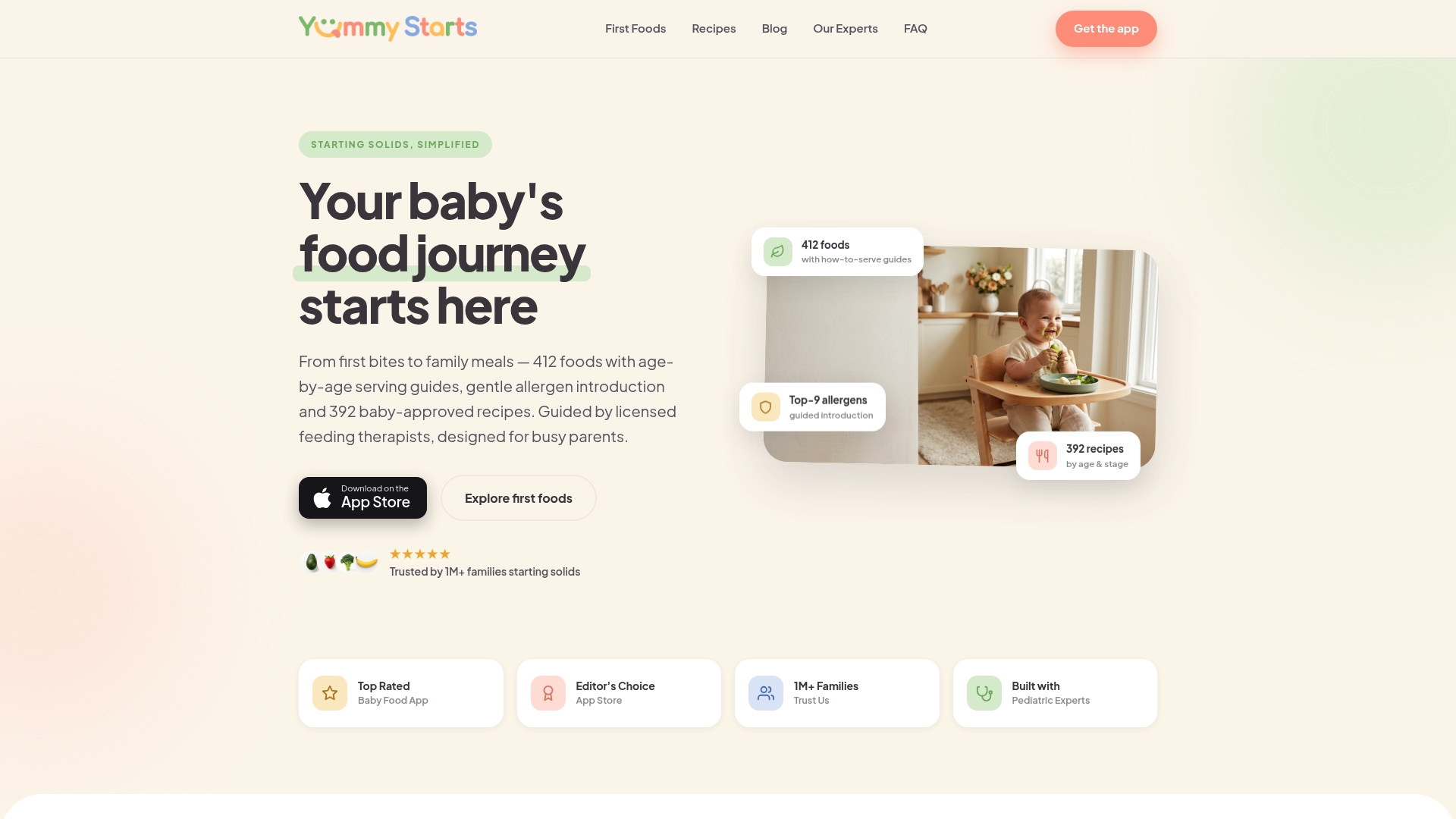
Yummy Bites App supports over a million families through exactly this stage. The app includes 392 recipes designed for infants at every feeding stage, with step-by-step serving instructions and real-time allergen tracking built in. Licensed therapists and pediatric specialists shaped every feature. The baby recipes and meal planner makes it straightforward to rotate allergens into your baby’s weekly meals without reinventing the menu every day. The Foods Library gives you a curated list of safe first foods, including allergenic options with preparation tips for each one.
FAQ
When should I start introducing allergens to my baby?
Start introducing allergens around 6 months, once your baby shows solid food readiness. The AAP and ASCIA both confirm that introduction should not happen before 4 months.
What are the nine common allergens to introduce by 12 months?
ASCIA identifies cow’s milk, egg, peanut, tree nuts, wheat, soy, sesame, fish, and shellfish as the key allergens to introduce within the first year of life.
How do I know if my baby is having an allergic reaction?
Reactions typically appear within minutes and can occur up to 2 hours after eating. Watch for hives, swelling, vomiting, or breathing difficulty, and call 911 for any severe symptoms.
Does delaying allergen introduction protect against allergies?
No. The AAP states there is no evidence that delaying allergenic foods prevents food allergy. Early introduction is the recommended approach.
How often should I feed my baby an allergen after the first introduction?
Offer tolerated allergens at least once or twice per week to maintain immune tolerance. Stopping after one successful taste does not build lasting protection.
Recommended

This article is for general educational purposes only and is not a substitute for professional medical advice, diagnosis, or treatment. Always consult your pediatrician or a qualified healthcare provider about your baby's diet, allergies and readiness for solids.