Why Keep an Allergen Food Diary for Your Child
Discover why keeping an allergen food diary is crucial for your child. Identify triggers easily and help your doctor create a plan today!

An allergen food diary is a written record of every food your child eats alongside any symptoms that follow, and it is the most reliable tool parents have for identifying hidden triggers. Most food allergy reactions in children are not obvious. Symptoms can be delayed, cumulative, or easily confused with other conditions. A structured diary transforms guesswork into evidence. It gives your child’s doctor something concrete to work with, and it gives you a clear picture of what is actually happening at the table. Yummy Bites works with families navigating exactly this challenge every day, and the diary is always the starting point.
Why keep an allergen food diary: the core case
Keeping an allergen food diary is the difference between suspecting a trigger and proving one. Without a written record, parents rely on memory, and memory is unreliable when you are managing a busy household, a fussy eater, and a child who cannot yet describe how they feel.
The clinical term for this practice is a “food and symptom diary,” and it serves as a formal investigative tool in allergy medicine. A structured food diary transforms anecdotal reports into clear evidence that improves testing decisions. That matters because allergy testing, whether blood work, skin prick tests, or oral food challenges, works best when a clinician already has a hypothesis about which foods to target.

The diary also catches what casual observation misses. Cumulative load reactions require tracking symptoms over days rather than simple meal-to-symptom correlations. Your child might eat peanut butter on Monday with no reaction, then eat it again Thursday and break out in hives. Without a diary, you would never connect those two events.
How long should you keep a food diary?
Duration is the factor most parents underestimate. A single week of entries is rarely enough to see a reliable pattern. Tracking for 2–4 weeks is the recommended minimum for effective pattern identification in children with suspected food allergies. That window gives you enough data to distinguish a true trigger from a coincidence.
Here is why the timeline matters in practice:
- Week one captures your child’s typical diet and any obvious, immediate reactions.
- Week two starts revealing patterns you did not notice at first, especially reactions that appear a day after eating a specific food.
- Weeks three and four give clinicians enough longitudinal data to make confident recommendations about testing or elimination.
Shorter tracking periods produce incomplete pictures. A child who reacts to dairy every third or fourth exposure will look symptom-free during a single week of observation. That false negative can delay diagnosis by months.
Consistency matters as much as duration. Skipping entries on weekends or during travel creates gaps that distort the pattern. Every meal counts, including snacks, drinks, and anything eaten outside the home.
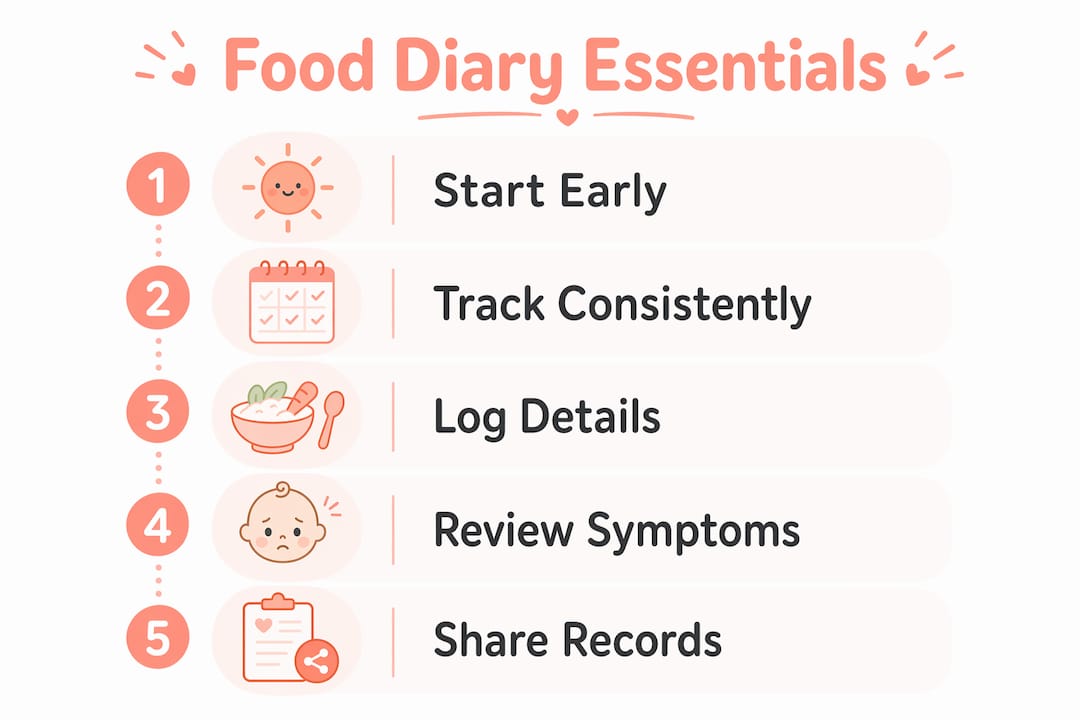
Pro Tip: Set a recurring phone alarm for 20 minutes after each meal. Use that window to log what your child just ate before the details fade. This one habit prevents the most common diary failure: the “I’ll write it later” gap.
What details should you record in your diary?
The quality of your diary depends entirely on the specificity of your entries. Vague notes like “pasta for lunch, seemed fine” are nearly useless. Precise entries like “Barilla whole wheat rotini with Rao’s marinara, 12:15 p.m., mild stomach cramping at 2:00 p.m.” give a clinician something to work with.
Here is what every entry should include:
- All foods and drinks, logged with exact times, not just meal names
- Brand names and cooking methods, because ingredient-level detail is critical since processing and additives vary significantly among products that look identical on the shelf
- Symptom description, onset time, and severity, rated on a simple 1–3 scale so you can track whether reactions are getting better or worse
- Contextual factors including sleep quality the night before, stress levels, outdoor time, and any illness, since stress, sleep, and environment all influence how the body responds to food
That last point surprises many parents. A child who is overtired or fighting a cold may react to a food they normally tolerate. Without logging those contextual factors, you will misread the diary and potentially eliminate a safe food unnecessarily.
Pro Tip: Take a photo of every meal before your child eats it. Photos capture brand labels, portion sizes, and ingredient combinations faster than writing, and they serve as a backup when you cannot log immediately.
Avoid summarizing meals too broadly. Writing “mixed vegetables” instead of “frozen Birds Eye peas and carrots, steamed” hides the specific ingredient that might be causing a reaction. The more granular your entries, the more useful the diary becomes.
How does a food diary support medical diagnosis?
A food diary does not replace allergy testing. It makes testing more targeted and more likely to produce a useful result. When you bring a four-week diary to your child’s allergist or pediatrician, you are not just sharing observations. You are providing objective data that guides personalized allergy evaluation and treatment planning.
Doctors use diary data to decide which tests to order first. A well-kept diary helps clinicians determine whether skin prick tests, blood tests, or oral food challenges are the right next step. Without that context, testing can feel like a fishing expedition, expensive and emotionally draining for both parent and child.
The diary also plays a central role in elimination and reintroduction protocols. An elimination diet removes a suspected trigger for a set period, then reintroduces it systematically to confirm the reaction. Your diary is the record that tells you whether symptoms improved during elimination and whether they returned on reintroduction.
“A food diary is not just a record. It is a powerful investigative tool that transforms subjective experiences into actionable clinical data.” — Child Food Allergy Dubai: Signs & Testing
One caution worth knowing: eliminating multiple foods at once complicates diagnosis and raises nutrition risks in growing children. Your diary helps your doctor make a targeted, evidence-based decision about which single food to eliminate first, rather than removing several at once and leaving your child’s diet unnecessarily restricted.
Share your diary with every provider involved in your child’s care, including your pediatrician, allergist, and dietitian. Each specialist reads the same data through a different lens, and that collaboration produces better outcomes.
Common challenges in tracking and how to solve them
Keeping a detailed diary is harder than it sounds. Most parents start strong and then hit predictable obstacles. Knowing those obstacles in advance makes them easier to manage.
-
Delayed reactions are the biggest trap. Symptoms can appear 12–24 hours after eating, which means parents often blame the most recent meal rather than something eaten the day before. Logging every meal, every day, is the only way to catch these delayed patterns.
-
Forgotten ingredients derail accuracy. Restaurant meals, grandparent visits, and packaged snacks all introduce ingredients you did not prepare yourself. Ask for ingredient lists, photograph packaging, and note when you are uncertain. An honest “unknown ingredients” entry is more useful than a confident but wrong one.
-
Inconsistent logging creates gaps that look like symptom-free periods. Use a dedicated app or a simple notebook kept on the kitchen counter. The tool matters less than the habit. Yummy Bites offers meal planning tools that help you track ingredients systematically alongside your diary.
-
Broad summaries replace specific entries when parents are tired. “Good day, no symptoms” tells a clinician nothing. Even on calm days, log every meal. Absence of symptoms is also data.
-
Underestimating context leads to false conclusions. A reaction that appears after a stressful school day may look like a food trigger when it is actually a stress response amplifying a mild sensitivity. Log the context every time, not just on bad days.
The goal is not a perfect diary. The goal is an honest one. A diary with a few gaps and honest uncertainty notes is far more useful than one that looks clean but glosses over complexity.
Key takeaways
A well-kept allergen food diary is the single most effective tool for identifying a child’s food triggers and guiding accurate medical diagnosis.
| Point | Details |
|---|---|
| Track for at least 2–4 weeks | Shorter periods miss delayed and cumulative reactions that only appear over time. |
| Log ingredient-level detail | Include brand names and cooking methods, not just food categories, for meaningful entries. |
| Record context alongside symptoms | Note sleep, stress, and activity since these factors directly influence allergic responses. |
| Share the diary with your care team | Allergists, pediatricians, and dietitians each use diary data differently to guide testing. |
| Use photos and reminders | Photographs and scheduled alerts are the two most effective tools for consistent, accurate logging. |
The diary is the most underrated tool in your parenting kit
After working with hundreds of families managing food allergies, the pattern I see most often is this: parents spend months anxious and confused, cycling through elimination diets that do not work, before someone finally suggests keeping a detailed diary. Then, within three weeks, the picture becomes clear.
The diary is not glamorous. It does not feel like progress when you are writing down “Cheerios, 7:45 a.m.” for the fourteenth day in a row. But that record is exactly what your child’s allergist needs to stop guessing and start acting.
What I tell parents is this: treat the diary like a science experiment, not a chore. You are collecting data. Every entry, even a boring one, narrows the field. The days with no symptoms are as informative as the days with reactions.
The parents who get the fastest answers are not the ones with the most medical knowledge. They are the ones with the most consistent diaries. That is something every caregiver can do, regardless of their background or comfort with medical settings. Start simple, stay honest, and bring what you have to your next appointment. Your child’s care team will do the rest.
Start tracking with confidence using yummy starts
Managing a child’s diet during allergy investigation is genuinely hard, especially when you are also navigating first foods and solid food introduction at the same time.
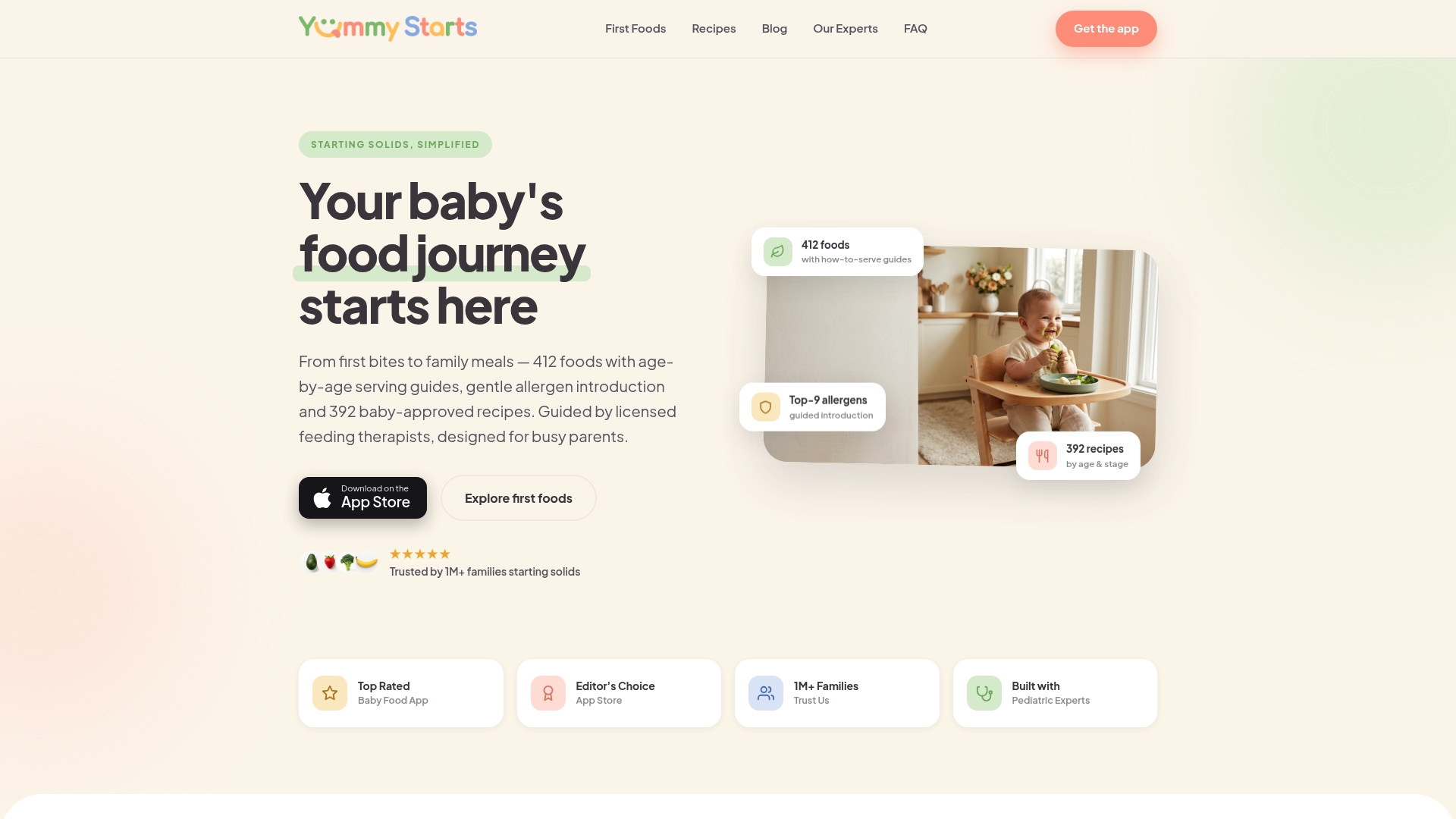
Yummy Bites was built for exactly this moment. The app supports over a million families with 392 recipes, step-by-step serving instructions, and real-time allergen tracking developed alongside licensed pediatric specialists. You can use the foods library to understand which ingredients you are introducing and log them alongside your symptom diary. For parents starting solids while also managing suspected allergies, Yummy Bites gives you a structured, expert-backed foundation so you are not building from scratch on your own.
FAQ
What is an allergen food diary?
An allergen food diary is a written record of everything your child eats and any symptoms that follow, used to identify food triggers. It is the clinical standard starting point before allergy testing.
How long should i keep a food diary for my child?
Maintain the diary for at least 2–4 weeks to generate enough data for reliable pattern recognition. Shorter periods frequently miss delayed or cumulative reactions.
What symptoms should i log in a food diary?
Log any physical changes after eating, including rashes, stomach pain, vomiting, congestion, or behavioral shifts, along with the exact time symptoms appeared and how severe they were.
Can a food diary replace allergy testing?
A food diary does not replace skin prick tests, blood tests, or oral food challenges. It guides clinicians in deciding which tests to prioritize and makes results more accurate.
How do i handle delayed reactions in my diary?
Since reactions can appear 12–24 hours after eating, log every meal daily without skipping. Review entries from the previous day when a reaction appears, not just the most recent meal.
Recommended

This article is for general educational purposes only and is not a substitute for professional medical advice, diagnosis, or treatment. Always consult your pediatrician or a qualified healthcare provider about your baby's diet, allergies and readiness for solids.