Egg Allergy Introduction Explained for Parents
Learn the egg allergy introduction explained for parents. Discover how early introduction can reduce allergy risks and promote tolerance in infants.

Early, structured introduction of egg to infants is defined as the deliberate feeding of egg in small amounts during the first year of life to train the immune system toward tolerance. Research on 7,200 children shows this approach produces a 17% reduction in egg allergy prevalence, with the greatest benefit seen in babies with eczema. The egg allergy introduction explained in this guide follows the latest 2026 pediatric guidelines, which recommend starting between 4 and 8 months depending on your baby’s risk level. If you have been putting off introducing egg out of fear, the science says delay is the bigger risk.
What is an egg allergy and how common is it in infants?
Egg allergy is one of the most common food allergies in young children, caused by the immune system producing IgE antibodies that mistakenly identify egg proteins as a threat. When your baby eats egg, those antibodies trigger the release of histamine and other chemicals, producing symptoms that range from mild skin reactions to severe respiratory distress. Understanding this mechanism helps you recognize what you are watching for during introduction.
Egg allergy symptoms in infants fall into two broad categories:
- Skin reactions: hives, redness, swelling around the mouth or eyes, eczema flare-ups
- Digestive reactions: vomiting, stomach cramps, diarrhea
- Respiratory reactions: runny nose, wheezing, coughing
- Severe reactions: throat swelling, difficulty breathing, anaphylaxis (call 911 immediately)
The good news is that egg allergy in children is not a life sentence. Approximately 50% of children outgrow egg allergy by age 3, and 85% resolve it by their teenage years. That trajectory gives parents a realistic and reassuring picture: most children who react to egg early in life will eventually tolerate it.
When and how should you introduce egg to reduce allergy risk?

Timing is the single most important variable in egg allergy management for infants. Most infants can safely start egg at around 6 months, while high-risk infants, those with moderate to severe eczema or a family history of food allergy, may begin as early as 4 months under medical supervision. Delaying introduction beyond 12 months is no longer recommended by pediatric allergy guidelines.
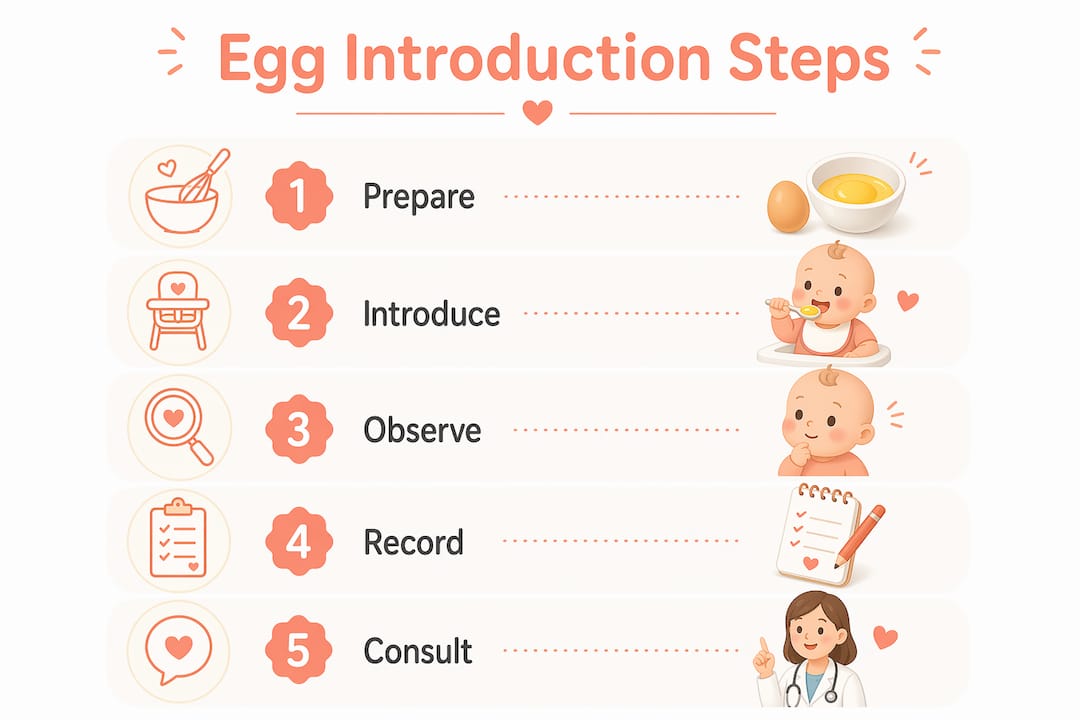
Here is a practical step-by-step approach for introducing egg safely:
- Talk to your pediatrician first. If your baby has eczema or a sibling with egg allergy, request allergy testing before the first introduction at home.
- Start with a fully cooked form. Hard-boiled egg yolk mashed into puree or scrambled egg mixed into baby cereal are the safest starting points.
- Offer a small amount. Begin with a pea-sized portion and wait. Do not offer a full serving on the first attempt.
- Choose the right time of day. Introduce egg in the morning so you can monitor your baby for several hours while you are alert and at home.
- Increase gradually. If your baby tolerates the first serving, increase the amount slowly over several sessions before making egg a regular part of meals.
- Keep egg in the diet. Once tolerated, offer egg at least two to three times per week. Consistency matters for building tolerance.
Pro Tip: For high-risk infants, the first introduction should happen in a clinical setting, not at home. An allergist can administer a supervised oral food challenge and have epinephrine on hand if needed. This is not overcautious. It is the standard of care.
Families looking for a structured approach to safe food introduction will find that having a clear plan before the first bite makes the whole process feel far less overwhelming.
How do you recognize egg allergy symptoms during introduction?
Most allergic reactions to egg appear within 2 hours of eating. Delayed reactions can occur up to 24 hours later, which is why monitoring does not stop the moment your baby finishes the meal. Knowing the difference between an immediate IgE-mediated reaction and a delayed non-IgE reaction helps you respond correctly.
Watch for these signs after every new egg exposure:
- Immediate reactions (within 2 hours): hives, lip swelling, vomiting, runny nose, or wheezing
- Delayed reactions (2–24 hours): eczema flare-up, loose stools, or general irritability
- Emergency signs requiring 911: throat tightening, difficulty breathing, sudden pallor, or loss of consciousness
A reaction does not always mean your baby has a permanent allergy. A single mild reaction warrants a call to your pediatrician, not a permanent ban on egg. Severe symptoms require emergency care and a follow-up allergy evaluation.
Keeping a detailed allergy diary is one of the most practical tools available to parents during this period. Log the time of feeding, the amount offered, the preparation method (scrambled, boiled, baked), and any reaction you observe. This record becomes invaluable when your pediatrician or allergist needs to assess whether a true allergy exists.
Pro Tip: Take a photo of any skin reaction immediately after it appears. Reactions fade quickly, and a photo gives your doctor far more information than a verbal description alone.
What is the egg ladder and how does it help children outgrow egg allergy?
The egg ladder is a clinical framework for gradually reintroducing egg in progressively less cooked forms to build immune tolerance over time. Egg allergy resolves in stages, starting with tolerance to baked egg, then lightly cooked egg, and finally raw or minimally cooked egg. The logic is straightforward: heat changes egg proteins, making them less reactive. Baked egg is the least allergenic form.
Tolerance to baked egg is a strong predictor of full allergy resolution. Children who can eat a muffin or a biscuit containing egg without reacting are far more likely to eventually tolerate scrambled egg and beyond. This is not just anecdotal. Allergists use baked egg tolerance as a clinical milestone.
| Egg ladder stage | Cooking method | Example foods |
|---|---|---|
| Stage 1 | Well-baked (180°C+, 30+ min) | Muffins, biscuits, cakes with egg |
| Stage 2 | Baked but less dry | Pancakes, waffles, quiche |
| Stage 3 | Lightly cooked | Scrambled egg, soft-boiled egg |
| Stage 4 | Minimally cooked or raw | Soft-poached egg, French toast |
Never advance your child up the egg ladder without consulting an allergist. Moving too quickly can trigger a reaction that sets back progress. The ladder is a tool for building tolerance, not a race. Each stage should be maintained for several weeks before moving forward, and only after your child has shown clear tolerance at the current level.
Families managing high-risk allergen foods will find the egg ladder fits naturally into a broader allergen introduction plan that covers peanut, tree nuts, and dairy alongside egg.
Key Takeaways
Early, structured egg introduction between 4 and 8 months is the most evidence-backed strategy for reducing egg allergy risk in infants, especially those with eczema.
| Point | Details |
|---|---|
| Start timing matters | Introduce egg between 4 and 8 months; delaying past 12 months increases allergy risk. |
| High-risk babies need supervision | Infants with eczema or family allergy history should have a supervised first introduction. |
| Monitor for 24 hours | Reactions can be immediate or delayed up to 24 hours; log every detail in an allergy diary. |
| Use the egg ladder | Progress from baked to lightly cooked to raw egg forms under allergist guidance to build tolerance. |
| Most children outgrow it | 85% of children with egg allergy resolve it by their teenage years with proper management. |
Why I changed my mind about waiting on egg introduction
When I first started working with families on infant feeding, the instinct to protect a baby by waiting felt completely reasonable. Egg is a known allergen. Why introduce risk early? That logic made sense until the evidence started pointing in the opposite direction.
Dr. Jennifer Koplin and other allergy researchers have shown that the immune system is not protected by avoidance. It is trained by exposure. Waiting does not lower the stakes. It raises them. The shift from avoidance to early exposure is one of the most significant changes in pediatric allergy guidance in a generation, and many parents have not heard about it yet.
What I find most reassuring for anxious parents is the vaccine question. Many families with egg-allergic children worry about MMR and flu vaccines. Children with egg allergy can safely receive MMR and other vaccines, because egg protein levels in vaccines are negligible. That fear, while understandable, does not need to drive decisions.
The parents I have seen struggle most are the ones who received conflicting advice and ended up doing nothing. Fear-driven delay is not a neutral choice. It is a choice with consequences. My advice: get a clear plan from your pediatrician, start with baked egg, keep a diary, and trust the process. Your baby’s immune system is more capable than you think.
How Yummy Bites App makes egg introduction less stressful

Knowing the guidelines is one thing. Putting them into practice at 6 a.m. with a hungry baby is another. Yummy Bites App supports over a million families through exactly this stage, with 392 baby-friendly recipes and real-time allergen tracking built in. The app’s Foods Library includes egg-specific preparation guides, showing you exactly how to cook and serve egg at each stage of introduction. The baby meal planner lets you schedule egg into your baby’s weekly rotation so it stays consistent, which matters for building tolerance. Every recommendation is backed by licensed pediatric specialists, so you are not guessing. You are following a plan.
FAQ
What age should I introduce egg to my baby?
Most babies can start egg at around 6 months, when solid foods begin. High-risk infants with eczema or a family history of food allergy may start as early as 4 months under medical supervision.
What are the first signs of egg allergy in babies?
The most common early signs are hives, lip or eye swelling, and vomiting within 2 hours of eating egg. Delayed reactions, including eczema flare-ups or loose stools, can appear up to 24 hours later.
Can I introduce egg at home if my baby has eczema?
Babies with moderate to severe eczema are considered high-risk for egg allergy. Their first egg introduction should happen in a clinical setting with an allergist present, not at home.
What is the egg ladder?
The egg ladder is a step-by-step clinical framework that moves from well-baked egg forms to lightly cooked and then raw egg, helping children with egg allergy build tolerance gradually under medical guidance.
Will my child always have an egg allergy?
Egg allergy often resolves with age. Approximately 50% of children outgrow it by age 3, and 85% do so by their teenage years, particularly when managed with a structured approach like the egg ladder.
Recommended

This article is for general educational purposes only and is not a substitute for professional medical advice, diagnosis, or treatment. Always consult your pediatrician or a qualified healthcare provider about your baby's diet, allergies and readiness for solids.