Baby Food Introduction Order Guide for New Parents
Explore the baby food introduction order guide to smoothly transition your baby to solids. Build healthy eating habits from the start!
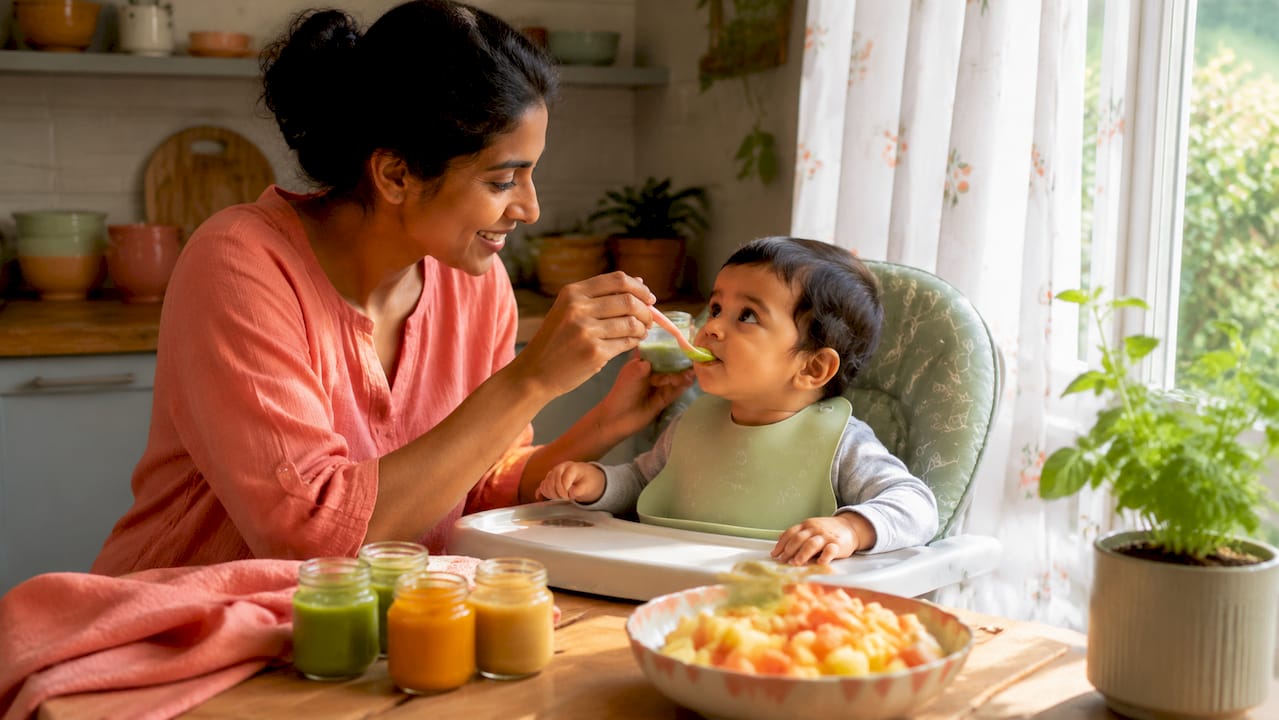
A baby food introduction order guide is a step-by-step plan for moving your baby from breast milk or formula to solid foods safely, starting at around 6 months. The goal is not to follow a rigid sequence but to introduce a wide variety of foods while watching for reactions and keeping choking risk low. The American Academy of Pediatrics (AAP) and the CDC both emphasize timing, readiness, and careful monitoring over any fixed food order. Getting this right from the start builds healthy eating habits and reduces allergy risk for years to come.
What is the baby food introduction order guide approach?
The most important principle in any solid food introduction plan is this: readiness matters more than the calendar. The CDC recommends starting solids at around 6 months, and starting before 4 months is not recommended. That window exists because your baby’s digestive system and motor skills need time to develop.
Before you open a single jar of pureed sweet potato, check for these readiness signs:
- Good head control. Your baby can hold their head steady and upright without support.
- Sitting with support. They can sit in a high chair or feeding seat without slumping.
- Interest in food. They watch you eat, reach toward your plate, or open their mouth when food comes near.
- Loss of the tongue-thrust reflex. Younger babies automatically push food out with their tongue. When that reflex fades, swallowing solids becomes possible.
Breast milk or formula stays the primary nutrition source through the first year. Solids at this stage are about learning, not replacing milk feeds. Think of early meals as practice runs, not nutritional substitutes. Your baby is building a skill set, one spoonful at a time.
Pro Tip: If your baby was born prematurely, use their corrected age, not their birth age, when assessing readiness. A baby born 6 weeks early may not be ready until closer to 7.5 months.
What foods should you introduce first?
The AAP does not require a strict sequence for introducing solid foods. That is genuinely good news. You do not need to follow a prescribed order of vegetables before fruits or cereals before meats. What matters is variety across food groups by 7–8 months and careful monitoring of each new food.
Start with iron-rich foods
Iron is the one nutrient that deserves priority. Breast milk is low in iron, and your baby’s stored iron from birth starts to deplete around 6 months. Iron-dense first foods include pureed meats like chicken and beef, lentils, and iron-fortified cereals. Oat, barley, and multigrain cereals are all solid choices. Avoid feeding only rice cereal to reduce arsenic exposure. Rotating cereals is a simple fix with a real safety benefit.

The one-at-a-time rule
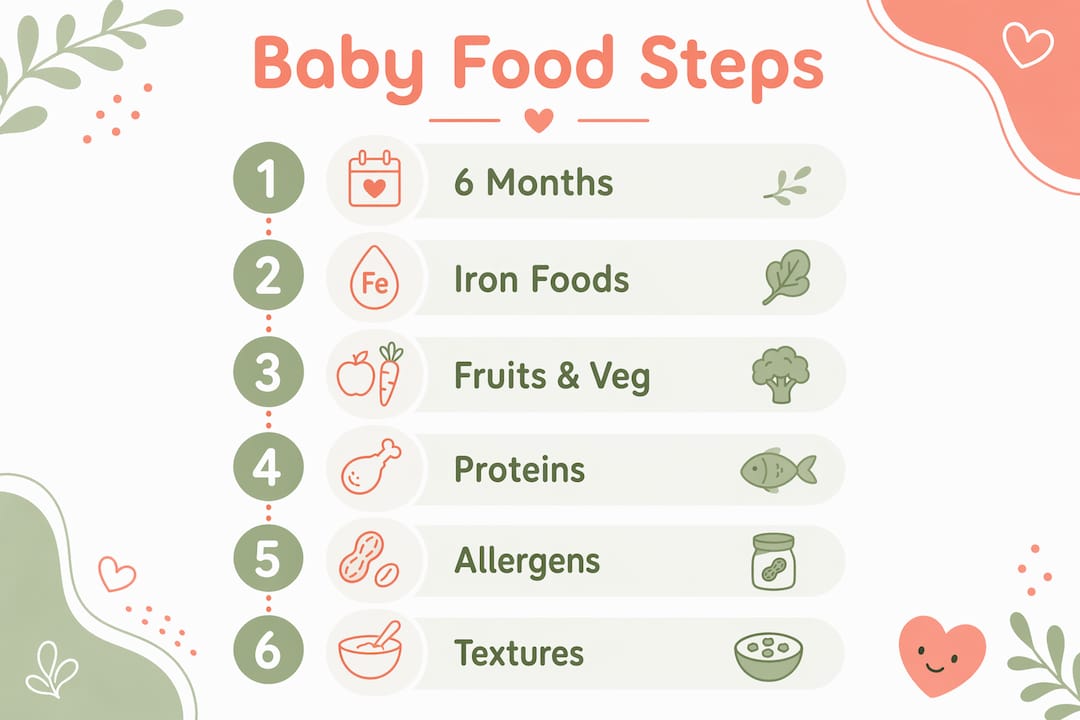
Introduce one single-ingredient food at a time and wait 3–5 days before adding another. This window gives you time to spot any reaction, whether that is a rash, digestive upset, or unusual fussiness. It also takes the guesswork out of identifying the culprit if something does go wrong.
A practical baby food timeline for the first few weeks might look like this:
- Days 1–4: Pureed sweet potato
- Days 5–8: Pureed chicken or iron-fortified oat cereal
- Days 9–12: Pureed peas
- Days 13–16: Pureed banana
By 7–8 months, your baby’s food variety should span vegetables, fruits, proteins, whole grains, and dairy products without added sugars. Yogurt and soft cheese are fine; cow’s milk as a main drink is not recommended until 12 months.
Pro Tip: Keep a simple feeding log for the first two months. Note the food, date, and any reactions. You do not need an app for this, though the Yummy Bites App makes it easy with built-in tracking. A notes app or paper works too.
How do you safely introduce allergenic foods?
This is the section most parents get wrong, and the error is almost always the same: waiting too long. Delaying allergenic foods is unnecessary for most babies. Current guidance from the AAP and HealthyChildren.org encourages introducing common allergens alongside other first foods, not after them.
The major allergens to introduce early include:
- Eggs (well-cooked and pureed or mashed)
- Peanuts (thinned peanut butter mixed into oat cereal or puree)
- Tree nuts (almond butter thinned in puree)
- Wheat (soft cooked pasta or wheat-based cereal)
- Shellfish (pureed shrimp or crab, well-cooked)
- Soy (tofu pureed smooth)
- Fish (pureed salmon or cod)
- Sesame (tahini thinned in puree)
Early peanut introduction helps prevent peanut allergy, particularly for babies already at higher risk. That finding has shifted clinical practice significantly over the past decade.
A note for high-risk families: If your baby has severe eczema, an existing egg allergy, or a close family history of food allergies, consult a pediatrician before introducing peanuts or other top allergens. Your doctor may recommend allergy testing or a supervised first introduction in a clinical setting.
Watch for allergic reaction signs in the 2 hours after introducing any new allergen. These include hives, swelling around the mouth, vomiting, or difficulty breathing. Gagging is normal and is not an allergic reaction. Knowing the difference between gagging and a true reaction is one of the most calming things you can learn as a new parent.
Pro Tip: When introducing a new allergen, keep the rest of the meal familiar. Use a texture and base your baby already tolerates. Consistent food preparation reduces false alarms by separating texture reactions from true allergy responses.
What textures are safe, and how do you prevent choking?
Smooth should be a ramp, not a residence. Starting with smooth purees is correct, but staying there too long can actually slow your baby’s oral motor development. Texture progression should follow your baby’s chewing and swallowing development, not the calendar.
The table below outlines a general texture progression by developmental stage:
| Stage | Approximate Age | Texture Goal | Example Foods |
|---|---|---|---|
| Early solids | 6 months | Smooth purees | Pureed sweet potato, pureed chicken |
| Mid introduction | 7–8 months | Mashed, soft lumps | Mashed banana, soft scrambled egg |
| Advancing textures | 9–10 months | Soft finger foods | Soft-cooked carrot sticks, small pasta pieces |
| Table food transition | 11–12 months | Modified family foods | Soft diced fruit, shredded chicken |
Choking prevention comes down to three things: texture, size, and supervision. Cut all foods into pieces no larger than one-half inch. Avoid round, firm foods without modification. Grapes, cherry tomatoes, whole blueberries, and hot dog rounds are all high-risk without cutting. Raw carrots, whole nuts, and hard candy are off the table entirely until much later.
Supervise every feeding and offer small portions slowly. Never leave your baby alone with food. For a deeper look at safe serving sizes and textures, the Yummy Bites blog covers choking prevention for solids in practical detail.
Pro Tip: Gagging is loud and dramatic. Choking is silent. A gagging baby is working the food forward with their tongue, which is exactly what they should do. A choking baby cannot make noise, cough, or cry. Knowing this distinction will help you stay calm and respond correctly.
How do you handle common challenges when starting solids?
Food rejection is normal. Your baby may spit out the first ten spoonfuls of pureed peas and then eat them happily on day eleven. Initial rejection does not mean your baby dislikes the food. It means they are learning a new skill in a new situation.
Common challenges and how to handle them:
- Consistent refusal. Try the same food on different days and in different combinations. Pair a rejected food with a familiar one.
- Gagging on every bite. Slow down. Go back to a smoother texture and progress more gradually.
- Constipation. Introduce more water with meals and prioritize high-fiber purees like prunes, pears, and peas.
- Suspected reaction. Stop the new food, note the symptoms, and call your pediatrician. Do not reintroduce without guidance.
- Low iron intake. If your baby is rejecting meat, fortified cereals are a reliable backup. Pair them with vitamin C-rich foods like pureed mango to boost iron absorption.
Distinguishing gagging from choking is the single most useful skill you can develop before starting solids. Take an infant CPR and first aid course before your baby’s 6-month mark. Many hospitals and community centers offer them free or at low cost.
Key takeaways
The most effective approach to baby food introduction is to prioritize readiness, introduce one new food every 3–5 days, and include allergens early rather than avoiding them.
| Point | Details |
|---|---|
| Start at the right time | Begin solids at around 6 months when readiness signs are present, not before 4 months. |
| No strict food order required | Offer variety across food groups by 7–8 months; iron-rich foods deserve early priority. |
| Introduce allergens early | Add eggs, peanuts, wheat, and shellfish alongside other first foods for most babies. |
| Match texture to development | Progress from smooth purees to soft lumps based on your baby’s skills, not the calendar. |
| Supervise every meal | Cut foods to half-inch pieces, offer small portions, and never leave your baby alone with food. |
What I have learned from watching thousands of families start solids
Parents come to the solids stage with a lot of fear, and most of it is pointed in the wrong direction. They worry about the order of foods when the real risk is waiting too long on allergens. They panic over gagging when gagging is actually a safety reflex working perfectly. They obsess over whether to start with vegetables or fruit when the AAP says it genuinely does not matter.
The families I have seen struggle most are the ones following a rigid script instead of watching their baby. Your baby will tell you when they are ready for a lumpier texture. They will lean forward, open their mouth wider, and handle the food with more confidence. That is your cue to progress, not a date on a chart.
Early allergen introduction is the one area where I push back hardest against old-school advice. The evidence is clear. Waiting does not protect your baby. For most families, introducing peanut butter thinned in oat cereal at 6 months is not only safe, it is protective. The exception is the high-risk baby with severe eczema or an existing egg allergy. Those families need a pediatrician in the conversation before they open the peanut butter jar.
The other thing worth saying plainly: your baby is not going to love every food the first time. Repeated exposure, sometimes 10 to 15 tries, is how preference develops. Patience is not a soft skill here. It is the actual mechanism by which children learn to eat a varied diet. Keep offering. Keep the meals calm. Your baby just wants lunch.
How Yummy Bites App supports your baby’s first foods
Starting solids is one of the most exciting and nerve-wracking milestones of the first year. The Yummy Bites App was built specifically for this moment, with 392 recipes organized by age, feeding stage, and allergen profile.
The app’s foods library covers every major food group with step-by-step serving instructions and real-time allergen tracking, all reviewed by licensed pediatric specialists. Over a million families use Yummy Bites App to plan meals, track new food introductions, and get answers from credentialed experts. Whether you are on day one of purees or moving into soft finger foods, the baby meal planner gives you a clear, personalized path forward without the guesswork.
FAQ
When should I start introducing solid foods?
Start solid foods at around 6 months when your baby shows readiness signs like head control, sitting with support, and interest in food. Starting before 4 months is not recommended by the CDC or AAP.
Does the order of food introduction matter?
The AAP does not require a strict sequence. Offer a variety of food groups by 7–8 months and prioritize iron-rich foods early, but the specific order is flexible.
When should I introduce peanuts and other allergens?
Introduce common allergens like peanuts, eggs, and wheat alongside other first foods at around 6 months. Early introduction reduces allergy risk for most babies. High-risk infants with severe eczema or an existing egg allergy should consult a pediatrician first.
How do I know if my baby is choking or just gagging?
Gagging is loud and involves the baby pushing food forward with their tongue. Choking is silent and means the airway is blocked. Always supervise meals and take an infant CPR course before starting solids.
How long should I wait between new foods?
Wait 3–5 days between each new single-ingredient food. This window lets you identify any allergic reaction or intolerance before adding the next food.
Recommended

This article is for general educational purposes only and is not a substitute for professional medical advice, diagnosis, or treatment. Always consult your pediatrician or a qualified healthcare provider about your baby's diet, allergies and readiness for solids.