How to introduce peanut without the panic
For decades parents were told to wait on peanut. The science now says the opposite: early, regular exposure is one of the best tools we have against peanut allergy. Here's the calm, practical version of how to do it.
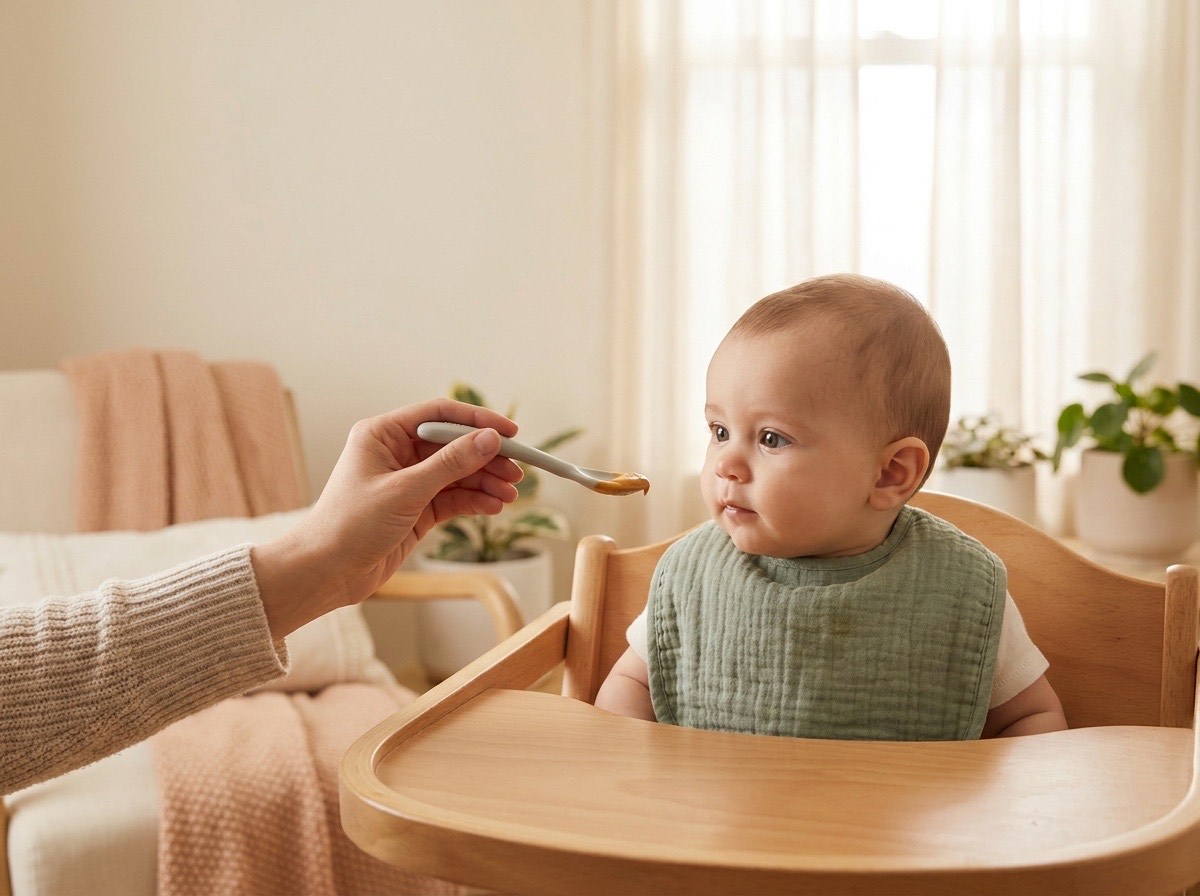
If peanut introduction makes your stomach flutter, you're in good company — it's the allergen parents fear most. So let me lead with the good news: the landmark LEAP trial found that introducing peanut early and keeping it in the diet reduced peanut allergy by roughly 80% in high-risk infants compared to avoidance. Waiting doesn't protect your baby. Early, repeated, boring exposure does.
When to start
For most babies: around 6 months, once they've started solids and handled a few simple foods well. Don't make peanut the very first food — give yourself two or three calm meals of vegetables or cereal first, so you know what "normal" looks like for your baby.
One important exception: if your baby has severe eczema, an existing egg allergy, or a strong family history of food allergy, talk to your pediatrician or an allergist before starting. Higher-risk babies benefit from early introduction the most — that's exactly who the LEAP trial studied — but your doctor may want allergy testing first or to supervise the first taste.
How to serve it safely
Whole peanuts and thick globs of peanut butter are serious choking hazards. Never those. Instead:
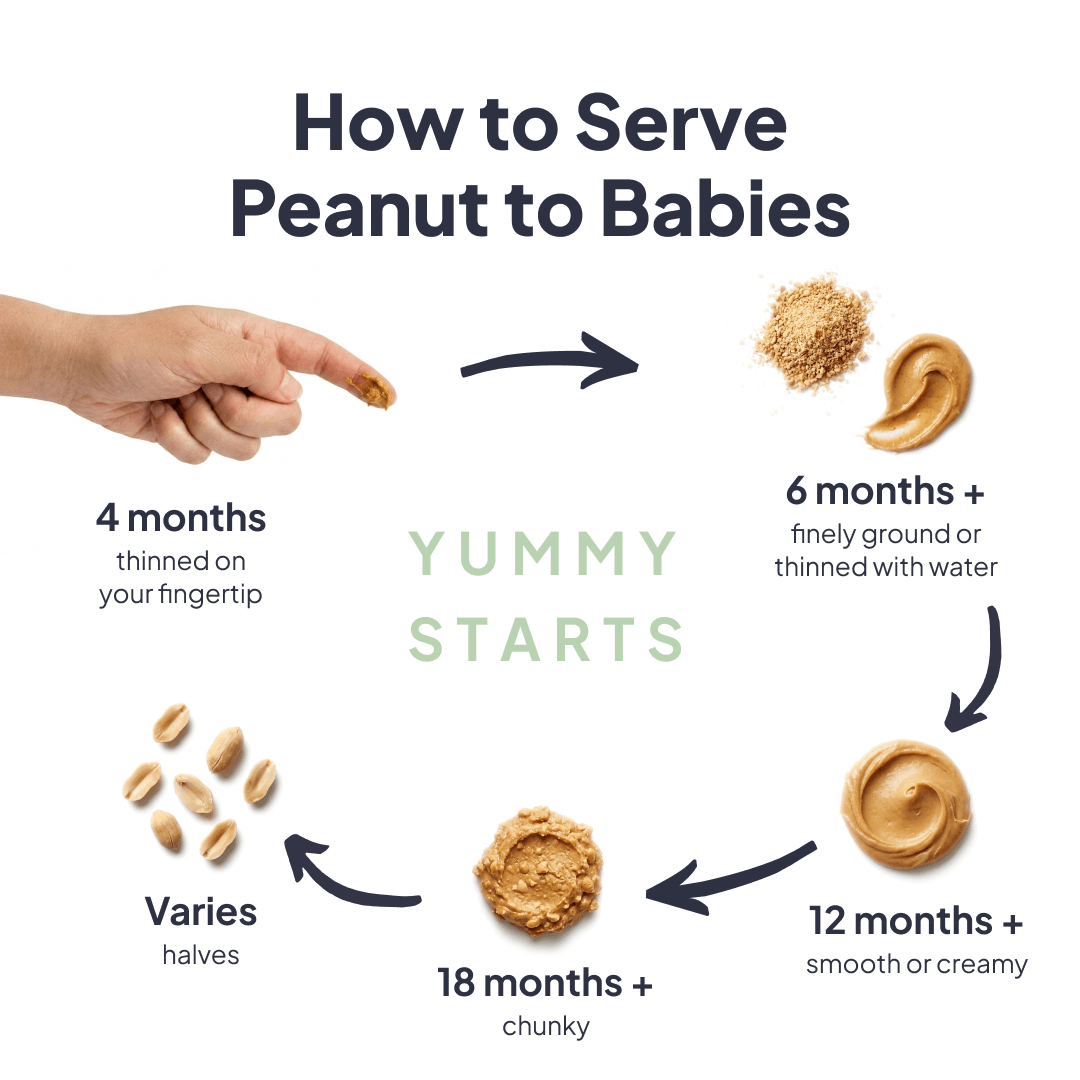
- Thinned peanut butter: stir 1–2 teaspoons of smooth (never crunchy) peanut butter into warm water, breast milk or formula until it's a smooth, drippy paste, then mix into a familiar purée like oatmeal or banana.
- Peanut powder: peanut flour or powdered peanut butter stirs invisibly into porridge, yogurt or fruit purées.
- For self-feeders: a very thin smear of peanut butter on a strip of toast.
The first taste, step by step
- Pick a calm weekday morning at home — not right before a nap, not on the way to daycare, not the evening before a trip. You want daylight hours to observe (and your pediatrician's office open).
- Start small: offer a small part of a teaspoon of the thinned mixture on the tip of a spoon. Wait 10 minutes.
- No reaction? Continue with the rest of the portion at your baby's pace.
- Watch for the next two hours while doing normal things. Most reactions, if they happen, appear within minutes to two hours.
Then comes the part everyone forgets: keep going
One successful taste is a start, not a finish. Protection comes from regular exposure — aim for peanut roughly three times a week, about 2 teaspoons of peanut butter's worth each time, kept up through toddlerhood. This is honestly the hardest part: not because it's difficult, but because life is busy and unglamorous repetition is easy to drop. Put it in the breakfast rotation and let momentum do the work.
"Early, repeated exposure is the best tool we have against food allergies. Done step by step, it's also far less scary than parents expect."
What a reaction looks like — and what to do
- Mild (most common): a few hives around the mouth, mild redness, a single vomit, mild fussiness. Stop feeding, take photos, note the time and amount, and call your pediatrician for guidance before the next exposure.
- Severe (rare — act immediately): trouble breathing, wheezing or persistent cough, swelling of lips or tongue, widespread hives, repeated vomiting, unusual floppiness or pallor. Call your local emergency number right away.
Document everything — what, how much, when, what happened. Patterns across exposures are gold for your pediatrician or allergist.

This article is for general educational purposes only and is not a substitute for professional medical advice, diagnosis, or treatment. If your baby is at higher risk of food allergy (severe eczema, existing food allergy, or strong family history), consult your pediatrician or an allergist before introducing peanut. In a medical emergency, call your local emergency number immediately.