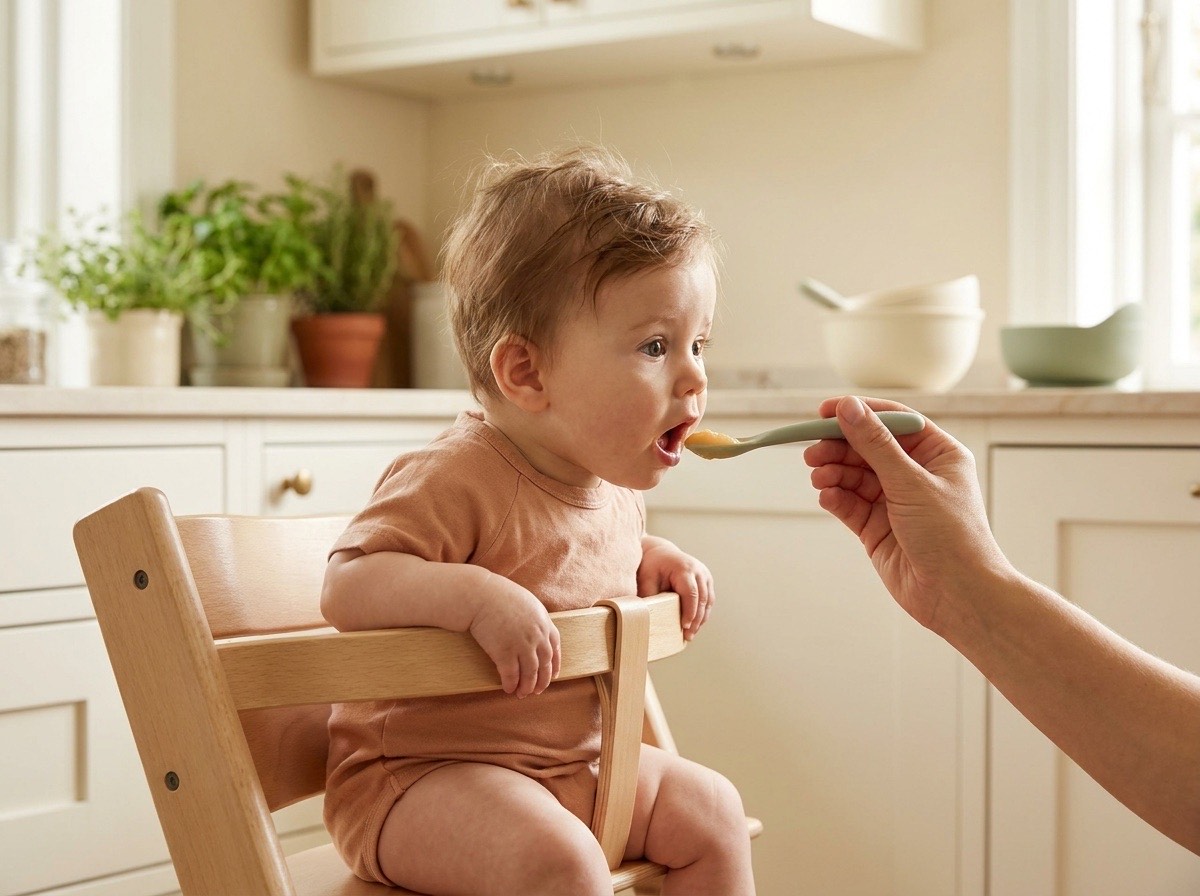
Food Introduction Schedule for Babies: A Parent's Guide
Discover what is food introduction schedule for your baby. Follow a detailed timeline to safely introduce solids and support healthy growth.

A food introduction schedule is a structured timeline that guides parents on when, what, and how to introduce solid foods to their baby, starting around six months of age. Pediatricians use the formal term “complementary feeding plan” to describe this process, though “food introduction schedule” captures exactly what parents are building at home. The CDC and the American Academy of Pediatrics (AAP) both recommend starting solids at about 6 months, never before 4 months. Getting this timeline right protects your baby’s digestive system, supports brain development, and reduces the risk of food allergies.
What is a food introduction schedule and why does it matter?
A food introduction schedule is a parent’s roadmap for moving a baby from an all-milk diet to a varied, solid-food diet over the first year of life. Without a plan, it is easy to introduce too many foods at once, miss allergy warning signs, or start before your baby is physically ready. The schedule gives you a clear structure while leaving room to follow your baby’s individual pace.
The AAP guidelines emphasize that the timing of food introduction directly affects long-term allergy outcomes. Pediatric providers sometimes give conflicting advice, which creates real confusion for new parents. A guideline-based approach built on CDC and AAP recommendations cuts through that noise and gives you a consistent, evidence-backed starting point.

Think of the schedule as a ramp, not a rigid rulebook. You are gradually building your baby’s relationship with food, one ingredient at a time.
When to start solids: age and readiness signs
Solid foods should not start before 4 months. Before that age, babies lack the motor skills needed for safe swallowing, and their digestive systems are not ready to process anything beyond breast milk or formula. Starting too early raises the risk of choking, digestive upset, and overfeeding.
The CDC and AAP both recommend waiting until around 6 months. That said, readiness is not purely about age. Physical signs matter just as much as the calendar. Look for these developmental readiness cues before offering any solid food:
- Sits with support. Your baby can hold an upright position with minimal help, which is necessary for safe swallowing.
- Holds their head steady. Good head and neck control reduces choking risk during feeding.
- Shows interest in food. Reaching for your plate, watching you eat, or opening their mouth when food approaches are strong signals.
- Has lost the tongue-thrust reflex. Younger babies automatically push objects out of their mouths. When this reflex fades, they can move food toward the back of the throat.
No single sign is enough on its own. A baby who sits well but shows zero interest in food may simply need another week or two. Watch the full picture, not just one marker.
Pro Tip: If your baby was born prematurely, use their corrected age, not their birth age, when assessing readiness. A baby born 6 weeks early may not be ready for solids until closer to 7 or 8 months of actual age.
How to structure a solid foods schedule: timing, frequency, and quantities
The practical setup of a baby feeding schedule follows a clear progression. Start with one or two small solid meals per day, then build from there as your baby grows more comfortable.
The 3-to-5-day rule
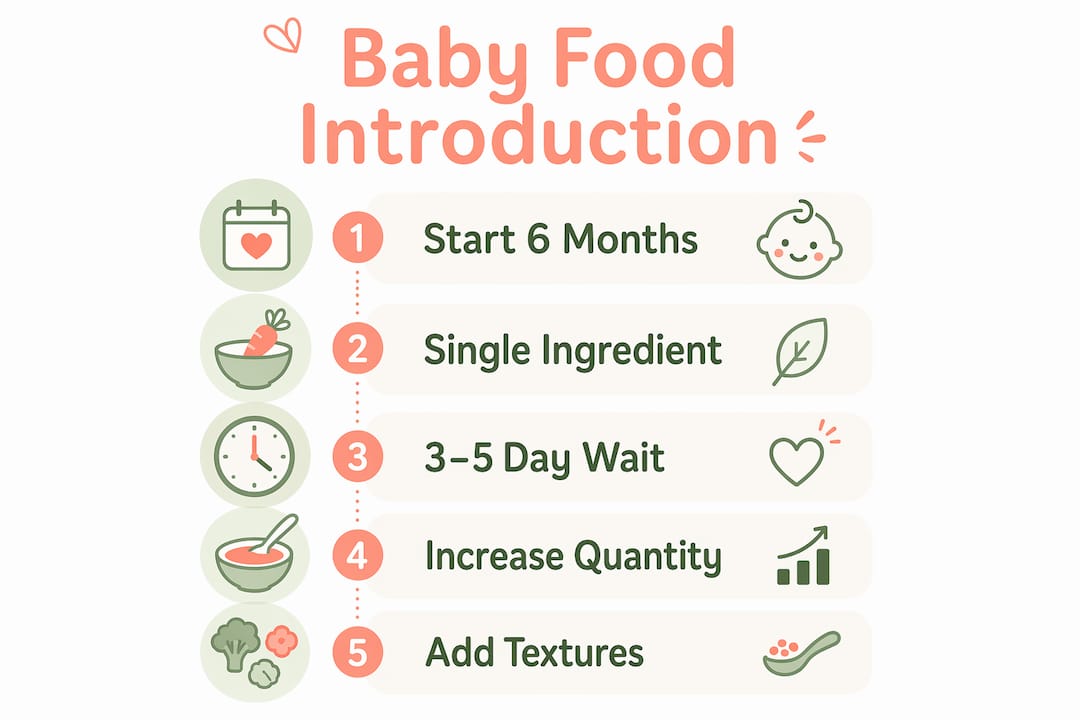
Introduce one single-ingredient food at a time and wait 3–5 days before adding anything new. This waiting period is the most important structural rule in any solids introduction plan. It gives you a clear window to spot rashes, hives, vomiting, or unusual fussiness that could signal an allergic reaction.
Quantities and progression
Start with 1–2 teaspoons per serving. Most of it will end up on the bib, and that is completely normal. Increase the amount gradually as your baby gets the hang of swallowing. By 9 months, most babies are eating three small solid meals per day, and milk intake naturally decreases by roughly one-third.
A typical daily feeding window at different stages looks like this:
- Around 6 months. One solid meal per day, usually mid-morning. Breast milk or formula remains the primary nutrition source.
- Around 7–8 months. Two solid meals per day, morning and early afternoon. Textures can progress from smooth purees to mashed or soft lumpy foods.
- Around 9 months. Three solid meals per day. Soft finger foods can be introduced alongside purees. Milk feeds continue but decrease in volume.
| Age | Solid meals per day | Texture | Serving size |
|---|---|---|---|
| 6 months | 1 | Smooth puree | 1–2 teaspoons |
| 7–8 months | 2 | Mashed or soft lumps | 2–4 tablespoons |
| 9 months | 3 | Soft finger foods | 4–6 tablespoons |
Pro Tip: Offer solids about an hour after a milk feed, not right before. A baby who is too hungry will be frustrated by the slow pace of solid feeding. A baby who is slightly satisfied is calmer and more curious.
What foods to introduce and how to handle allergens
There is no required order for introducing foods, with one important exception: iron-rich foods should come early. Babies are born with iron stores that start to deplete around 6 months. Iron supports rapid brain development and healthy growth during this transition period.
Good early iron sources include:
- Pureed meats (chicken, beef, turkey)
- Iron-fortified single-grain cereals
- Pureed lentils or beans
- Mashed egg yolk
Early allergen introduction
The LEAP trial found an 81% reduction in peanut allergy among high-risk infants who were exposed to peanut protein early. That finding changed how pediatricians approach the allergen introduction timeline entirely. Delaying allergenic foods does not prevent allergies. Early, consistent exposure is what builds tolerance.
The major allergens to introduce between 4–6 months (once your baby shows readiness) are:
- Peanuts (thinned peanut butter mixed into puree)
- Eggs (well-cooked, pureed or mashed)
- Cow’s milk products (yogurt, cheese, not plain cow’s milk as a drink)
- Tree nuts (finely ground or as a thin paste)
- Wheat, soy, fish, and shellfish
Use the 3–5 day wait rule for each allergen, just as you would for any new food. If your baby has severe eczema or a known egg allergy, consult your pediatrician before introducing peanuts, as they may need a supervised introduction.
| Food category | Introduce early? | Notes |
|---|---|---|
| Iron-rich foods | Yes | Start within the first weeks of solids |
| Common allergens | Yes | Between 4–6 months if developmentally ready |
| Honey | No | Never before 12 months due to botulism risk |
| Whole cow’s milk as a drink | No | Wait until 12 months |
| Choking hazards (whole grapes, nuts) | No | Modify texture until 4+ years |
Tips for success and handling common challenges
The first solid food attempts are mostly exploratory. Babies are learning to move food to the back of their mouths, not trying to eat a full meal. Expect most of the food to come right back out. This is not rejection. It is learning.
A few practical principles make the early weeks much smoother:
- Follow your baby’s cues. Responsive feeding, meaning you respond to hunger and fullness signals rather than pushing a set amount, builds positive eating habits that last a lifetime. Turn your head away, close their mouth, or push the spoon away are all “I’m done” signals worth respecting.
- Offer milk before solids. A small pre-meal milk feed takes the edge off hunger and helps your baby approach new textures with curiosity rather than desperation.
- Supervise every meal. Never leave a baby alone with food. Gagging is normal and different from choking, but you need to be present to tell the difference. For a full breakdown of safe feeding practices, review choking prevention guidance before you start.
- Keep it consistent. Offer solids at roughly the same times each day. Predictability helps babies know what to expect and reduces mealtime resistance.
Pro Tip: If your baby consistently refuses solids after two or three weeks of trying, check the timing. Overtired or overstimulated babies rarely eat well. Try moving the solid meal to a calm, well-rested window in the day.
Babies who resist solids are not failing. They are often just not ready, or the timing is off. A guide on why babies resist solid food can help you troubleshoot without the stress.
Key takeaways
A food introduction schedule works best when it combines evidence-based timing, single-ingredient introductions, early allergen exposure, and responsive feeding cues tailored to your baby’s individual pace.
| Point | Details |
|---|---|
| Start around 6 months | Never before 4 months; wait for physical readiness signs, not just age. |
| Use the 3–5 day rule | Introduce one food at a time and wait before adding anything new to catch reactions. |
| Prioritize iron-rich foods | Pureed meats and iron-fortified cereals should appear in the first weeks of solids. |
| Introduce allergens early | Early exposure between 4–6 months reduces allergy risk, not increases it. |
| Follow your baby’s cues | Responsive feeding builds lifelong healthy eating habits and reduces mealtime stress. |
What I’ve learned from watching thousands of families start solids
Parents come to me with a lot of anxiety about getting the schedule exactly right. I understand that impulse. But after working with families through the starting-solids stage, the thing I keep coming back to is this: the schedule is a framework, not a performance review.
The guidelines from the CDC and AAP give you a solid foundation. Six months, one food at a time, 3–5 days between new foods. That structure exists for real reasons, and it works. But within that structure, your baby is the expert on their own pace. Some babies take to purees immediately. Others need two weeks of just touching the spoon before anything goes in their mouth. Both are normal.
The mess bothers parents more than it bothers babies. A baby smearing sweet potato across the high chair tray is not wasting food. They are learning what food feels like, smells like, and eventually tastes like. That sensory exploration is part of the process.
The one thing I push back on hardest is the idea that delaying allergens is the “safe” choice. The research is clear. Early introduction reduces risk. Waiting out of caution can actually work against you. If your pediatrician is still advising you to hold off on peanuts until age 1, it is worth asking them about the current AAP guidance.
Treat the schedule as a living document. Adjust it when your baby is sick, teething, or going through a developmental leap. Come back to the baseline when things settle. The goal is a baby who grows up comfortable with a wide range of foods, not one who hit every milestone on the exact right day.
How Yummy Bites App makes your baby’s food plan easier
Building a solid foods plan from scratch takes real time and research. Yummy Bites App was built specifically for this stage, combining a personalized meal planner with real-time allergen tracking and step-by-step serving instructions backed by pediatric specialists.
The app includes 392 recipes organized by age and feeding stage, so you always know what to offer next. Over a million families use Yummy Bites App to move through the first foods phase with confidence rather than guesswork. Whether you are just starting at 6 months or troubleshooting a picky eater at 10 months, the tools inside the app adapt to where your baby actually is, not where a generic chart says they should be.
FAQ
When should I start a food introduction schedule?
Start a food introduction schedule at around 6 months of age, and never before 4 months. Look for physical readiness signs like sitting with support and steady head control before offering any solid food.
What is the 3-to-5-day rule in baby feeding schedules?
The 3-to-5-day rule means you introduce one new single-ingredient food and wait 3–5 days before adding another. This window lets you identify any allergic reactions before moving on.
Do I need to introduce foods in a specific order?
No specific order is required beyond including iron-rich foods early. Pureed meats, iron-fortified cereals, and mashed legumes should appear in the first weeks to support brain development and growth.
Should I delay peanuts and eggs to avoid allergies?
Delaying allergenic foods does not prevent allergies. The AAP now recommends introducing peanuts and eggs between 4–6 months for most babies, as early exposure significantly reduces allergy risk.
How do I know if my baby is getting enough nutrition during the transition?
Breast milk or formula remains the primary nutrition source through the first year. Solids complement milk feeds starting around 6 months and gradually become more dominant after 12 months, so consistent milk feeds alongside solids keep nutrition on track.
Recommended

This article is for general educational purposes only and is not a substitute for professional medical advice, diagnosis, or treatment. Always consult your pediatrician or a qualified healthcare provider about your baby's diet, allergies and readiness for solids.